Human rights situation in Tibet under Xi Jinping is worsening
June 6, 2026
  • Read Ecopy
  • Circulation
  • Advertise
  • Careers
  • About Us
  • Contact Us
Android AppiPhone AppArattai
Organiser
  • ‌
  • Bharat
    • Assam
    • Bihar
    • Chhattisgarh
    • Jharkhand
    • Maharashtra
    • View All States
  • World
    • Asia
    • Europe
    • North America
    • South America
    • Africa
    • Australia
  • Editorial
  • International
  • Opinion
  • RSS @ 100
  • More
    • Op Sindoor
    • Analysis
    • Sports
    • Defence
    • Politics
    • Business
    • Economy
    • Culture
    • Special Report
    • Sci & Tech
    • Entertainment
    • G20
    • Azadi Ka Amrit Mahotsav
    • Vocal4Local
    • Web Stories
    • Education
    • Employment
    • Books
    • Interviews
    • Travel
    • Law
    • Health
    • Obituary
  • Subscribe
    • Subscribe Print Edition
    • Subscribe Ecopy
    • Read Ecopy
  • ‌
  • Bharat
    • Assam
    • Bihar
    • Chhattisgarh
    • Jharkhand
    • Maharashtra
    • View All States
  • World
    • Asia
    • Europe
    • North America
    • South America
    • Africa
    • Australia
  • Editorial
  • International
  • Opinion
  • RSS @ 100
  • More
    • Op Sindoor
    • Analysis
    • Sports
    • Defence
    • Politics
    • Business
    • Economy
    • Culture
    • Special Report
    • Sci & Tech
    • Entertainment
    • G20
    • Azadi Ka Amrit Mahotsav
    • Vocal4Local
    • Web Stories
    • Education
    • Employment
    • Books
    • Interviews
    • Travel
    • Law
    • Health
    • Obituary
  • Subscribe
    • Subscribe Print Edition
    • Subscribe Ecopy
    • Read Ecopy
Organiser
  • Home
  • Bharat
  • World
  • Operation Sindoor
  • Editorial
  • Analysis
  • Opinion
  • Culture
  • Defence
  • International Edition
  • RSS @ 100
  • Magazine
  • Read Ecopy
Home World

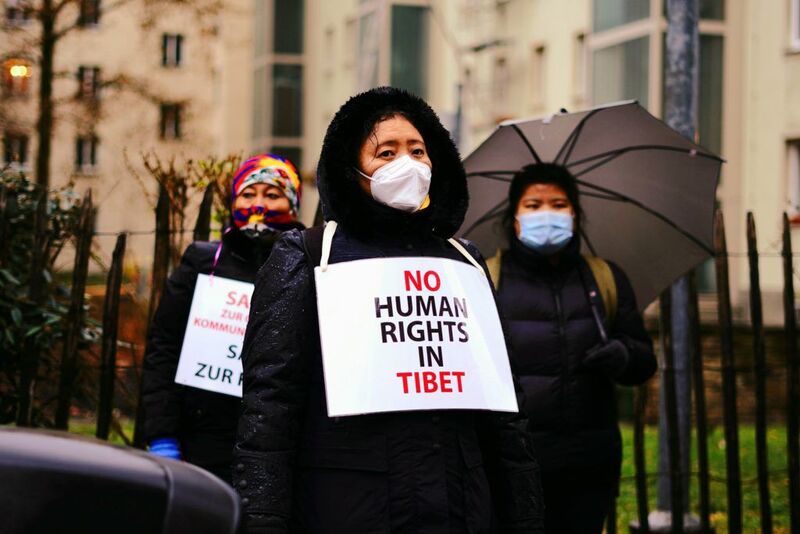
Human rights situation in Tibet under Xi Jinping is worsening

United Nations Committee on Economic, Social and Cultural Rights, which released its 'Concluding Observations' in its third periodic review of China in its recent report, underscored several issues related to the human rights of Tibetan people under the Chinese Government

Vijay KrantiVijay Kranti
Mar 19, 2023, 08:00 pm IST
in World, China
Follow on Google News
FacebookTwitterWhatsAppTelegramEmail

What ordinary Tibetan refugees have feared and have been calling upon the world community for help is now confirmed by the United Nation’s Committee on Economic, Social and Cultural Rights. Releasing its ‘Concluding Observations’ on its third periodic review of China on 6 March, the Committee has underlined several issues related to the human rights of Tibetan people under Chinese rule, which call for serious and urgent attention of the world community.

These issues include a severe onslaught on Tibetan culture and religion; forced relocation of nomad communities; poor treatment and exploitation of Tibetan labour; and brainwashing and forced assimilation of Tibetan children through Chinese Communist Party-run boarding schools.

It is not a coincidence that Freedom House also released its latest report titled “Freedom in the World 2023 Report” on March 9, which has ranked Tibet as the “World’s least-free country” alongside South Sudan and Syria. This is successively the third time, following similar reports of the Freedom House in 2021 and 2022 that Tibet has won this dubious distinction of being ranked at the bottom of the community of countries.

Using its own method of grading political rights and civil liberties, the organisation ation assigned minus 2 marks out of a possible 40 for political rights and just 3 marks out of 60 for civil liberties in Tibet. That puts Tibet with a total score of 1 out of 100 and thus bracketing Tibet with South Sudan and Syria who have been also assigned the same score of 1.

In its report, the Freedom House has found that both the Chinese and Tibetan citizens living in Tibet lack basic rights, but the (Chinese) authorities are especially rigorous in suppressing any signs of dissent among Tibetans, including manifestations of Tibetan religious beliefs and cultural identity.

Commenting on this report of Freedom House the International Campaign for Tibet (ICT), a prominent Tibet advocacy group in the USA and Europe, said, “After more than six decades of illegal occupation, China has turned Tibet into the world’s least-free country…. With Tibet once again at the bottom of Freedom House’s global freedom scores, it’s imperative that the global community take action to resolve the decades-long conflict in Tibet.”

The ICT also referred to the historic bipartisan bill, recently presented jointly by representatives of Democratic and Republican parties of the USA, for passing “Promoting a Resolution to the Tibet-China Conflict Act” which acknowledges Tibet as an ‘unresolved’ issue and makes it an official US policy that China must resume dialogue with Dalai Lama to determine Tibet’s legal status under the international law.

Tibet watchers have regularly expressed disappointment at what they call as “return of Mao’s Cultural Revolution” in Tibet since President Xi Jinping took over the reigns of China. His openly expressed goal of wiping out Tibet’s distinct cultural and social identity by assimilating the Tibetan population into a ‘uniform’ Chinese identity has given rise to such fears both among the Tibetan people and human rights watchers across the world.

In his first-ever sudden and secrecy-wrapped visit to Tibet in July 2021, Xi addressed a widely attended meeting of Chinese administrative officials of Tibet and the local Communist cadres to call upon them to take necessary steps to convert Tibetan Buddhism into a ‘Buddhism with Chinese Characteristics’.

Xi’s call for this attack on the religious faith of Tibetan people simply exposed the failure of China’s rulers to tame and discipline the Tibetan masses even 70 years after their colonial rule over Tibet. Xi and his fellow communist leaders of China have many times shown their frustration over Tibetan people’s continuing faith in Buddhism and their love for the exiled ruler of Tibet the Dalai Lama, who was forced to flee Tibet and take asylum in India in 1959.

This had followed the violent crushing of Tibetan uprising against nine-year-old Chinese rule. Following President Xi’s call the Chinese administrators of Tibet have gone into an overdrive to reduce the influence of Buddhism in Tibet. Reviving the memories of blasting of Buddha’s giant stone statue in Bamian of Afghanistan by the Taliban on 2 March 2001, the communist administrators of Kham Drakgo, a Tibetan area incorporated in Sichuan Province of China, demolished a 99-foot tall bronze statue of Buddha and 45 huge prayer wheels in December 2021. Since then there have been regular reports of the demolition of many such statues which dominated the skyline of various Tibetan towns in occupied Tibet.

The UN Committee has also referred to China’s ongoing campaign of putting an end to the traditional lifestyle of Tibetan nomads who regularly migrate along with their yaks, sheep and cows with changing seasons. These nomads account for about one third of original Tibet’s six million population.

The Chinese authorities have been forcing these nomads to sell off their animals and settle into designated, small and newly developed crowded settlements where strong Chinese surveillance system can keep them under discipline and close watch.

Beside many other issues like what the UN Committee has termed as “coercive lobour programs implemented in Tibet’ and systematic ban on use of Tibetan language”, it has specially focused on “the Chinese government’s extensive resettlement policy and forced assimilation of Tibetan children at state run boarding schools.”

This concern has gained international momentum over recent years following reports from China-controlled Tibet that hundreds of thousands of Tibetan children, many of them as young as four year olds, are being forcibly taken away from their families and are being admitted to residential schools which are run by the CCP cadres.

Terming it as a danger for the Tibetan identity and Tibet’s future generations, Gonpo Dhundup, President of Tibetan Youth Congress, says, “These residential schools, controlled and run by the Chinese Communist Party remind you of the residential schools which were extensively established and used by the colonial occupants of North America and Australia.

The only use of these schools was to completely wipe out the native languages and local social identity of many generations of the Red Indians and Aborigines. President Xi is also using the same method to convert future generations of Tibet who would look Tibetan in their physical appearance but their brains and hearts will be programmed as perfect communist cadres of China.” The UN Committee report has called for independent international investigations to the current Tibetan situation.

(The writer is a veteran Tibetologist and Chairman Centre for Himalayan Asia Studies and Engagement)


Topics: Social and Cultural Rights.Tibetan people under Chinese ruleFreedom in the World 2023 ReportChinese Communist PartyPresident Xi JinpingHuman rights situation in TibetUnited Nation's Committee on Economic
Vijay Kranti
Vijay Kranti
Senior Journalist, Tibetologist and Chairman of Centre for Himalayan Asia Studies and Engagement [Read more]
Share1TweetSendShareSend
✮ Subscribe Organiser YouTube Channel. ✮
✮ Join Organiser's WhatsApp channel for Nationalist views beyond the news. ✮
Previous News

Nepal: Newly-elected Vice President Ram Sahaya Prasad Yadav is scheduled to take oath tomorrow

Next News

Akhil Bharatiya Pratinidhi Sabha 2023: Expand to Transform

Related News

As Beijing tightens its grip ahead of June 4, dissidents inside China face surveillance and intimidation while activists abroad keep alive the memory of the 1989 Tiananmen crackdown

Tiananmen at 37: How China suppresses remembrance of the massacre through fear, censorship and surveillance

Tiananmen Square Massacre: When Tanks Met Students—The Night China Crushed Its Democratic Hope!

Tiananmen Square Massacre: When Tanks Met Students—The Night Communist China Crushed Its Democratic Hope!

Organised protest ecosystems driven by ideology, identity politics and digital mobilisation are increasingly testing democratic systems in India and the United States

Protest Industry: Why democracies like India and US are under persistent threat

China’s economic slowdown pushes migrant workers into homelessness as Beijing reshapes the narrative through new terminology.

China rebrands ‘homelessness’ as ‘dispersed persons’ to hide rising economic distress and urban poverty

PM Narendra Modi at the plenary session of the BRICS Summit in Brazil on ‘Multilateralism, Economic-Financial Affairs, and Artificial Intelligence’

The Geo-economics of BRICS

Chinese President Xi Jinping is the Chairman of the Central Military Commission

Nine top Chinese generals loyal to Xi Jinping dismissed in historic military purge ahead of communist party plenum

Load More

Latest News

Jameer Khan and Alla Bhakshu arrested in Pakistan-linked terror probe

Karnataka: Digital jihad trail exposed: Jameer Khan and Alla Bhakshu arrested, links traced to Pakistan

Union Home Minister Amit Shah addressing BSF personnel at the Lankamura Border Outpost along the India-Bangladesh border in West Tripura district on June 5, 2026

Amit Shah at Bangladesh Border: “India will have an impregnable security grid soon”

India slams Pakistan’s bid to hold elections in Gilgit-Baltistan, demands end to illegal occupation

Maharashtra government approves central wage structure for Pune Metro Contract Workers; Major victory for BMS

India seals robust 7.7% GDP Growth in FY26: Reflects economic resilience amid West Asia crisis & other global headwinds

A representative image

After TCS, Corporate Jihad allegations reach SBI: Married Hindu employee conversion claims trigger FIR in Mumbai

MEA spokesperson Randhir Jaiswal highlights India's resolve to deport illegal Bangladeshi migrants via bilateral mechanisms

India reiterates strong resolve to deport illegal Bangladeshis; Flags delay of bilateral procedures from Dhaka

Kerala HC rejects CMRL appeal, clears way for ED probe against Pinarayi Vijayan’s daughter in money laundering case

Uttar Pradesh leads in Bharat's green transformation

World Environment Day 2026: On his birthday, Yogi Adityanath’s green vision powers Uttar Pradesh’s transformation

As Khalistani networks seek new platforms beyond the West, Azerbaijan has emerged as a key venue for conferences, campaigns and narratives aligned with the Pakistan-Turkey axis against India.

Khalistan’s New Grazing Ground: Azerbaijan emerges as new hub for Turkey-Pakistan backed anti-India networks

Load More
  • Privacy
  • Terms
  • Cookie Policy
  • Refund and Cancellation
  • Delivery and Shipping

© Bharat Prakashan (Delhi) Limited.
Tech-enabled by Ananthapuri Technologies

  • Home
  • Search Organiser
  • Bharat
    • Assam
    • Bihar
    • Chhattisgarh
    • Jharkhand
    • Maharashtra
    • View All States
  • World
    • Asia
    • Africa
    • North America
    • South America
    • Europe
    • Australia
  • Editorial
  • Operation Sindoor
  • Opinion
  • Analysis
  • Defence
  • Culture
  • Sports
  • Business
  • RSS @ 100
  • Entertainment
  • More ..
    • Sci & Tech
    • Vocal4Local
    • Special Report
    • Education
    • Employment
    • Books
    • Interviews
    • Travel
    • Health
    • Politics
    • Law
    • Economy
    • Obituary
  • Subscribe Magazine
  • Read Ecopy
  • Advertise
  • Circulation
  • Careers
  • About Us
  • Contact Us
  • Policies & Terms
    • Privacy Policy
    • Cookie Policy
    • Refund and Cancellation
    • Terms of Use

© Bharat Prakashan (Delhi) Limited.
Tech-enabled by Ananthapuri Technologies