Bhubaneswar: The Rashtriya Swayamsevak Sangh (RSS) has continuously striven to organize Hindu society with the aim of building a prosperous, strong, and glorious Bharat . Founded by Dr. Keshav Baliram Hedgewar in 1925, the organization has now completed a remarkable 100-year journey. Through its network of daily shakhas, the RSS has consistently worked to unite Hindu society, which it regards as the nation’s “Putra rupi Samaj,” and this effort has evolved into a vast and influential movement today.
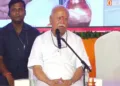
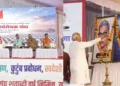
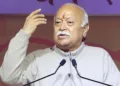
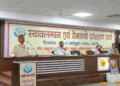
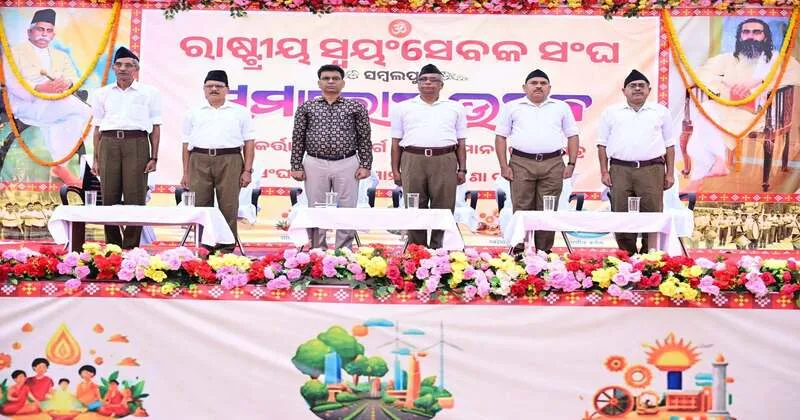
These views were expressed by Dr. Gopal Prasad Mahapatra, Akhil Bharatiya Sadbhavana Pramukh of the RSS, while addressing the Samarop Programme of the Sangh Shiksha Varg and Karyakarta Vikas Varg–I held at the Vedic International School campus in Sambalpur.
Dr. Mahapatra stated that if the principles of national duty are upheld through the awakening of people’s collective strength, far-reaching social transformation can be achieved. Such transformation, he explained, would enable Bharat to realize the ideal of Swatantrata and emerge as a highly prosperous nation capable of guiding the world as a Vishwaguru .
Swatantrata: Beyond political independence
Dr. Mahapatra articulated that Swatantrata signifies more than mere Swadhinata, or political independence; it represents the establishment of one’s own Tantra, or system. He quoted Swami Vivekananda, who stated, “Every nation has a soul. Every nation has its own destiny and character. Every nation has a message for the world.” This prompts crucial questions: What constitutes Bharat ‘s soul, destiny, and national character? What message does Bharat offer humanity?
Swami Vivekananda believed Bharat to be fundamentally a spiritual nation, with spirituality as its life force. He contended that Bharat ‘s existence is inextricably linked to its spirituality; should spirituality vanish, Bharat , in its true essence, would cease to exist. While many civilizations contemporary to Bharat have disappeared, Bharat endures.
Bharatiya civilization’s resilience amidst centuries of invasions
Dr. Mahapatra highlighted that for centuries, hostile forces repeatedly invaded Bharat , attempting to destroy its civilization and culture. Yet, Bharat remains firmly rooted in its original civilizational ethos. He referenced poet Muhammad Iqbal’s famous observation that ancient civilizations like Greece, Egypt, Rome, and Babylon have largely vanished, whereas Bharat has survived and maintained its distinct identity.
He stressed that Bharat ‘s resilience stems from its “Swa”its civilizational self or intrinsic national identity. This essence has allowed Bharat to remain steadfast despite countless challenges and historical upheavals. Therefore, he argued, national systems and institutions should be built upon this foundational “Swa”.
Dr. Mahapatra further explained that while Bharat achieved Swadhinata in 1947, the journey toward Swatantrata continues. He noted that “Swadhinata” and “Swatantrata,” though often used interchangeably, are not identical. “Swadhinata” refers to governance by one’s own people rather than foreign rulers. The transfer of power from British to Bharatiya hands achieved political “Swadhinata,” but the establishment of a fully indigenous and civilizationally rooted system remains an ongoing endeavor.
He said that Bharat is progressively moving toward realizing the broader and deeper concept of Swatantrata—one anchored in its own cultural values, civilizational consciousness, and national identity.
Spirituality is our “swa”
Dr. Mahapatra posed the question: what constitutes Swatantrata? He asserted that spirituality forms the core of Bharat ‘s “Swa” (civilizational self or intrinsic identity). A fundamental understanding of spirituality reveals that the entire universe expresses a single Divine consciousness. Consequently, all human beings are interconnected, bound by a common existence rather than being separate entities.
He highlighted that Bhagwan Krishna conveyed this very message to Arjuna in the Bhagavad Gita. The realization of interconnectedness among all life forms the bedrock of Bharat ‘s spiritual worldview.
Dr. Mahapatra further elaborated that if all individuals are intrinsically connected, then human relationships and social conduct should naturally be guided by mutual affection, empathy, and respect. Individuals should treat others as they themselves wish to be treated.
Explaining this principle, he stated that just as harsh words or disrespectful behavior cause personal pain, one should refrain from speaking or acting in ways that may hurt others. Conversely, the kind of behavior one appreciates and expects from others should be extended to everyone. He said that such an attitude of empathy, dignity, and mutual respect is the practical manifestation of spirituality in daily life.
Need for a system based on ‘Swa’
In his address, he stated that society must adopt a way of life rooted in mutual cooperation and sacrifice. According to him, this collective way of living has evolved from Bharat’s inherent “Swa” (civilizational self). This shared way of life came to be known as Dharma. Over time, Dharma gave rise to a set of enduring values, which together formed what is understood as culture. Gradually, this continuum of Dharma, culture, and tradition evolved into a civilization. This entire way of life, he said, represents Bharat ‘s “Swa”.
He further emphasized the need to develop a system based on this way of life or “Swa.” He stated that the education system should be aligned with this civilizational framework. Similarly, sectors such as agriculture, healthcare, defense, and all other aspects of society should also be structured in accordance with this indigenous way of life rooted in Bharat’s “Swa.”
From antyodaya to sarvodaya
He explained that the concept of Antyodaya emerges from this philosophy, meaning that the upliftment of the person at the lowest rung of society is essential for achieving Sarvodaya (welfare of all). Since that individual is an integral part of society, his or her well-being must be a priority. Therefore, there is a need for a system in which the welfare of all is considered and everyone lives together in harmony.
He further asked what is required to establish such a system. He recalled that when the Sangh was founded, Swayamsevaks in its early phase used to take a pledge stating that they had joined the organization to work for the liberation of Hindu Rashtra. Later, this resolve was broadened to declare a commitment towards the all-round development of Hindu Rashtra, Hindu Dharma, and Hindu society, as well as the creation of a prosperous and glorious Bharat . He said that such a model of social life must be developed.
He stated that after deep reflection, Dr. Hedgewar, the founder of the RSS, concluded that this mission could not be accomplished through any other means. With the objective of protecting Dharma, culture, and contributing to the creation of a glorious Bharat , he established the Rashtriya Swayamsevak Sangh in 1925 on the auspicious occasion of Vijayadashami. Today, the organization has completed 100 years of its journey.
He added that it is rare for any organization to remain continuously committed to its original goals for a century, without deviation in its principles or methodology, while still remaining relevant in the mainstream. The RSS, he said, stands as a notable example of such continuity and dedication.
RSS is not merely an organization, but an ideological movement
He stated that the Rashtriya Swayamsevak Sangh (RSS) is not merely an organization but fundamentally an ideological movement. Bharat , he said, is a Hindu nation, and a united Hindu society can create a powerful and capable Bharat .
He further explained that the work of the RSS began with the objective of transforming this idea into a mass movement, taking it to every individual in society. While it was later given an organizational structure for effective implementation, at its core, it remains an ideological movement.
Seven foundations of the Sangh’s success
He stated that any organization requires seven key elements for success. The foremost among them is its objective. Dr. Hedgewar clearly defined the RSS’s objective as the organization of Hindu society and the creation of a prosperous and glorious Bharat . It is with this goal that RSS volunteers have been working tirelessly.
The second is Siddhant (Principle). The Sangh’s Siddhantis that only when Hindu society is united can Bharat emerge as a strong and prosperous nation. The Sangh’s guiding maxim is: “Organized Hindus, Strong Bharat”.
Next comes the Karyapaddhati (Methodology). A structured and effective system is required to carry out this mission—one that enables people from all sections of society to come together in one place, sit together, and engage in collective reflection. Only then can a sense of mutual affection and fraternity be developed.
Quoting Sister Nivedita, he said that if people gather at a fixed place, at a fixed time, to contemplate a fixed subject every day, that subject gradually becomes a “maha mantra” or powerful guiding principle. He said that the Sangh has developed a distinctive methodology through its Shakha system, through which a grand awakening of national devotion is taking place.
The fourth aspect is Karyakarta . Through this system, Swayamsevaks are developed, and from among them emerge dedicated Karyakartas. He said that the Sangh has two types of Karyakarta —Pracharaks, who dedicate their entire lives to social work, and Grihastha Karyakartas, who serve while living family lives.
The fifth element is leadership. The Sangh has built a strong chain of leadership, which has enabled its continuous expansion in society.
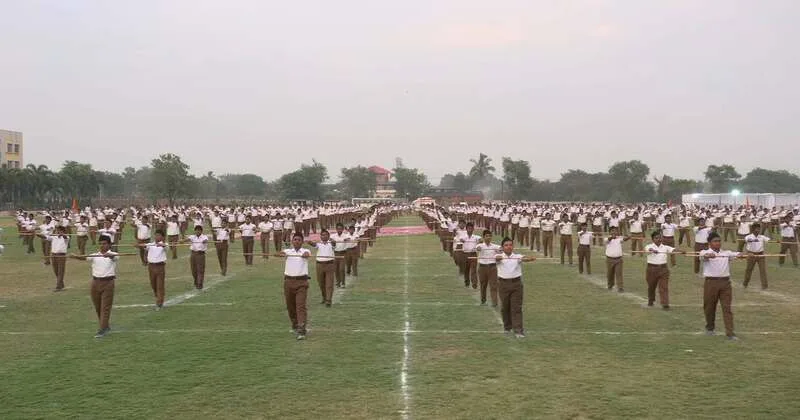
The sixth is adaptation to changing times (Yuganukul Parivartan). Since the organization works for society, necessary changes must be made whenever required. He clarified that while the Sangh has not changed its objectives, Siddhant, or Karyapaddhati, it has adapted the form of its programs over time. Even its uniform has evolved, reflecting its ability to remain relevant with changing times.
The seventh and final aspect is the awakening of people’s power (Lok Shakti Jagaran). He said that if the Sangh had remained limited to itself, its present scale would not have been possible. The organization was founded not merely to expand itself, but to organize society as a whole. Through this, it has worked towards awakening collective social strength. He added that organized consciousness in society naturally leads to the creation of collective power.
Call to make “Panch Parivartan” a way of social life
Dr. Mahapatra stated that RSS volunteers are working to integrate the five themes of Panch Parivartan into everyday social life to achieve meaningful social transformation. These five aspects are Nagarik Kartavya (civic responsibility), Samajik Samarasata (social harmony), Paryavaran Surakshya (environmental protection), Swa Adharit Jeevan (a self-reliant lifestyle), and Kutumb Prabodhan (family awareness).
He further stated that in today’s context, these five elements represent the key dimensions of national duty, and their adoption can bring about positive and constructive change in society.
Need to take discipline and values to every household: Tularam Kalet
Tularam Kalet, Finance Controller of Veer Surendra Sai University of Technology and chief guest of the program, stated that the discipline, organizational culture, and values of the Rashtriya Swayamsevak Sangh (RSS) need to be disseminated to every section of society. He urged volunteers to remain vigilant and actively counter forces promoting caste-based divisions and social discord.
He called upon the youth to come forward and play an active role in nation-building and social development. He further stated that volunteers must contribute with greater responsibility to social and national life, taking a leading role in promoting national interest, social harmony, and character-building initiatives.
#WATCH | Sambalpur: Odisha CM Mohan Charan Majhi, along with Deputy CM Kanak Vardhan Singh Deo, attended the closing ceremony of Karyakarta Vikas Varg-I and Sangh Shiksha Varg organised by the Rashtriya Swayamsevak Sangh (RSS) in Sambalpur.
Odisha BJP State President and Rajya… pic.twitter.com/n8cnOWeQLL
— ANI (@ANI) June 6, 2026
Presence of Chief Minister, Deputy Chief Minister & other dignitaries
The event was attended by several prominent dignitaries, including Odisha Chief Minister Mohan Charan Majhi, Deputy Chief Minister Kanak Vardhan Singh Deo, Deputy Speaker of the Odisha Legislative Assembly Bhawani Shankar Bhoi, Ministers Suresh Pujari and Rabinarayan Naik, BJP State President Manmohan Samal, MLAs Jayanarayan Mishra, Gaurishankar Majhi, Ashwini Sarangi, Nihar Mahananda , Sanat Gartia, Jay Dholakia, and former MLA Naouri Naik, among others.
614 participants trained
The Rashtriya Swayamsevak Sangh (RSS) annually organizes Sangh Shiksha Varg programs during summer vacations. These programs aim to enhance the quality and efficiency of Swayamsevaks, expand organizational work, and develop future karyakartas. This year, two such training camps were held at the Vedik International School in Sambalpur.
A total of 614 participants attended both camps, including 479 trainees from 368 different locations. All participants covered their own travel and other expenses. The training program ran daily from 4:00 a.m. to 10:00 p.m., concluding with the ceremonial lamp immersion (Deep Visarjan).
The curriculum encompassed physical training, including Dand (drill), Dand Yudh, Niyuddh, Yasti, Yogasana, and physical fitness exercises, alongside intellectual discussions and service-oriented activities. Shri Vijayanand Behera inaugurated the Sangh Shiksha Varg, while Shri Anand Agrawal inaugurated the Karyakarta Vikas Varg–I.