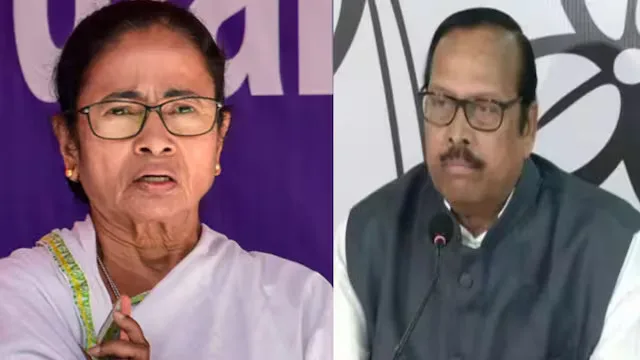
As the political crisis within the Trinamool Congress intensifies, senior party leader and Rajya Sabha MP Sukhendu Sekhar Ray has warned that the rebellion in the West Bengal Assembly may soon extend beyond the state and impact the party’s parliamentary ranks.
Reacting to the unprecedented revolt by a large section of the party’s legislators, Ray said the developments could have far-reaching consequences for the organisation founded by Mamata Banerjee nearly three decades ago.
“The incident where 60 out of 80 members completely walked out of the Assembly and declared a rebellion is unprecedented. This party will not survive,” Ray said while speaking to the media.
Ray further suggested that the rebellion may not remain confined to the Assembly and could soon impact the party’s strength in Parliament.
According to him, the developments unfolding in Kolkata are likely to have repercussions among Trinamool MPs in both Houses of Parliament.
“It is impossible that this will not have an impact on the MPs. Something major is about to unfold in the Lok Sabha very soon. After the Lok Sabha, the Rajya Sabha will likely follow,” he said.
The statement has intensified speculation that the ongoing revolt could expand into a larger organisational crisis involving the party’s national leadership and parliamentary wing.
Sukhendu Sekhar Ray also addressed the possibility of a future battle over the Trinamool Congress name and election symbol if the organisational conflict escalates further.
According to him, any such dispute would be decided under the Election Commission’s established rules and procedures.
“The loss of the party symbol and name is a standard procedure. The Election Commission has specific rules regarding this,” he said.
Ray noted that whichever faction secures the support of a majority of organisational office-bearers could stake claim over the party’s official identity.
“There are past precedents for this. Legal battles will ensue, and the matter will ultimately head to court,” he added.
His comments have fuelled speculation that the rebellion could eventually evolve into a full-fledged organisational split similar to those witnessed in Shiv Sena and the Nationalist Congress Party in Maharashtra.
The latest political confrontation began after around 60 of the party’s 80 MLAs reportedly backed expelled legislator Ritabrata Banerjee as the Leader of the Opposition in the West Bengal Assembly.
The move represented the most significant challenge yet to the existing leadership structure within the Trinamool Congress and highlighted growing dissatisfaction among a section of legislators.
The rebellion has also intensified debate regarding the future role of Mamata Banerjee and the growing influence of her nephew Abhishek Banerjee within the party.
The issue came into focus after reports emerged that Ritabrata Banerjee had proposed a restructured legislature party in which Mamata Banerjee would serve as a “chief adviser.”
The suggestion reportedly triggered discomfort within sections of the rebel camp.
“We were told that the party would continue under Mamata Banerjee’s leadership. She is not merely an adviser. We want the party to function under her leadership,” rebel MLA Gulshan Mullick said.
Mullick also warned that support for the new bloc could depend on Mamata Banerjee’s position within it.
“If Mamata Banerjee is not accepted as the supreme leader, then we will have to think whether we should remain in this bloc or not,” he said.
Another rebel MLA, Sangeeta Roy Basunia, echoed similar sentiments.
According to reports, Mamata Banerjee has begun reaching out to several MLAs and MPs in an effort to reopen communication channels with dissident leaders and prevent further erosion of support.
The developments come at a time when the Trinamool Congress is facing one of the most serious internal crises in its history.
Since breaking away from the Congress and founding the Trinamool Congress in 1998, Mamata Banerjee has remained the party’s undisputed face and principal political force.
The current rebellion, however, has raised unprecedented questions about the future structure of the organisation and the direction it may take in the coming months.
Amid the escalating turmoil, Mamata Banerjee is scheduled to visit New Delhi for a meeting of the INDIA bloc.
While no official reason has been provided beyond the opposition alliance meeting, political observers believe the visit could also provide an opportunity for the Trinamool leadership to assess the fallout of the rebellion and engage with party leaders at the national level.