JAGDAPUR: A special court in Kanker district of Chhattisgarh on Friday sentenced two members of the Maoist Jan Militia, Sanu Komra (23) and Arjun Kumar Sahu (22), to 10 years of rigorous imprisonment each for their involvement in a conspiracy to target security personnel with explosives. The court also imposed a fine of ₹2,000 on each convict.
The verdict was delivered by Special Judge Deepak K. Gupta on October 9. The case relates to the recovery of explosives and other materials allegedly intended to be used in an attack on security personnel in the Koylibeda police station area of Kanker district in October 2023.
Case Registered Under UAPA and Explosives Act
According to police, a case was registered at Koylibeda police station under Crime No. 20/2023. The charges included criminal conspiracy under Section 120-B of the Indian Penal Code, Sections 3 and 5 of the Explosive Substances Act, and Sections 38(2) and 39(2) of the Unlawful Activities (Prevention) Act (UAPA).
Kanker Deputy Superintendent of Police Amar Sidar, who investigated the case, said the court convicted the two accused on the basis of evidence collected during the investigation and arguments presented by the prosecution.
The prosecution maintained that the recovered materials were intended for use in a plot to target security personnel with an explosive attack. After completing the investigation, police submitted the case to the court for trial.
Government advocate Tribhuvan Shankar Yadav, representing the prosecution, stated, “The court sentenced Sanu Komra and Arjun Sahu to 10 years in prison each and fined them ₹2,000 each for planning an attack on a police party”.
Two accused arrested during joint patrol
The incident dates back to October 28, 2023, when a joint team of the Border Security Force (BSF) and local police was conducting a patrol near the Chilparas-Nayapara hill in the Koylibeda police station area. During the patrol, security personnel noticed some suspicious individuals attempting to flee near a forested area. The team cordoned off the area and apprehended two men, subsequently identified as Sanu Komra and Arjun Kumar Sahu.
According to police, both men were residents of Bedapara Alparas village under Koylibeda police station and were associated with the Jan Militia wing of the banned Maoist organisation.
Detonators, wires and other materials seized
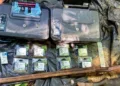
During a search, security personnel allegedly recovered nine detonators, a bundle of wire, one switch, three bundles of plastic rope, two packets of pellets, approximately one kilogram of iron pieces, two pipes and a mobile phone from the accused.
Investigators suspected that the materials were intended to facilitate an explosive attack on security personnel. Police subsequently registered the case, collected evidence and completed the investigation before submitting the matter to the court. Following the trial, the court found the two accused guilty and awarded each of them 10 years of rigorous imprisonment, along with a fine of ₹2,000.
Three verdicts in maoist-related cases
The latest judgment is among the verdicts delivered in Maoist-related criminal cases in Kanker district in recent months. In September 2026, a court in Kanker delivered a verdict in a case involving Maoist leader Prabhakar Rao, a Special Zonal Committee Member (SZCM), and his wife, Raje Kange, who was identified as a Divisional Committee Member (DVM). The case resulted in a seven-year prison sentence, according to the information provided.
Earlier, on September 16, 2026, a special court in Bhanupratappur sentenced Maoist accused Poluram Anchala to 10 years of imprisonment in another case. With the latest verdict against Komra and Sahu, a total of four Maoist-related cases are reported to have received judgments in the district, including the three cases referred to in the earlier account and the present case.
According to the information provided by officials, 36 Maoist-related cases had been pending in the district. Following verdicts in three cases, the number of pending cases was reported to have fallen to 33. The latest judgment adds another case to the list of matters decided by the courts.