NEW DELHI: A key detail buried in the National Investigation Agency’s (NIA) case against American national Matthew Aaron VanDyke and six Ukrainian nationals has brought renewed focus on the accused’s alleged movement from India into Myanmar and his reported presence at Camp Victoria, the military headquarters of the Chin National Army (CNA).
The development assumes significance not because the National Investigation Agency has closed the door on the terror angle it has not but because the agency’s chargesheet, at this stage, has invoked provisions of the Immigration and Foreigners Act rather than the stringent Unlawful Activities (Prevention) Act (UAPA) provisions under which the case was initially registered.
According to sources cited by media, the NIA’s investigation into offences under the UAPA against the accused remains ongoing. The agency has filed the chargesheet under the Immigration and Foreigners Act because those offences have, so far, been established during the investigation, while the NIA could file a supplementary chargesheet if further investigation establishes offences under the anti-terror law.
NIA SAYS VANDYKE WENT TO CAMP VICTORIA. NIA HAS THE EVIDENCE.
BUT WON’T USE IT? THE BIG REVELATION IS IN THE SMALL PRINT?
(see chargesheet below)
This is the contradiction that NIA needs to explain.
Camp Victoria is the military headquarters of the Chin National Army, an armed… pic.twitter.com/R1Ph91f7w0— Rahul Shivshankar (@RShivshankar) September 9, 2026
The Camp Victoria question
At the heart of the case is the alleged journey undertaken by VanDyke and the Ukrainian nationals after entering India. The NIA has said that the accused entered India on valid visas before travelling to Mizoram, a protected area, and subsequently crossed into Myanmar.
The agency has further mentioned that VanDyke travelled to Camp Victoria, a military facility associated with the Chin National Army, for pre-scheduled military training involving drones and other capabilities.
If established through the evidence collected by investigators, the movement assumes considerable security significance.
Camp Victoria is associated with the Chin National Army, an armed ethnic organisation fighting Myanmar’s military junta. The CNA operates in an area close to the porous India-Myanmar frontier, a region that has long posed complex security challenges for Indian agencies because of cross-border movement, ethnic armed groups and the presence of insurgent networks.
The central question, therefore, is not merely whether a foreign national travelled to Myanmar. It is what he was allegedly doing there, whom he was training, what capabilities were involved and whether those activities intersected with networks that have security implications for India.
Why the Myanmar connection matters to India
The India-Myanmar border has historically been one of the country’s most sensitive frontiers.
The difficult terrain and movement across communities on both sides of the border have created challenges for security agencies. Myanmar-based ethnic armed organisations have also had operational intersections with armed groups active in India’s Northeast.
Against this backdrop, allegations that a foreign combat specialist travelled from India into Myanmar and subsequently became associated with ethnic armed groups cannot be viewed in isolation.
The NIA has alleged that VanDyke and the Ukrainian nationals came into contact with ethnic armed groups after crossing into Myanmar. The agency has further alleged that these groups had links with insurgent outfits operating in India’s Northeast.
The investigation has also focused on that the accused transported a substantial consignment of drones from Europe to Myanmar through India.
Taken together, these matters have placed the case at the intersection of foreign nationals, cross-border movement, military training, drone technology and armed groups operating in a conflict zone adjoining India’s Northeast.
VanDyke: A foreign combat specialist in the NIA’s net
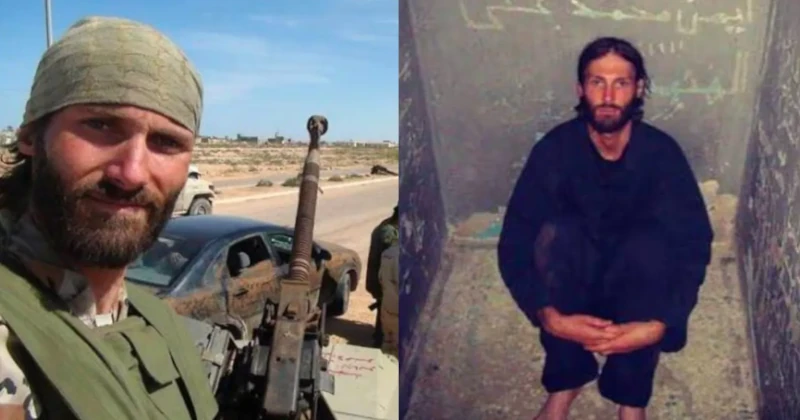
VanDyke, a US national, is the most prominent among the seven accused. He was arrested at Netaji Subhas Chandra Bose International Airport in Kolkata on March 13, while the six Ukrainian nationals Hurba Petro, Slyviak Taras, Ivan Sukmanovskyi, Stefankiv Marian, Honcharuk Maksim and Kaminskyi Viktor were arrested at airports in Delhi and Lucknow as part of a coordinated operation.
VanDyke has described himself as a combat specialist and is the founder of Sons of Liberty International (SOLI), a security organisation that has provided training to groups involved in conflicts against authoritarian regimes.
His reported involvement in conflict zones including Libya and Syria has added to the significance of the NIA’s allegations.
The agency’s case is not simply about a foreigner violating immigration conditions. Its broader investigation has examined whether the accused were involved in supporting ethnic armed groups in Myanmar through the supply of weapons, terrorist hardware and specialised training.
From drones to an alleged attack on a civilian aircraft
The investigation has also taken a potentially more serious turn with the NIA telling a court that the accused were allegedly involved in a drone attack on a civilian aircraft in Myanmar. Reports from Myanmar earlier this year had spoken of a passenger aircraft being struck by a suicide drone while preparing for take-off for Mandalay.
It remains to be established whether the incident referred to by the NIA was the same attack.
That distinction is important, particularly as the investigation is continuing and the agency has not yet concluded its probe into all the alleged offences.
The alleged use of drones in a conflict environment, however, adds another dimension to the investigation. What might ordinarily appear to be a case involving illegal movement of foreign nationals takes on a different security character when the allegations involve military training, drones and armed groups operating across an international border.
Why has the UAPA not appeared in the chargesheet?
The case was initially registered under the UAPA, and the accused were arrested amid allegations that they were involved in supporting armed groups in Myanmar with weapons, terrorist hardware and training. Yet the chargesheet filed so far invokes Sections 21 and 23 of the Immigration and Foreigners Act, dealing with violations concerning the entry, movement and stay of foreigners in India.
The development could prompt questions about whether the agency has moved away from its initial terror-related suspicions. However, information emerging from the investigation suggests a different interpretation.
According to media, the NIA has not dropped the UAPA investigation. The agency’s Special Public Prosecutor has reportedly told the court that the investigation into the matter is still continuing and that a supplementary chargesheet may be filed if an offence under the UAPA is established.