



BENGALURU: The Karnataka government’s five guarantee schemes have come under renewed scrutiny after ministers of the ruling Congress acknowledged that the programmes are placing additional pressure on state finances, even as they maintained the schemes would continue because they were commitments made to the people.
Municipal Administration Minister H.C. Balakrishna was the first to openly flag the financial challenge. Speaking to persons with disabilities who were protesting in Ramanagara over their demands, Balakrishna said managing the government’s finances would have been easier without the guarantee schemes. He said the government had to balance welfare commitments with salaries, development works and assistance to farmers affected by drought.
“If there were no guarantee schemes, the problem would not have been this severe,” Balakrishna said, explaining that the government had to accommodate various demands within the available budget. He also said farmers were seeking drought relief while beneficiaries of the guarantee schemes would oppose any attempt to stop them, leaving the government to manage competing demands.
"ಬೇಕೋ ಬೇಡ್ವೋ ಗ್ಯಾರಂಟಿ ಕೊಟ್ವಿ, ಈಗ ಒದ್ದಾಡ್ತಿದ್ದೀವಿ!"
ಇದು ನಾನು ಹೇಳುತ್ತಿರುವುದಲ್ಲ, ಸ್ವತಃ ಸಚಿವ ಬಾಲಕೃಷ್ಣ ಅವರೇ ಸಾರ್ವಜನಿಕವಾಗಿ ಒಪ್ಪಿಕೊಂಡಿರುವ ಕಾಂಗ್ರೆಸ್ ಸರ್ಕಾರದ 'ದಿವಾಳಿ' ಸತ್ಯ!
❌ರೈತರ ಹೊಟ್ಟೆಗೆ ಹೊಡೆದಿದ್ದೀರಿ: ಬರ ಪರಿಹಾರ ನೀಡಲು ಬಿಡಿಗಾಸೂ ಇಲ್ಲದೆ ಕೈಚೆಲ್ಲಿ ಕುಳಿತಿದ್ದೀರಿ!
❌ಅಭಿವೃದ್ಧಿ ಶೂನ್ಯ:… pic.twitter.com/9JaxjlJmzT— R. Ashoka (@RAshokaBJP) September 27, 2026
Balakrishna, however, clarified that his remarks should not be interpreted as an indication that the government intended to discontinue the schemes. He said the government had given the guarantees as welfare measures and would have to manage the financial implications within the budget.
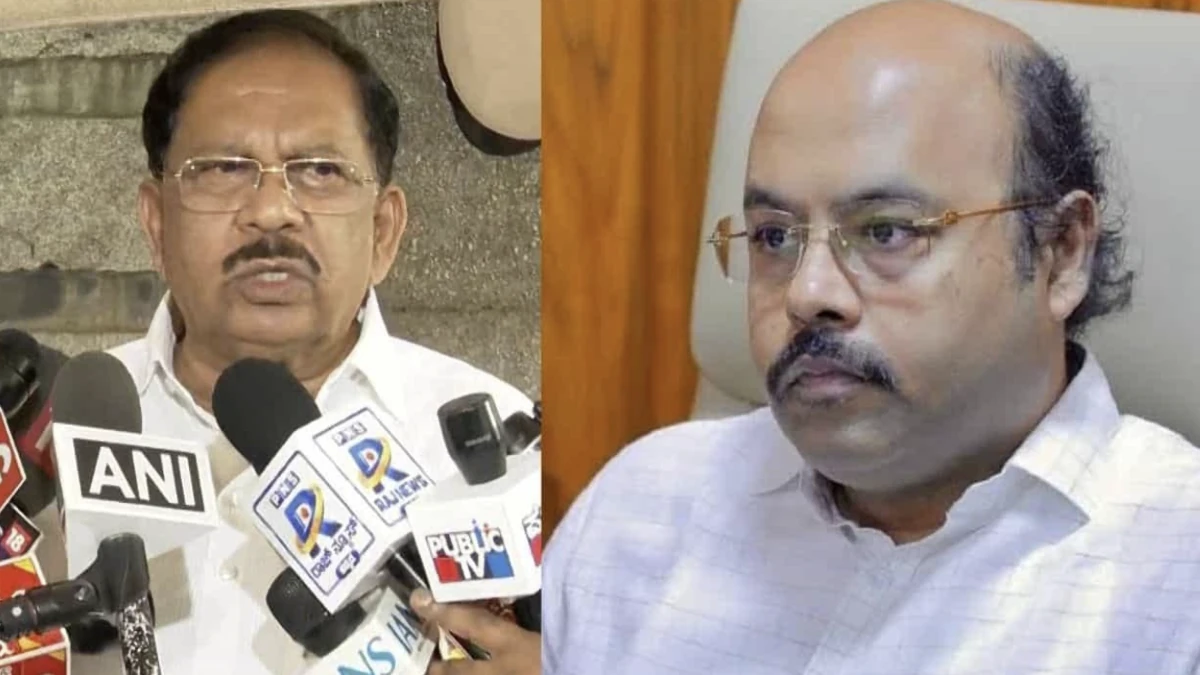
His remarks were followed by similar observations from Deputy Chief Minister G Parameshwara. He said the financial pressure created by the guarantee schemes was a predictable consequence of introducing large welfare programmes. At the same time, he maintained that the government had managed the expenditure so far and would continue implementing the guarantees.
Minister Yathindra Siddaramaiah also acknowledged that the schemes constituted a financial burden. He said the government could not avoid its responsibility merely because the programmes involved expenditure. According to Yathindra, the Congress had made commitments to the people and would continue to fulfil them despite the financial pressure.
The comments have brought renewed attention to the actual size of the guarantee expenditure. According to the Karnataka Budget Analysis 2026-27 by PRS Legislative Research, the state has budgeted Rs 51,286 crore for the five guarantee schemes during the current financial year. This represents about 12 per cent of the state’s expenditure excluding debt repayment. In 2025-26, expenditure on the schemes was estimated at Rs 51,034 crore.
The five programmes are Gruha Jyothi, Gruha Lakshmi, Shakti, Anna Bhagya and Yuva Nidhi. They cover free or subsidised electricity for eligible households, monthly financial assistance to eligible women heads of households, free travel for women and transgender persons on eligible state-run buses, foodgrain support for eligible beneficiaries and financial assistance to eligible unemployed graduates and diploma holders.
The budget figures also show the scale of individual allocations. The budget allocates Rs 28,608 crore to Gruha Lakshmi, Rs 10,578 crore to Gruha Jyothi, Rs 5,300 crore to the Shakti scheme, and Rs 7,700 crore to Anna Bhagya.
The financial debate is significant because the guarantee expenditure forms part of the state’s recurring expenditure. PRS notes that Karnataka’s total revenue expenditure for 2026-27 is projected at Rs 3,38,007 crore, while capital outlay is budgeted at Rs 71,924 crore. The state has projected a revenue deficit of Rs 22,957 crore and a fiscal deficit of Rs 97,448 crore for the year.
PRS also notes that the Comptroller and Auditor General had observed that implementation of the guarantee schemes increased revenue expenditure and the revenue deficit. It further reported that higher allocation towards the schemes in 2023-24 was associated with a reduction of Rs 5,229 crore in infrastructure spending compared with the previous year. The CAG also observed that the schemes were partly financed through borrowings in 2023-24.
The issue has therefore moved beyond a political argument over whether the guarantees should exist and into a wider discussion about how the state can sustain recurring welfare commitments while funding infrastructure, salaries, drought relief and other public services.
The government’s financial position already includes significant committed expenditure. According to the PRS analysis, Karnataka has budgeted Rs 1,85,025 crore for salaries, pensions and interest payments in 2026-27, equivalent to 59 per cent of estimated revenue receipts. Interest payments alone are projected at Rs 53,332 crore.
Opposition leaders have said the comments indicate the Congress government is facing financial constraints because of its guarantee commitments. Leader of Opposition R. Ashoka has alleged that the schemes have left the government with insufficient resources for drought relief and development works. These are political claims by the Opposition and are distinct from the government’s own acknowledgement that the guarantees create financial pressure.