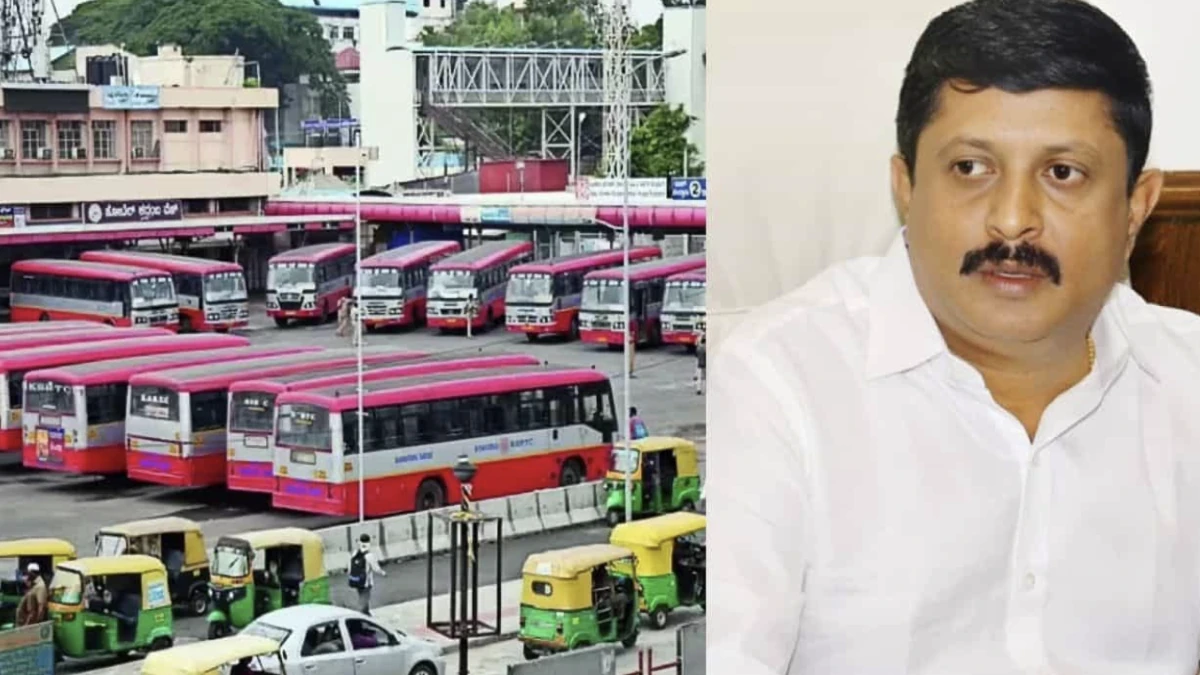
BENGALURU: Karnataka’s four state-run road transport corporations face a severe financial crisis, with combined losses estimated at around Rs 8,000 crore, Transport Minister B. Suresh said in the Legislative Council. The minister said the corporations are struggling to meet their financial obligations, including paying salaries to existing employees.
The four corporations, Karnataka State Road Transport Corporation (KSRTC), Bengaluru Metropolitan Transport Corporation (BMTC), North Western Karnataka Road Transport Corporation (NWKRTC) and Kalyana Karnataka Road Transport Corporation (KKRTC), continue to operate bus services across the state despite mounting financial pressures.
The minister’s statement comes amid concerns over the financial sustainability of the state’s public transport system and the impact of rising operational costs on the transport corporations. According to Suresh, diesel prices have increased four times, but the corporations have not raised passenger fares.
The minister said the decision not to raise fares has contributed to the financial strain on transport corporations. While the corporations have had to absorb higher fuel costs, they have continued to provide services without transferring the additional burden to passengers through a fare revision.
Suresh said the issue of a possible increase in passenger fares would be discussed with Chief Minister D.K. Shivakumar. “If the fares are increased, there is a possibility that the Opposition parties may stage protests. This issue will be discussed with the Chief Minister shortly,” he said, according to the report cited during the Legislative Council proceedings.
The minister’s remarks came in response to issues raised in the Council regarding the functioning and financial difficulties of state-run institutions. Congress member S. Ravi raised concerns during the discussion, following which the minister explained the financial position of the transport corporations.
The financial crisis has also affected recruitment in the four corporations. Opposition Leader Chalavadi Narayanaswamy raised the issue of candidates who had completed the recruitment process for various posts but were still waiting for appointment orders.
Narayanaswamy said several candidates had appeared for examinations and completed interviews for jobs in the transport corporations but had been waiting for appointment orders for nearly three years. He questioned the government over the delay and sought clarity on when the selected candidates would be appointed.
Responding to the issue, Suresh pointed to the financial difficulties the corporations face. He questioned how new employees could be appointed when the organisations were already struggling to pay the salaries of those currently working.
“When there is no money to pay the salaries of employees who are already working in the organisation, how can we recruit new candidates?” Suresh asked.
The minister’s response highlighted how far financial difficulties have affected personnel decisions within the transport corporations. While recruitment processes have been completed for certain positions, the government is yet to issue appointment orders in some cases, citing the financial burden involved.
The four corporations employ a large workforce and operate an extensive bus network connecting Bengaluru with cities, towns and rural areas across Karnataka. Their services are also an important component of public transportation for students, employees, senior citizens and residents of rural areas.
The corporations have traditionally depended heavily on passenger revenue to meet their operational expenditure. Fuel costs, employee salaries, maintenance expenses, fleet replacement, and other administrative costs make up a significant portion of their expenditure. Any increase in diesel prices without a corresponding increase in passenger revenue can therefore widen the gap between expenditure and earnings.
The government’s decision to maintain existing passenger fares has also kept travel costs relatively stable for commuters. However, the minister’s statement indicates that the corporations are absorbing the impact of rising costs, adding to their accumulated losses.
The financial difficulties also come at a time when the state’s public transport system is expected to meet increasing demand for affordable bus services. Maintaining services while controlling expenditure has become a challenge for the four corporations.
The BMTC, which operates primarily within Bengaluru, faces a distinct financial situation because of the nature of urban bus operations. The KSRTC and the two regional corporations cover extensive routes across the state, including long-distance and rural services. Many of these routes are essential for connectivity but may not always generate enough revenue to cover operating costs.
The financial position of the corporations has also raised questions over their ability to expand services, replace ageing buses and undertake fresh recruitment. Delays in recruitment could affect workforce planning, particularly as existing employees retire or vacancies accumulate.
The minister’s remarks suggest the government will have to balance several competing considerations before deciding on transport fares. While a fare increase could provide additional revenue to the corporations, it could also increase the financial burden on daily commuters and trigger opposition from political parties and sections of the public.
At the same time, continuing with existing fares would leave the corporations carrying higher fuel and operating costs without additional fare revenue. The government will therefore have to assess the corporations’ financial requirements and the impact of any proposed fare revision before deciding.
Suresh said the fare issue would be discussed with the Chief Minister, indicating that no final decision has been announced yet. The government is expected to examine the financial condition of all four corporations before deciding on the next course of action.