LUCKNOW: With Bharat Taxi’s zero-commission model and a farm loan scheme that has halved the interest rates, the Yogi Adityanath Government has turned the cooperative idea into a working economic tool for those who were long left out of the growth story.
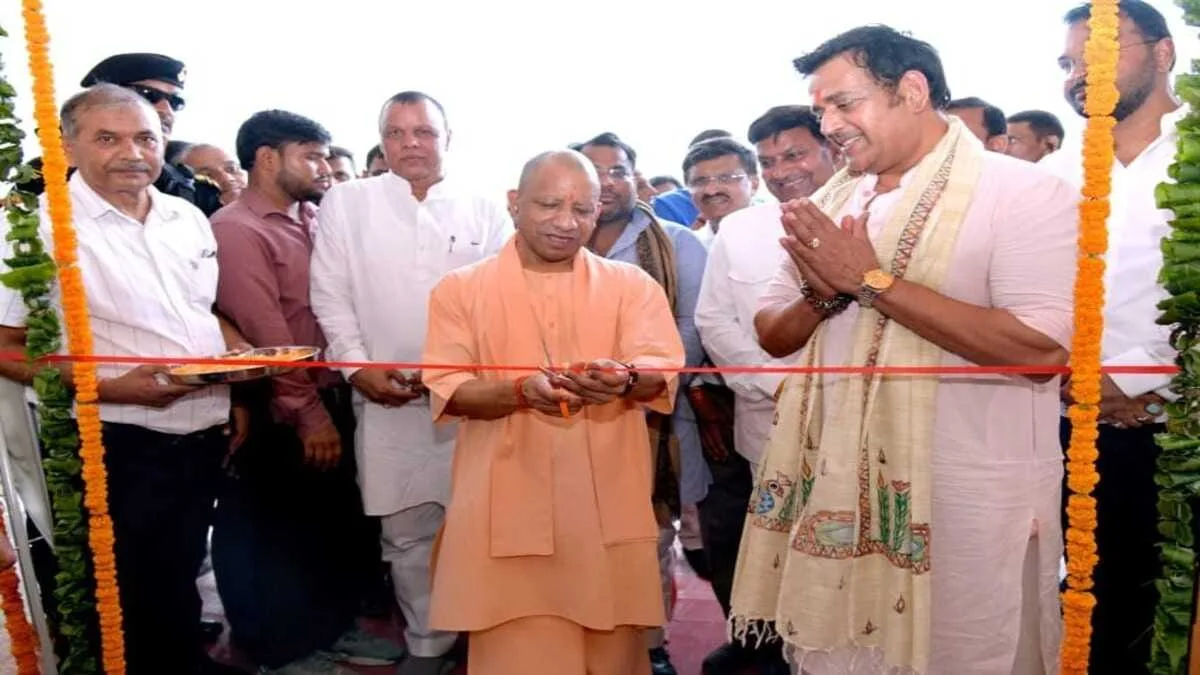
On September 23, Lucknow saw a launch aimed squarely at two of India’s most overlooked working communities that are the man behind the steering wheel and the farmer behind the plough. Chief Minister Yogi Adityanath rolled out Bharat Taxi, a cooperative ride-hailing platform, alongside the Mukhyamantri Krishak Samriddhi Yojana, a subsidised credit scheme for small and marginal cultivators.
Union Minister of State for Cooperation and Civil Aviation Murlidhar Mohol attended the event, lending the Centre’s weight to a programme built on the principle of Sahkar se Samriddhi, or prosperity through cooperation.
An e-portal for the Krishak Samriddhi Yojana, the Urvarak Setu mobile app and a mobile application for the Uttar Pradesh Cooperative Database Centre (UPCDC) went live. Bharat Taxi exchanged MoUs with Lucknow Airport, Lucknow Metro and Lucknow Police, while five of its Saarthis, as the drivers are called, received share certificates.
Loan cheques were handed to beneficiaries of the farmer scheme, and the Cooperation Department presented the Chief Minister with the dividend cheque of the Uttar Pradesh State Warehousing Corporation.
Drivers will be Sole Owners, not mere Earners
App-based mobility in India has long followed a familiar pattern: private aggregators set fares, keep a sizeable share of every ride and leave drivers with little security. Bharat Taxi flips that arrangement.
Drivers of cars, three-wheelers and two-wheelers can register on the platform with zero commission, keeping the full value of their fare. Each registered driver also receives social security cover of Rs 5 lakh.
No one had thought about taxi, two-wheeler and three-wheeler drivers earlier, the Chief Minister said, pointing out that registration would now bring them both a commission-free livelihood and a safety net. He added that a driver whose vehicle carries the words Bharat Taxi would feel a sense of pride.
That pride rests on ownership. The share certificates make drivers stakeholders in the enterprise they serve, which is the essence of the cooperative model. Services have begun in Lucknow, Gorakhpur, Varanasi and Prayagraj, as well as the institutional tie-ups promise assured demand from day one.
Cheaper Credit for the Annadata
The second pillar of the event addresses a burden every small farmer knows well: expensive borrowing. Under the Mukhyamantri Krishak Samriddhi Yojana, the interest rate on long-term loans through the Uttar Pradesh Cooperative Gramya Vikas Bank drops from 11 per cent to 6 per cent. The loans are meant for agriculture and farm machinery, the investments that decide whether a smallholding stagnates or grows.
The scheme aims to reach 5 lakh small and marginal farmers in the coming years. For a cultivator weighing a tractor or pump set, that cut can decide whether the purchase happens at all.
“If the annadata kisan is prosperous, India will be prosperous,” Yogi Adityanath said, tying rural credit directly to the national growth agenda. The stronger the cooperative sector becomes, the stronger the country will become.
Technology in the Service of Cooperation
The digital tools launched at the event are meant to cut the distance between the farmer and the system. The Krishak Samriddhi e-portal brings loan applications online. Urvarak Setu is designed to ease access to fertiliser, an input whose timely availability often makes or breaks a sowing season.
The UPCDC app gives the state a unified record of its cooperative institutions, aiding transparency and planning. The Chief Minister placed the launch within a longer arc of work. Since 2017, the state has waived loans worth Rs 36,000 crore for 86 lakh farmers.
Some 122 sugar mills are operational, and cane growers have received about Rs 3.30 lakh crore in payments over nine years. Of the 16 cooperative banks that had fallen into dormancy, 15 have been revived and returned to profit.
Cooperative movements rise or fall on trust, and a banking network revived from dormancy gives members reason to believe the new schemes will deliver.
Nari Shakti and the Larger Vision
The Government has also framed the programme within its commitment to women. Under Prime Minister Narendra Modi’s guidance, the double-engine government says it is working to give women dignity, security and self-reliance, so that they become active partners in the resolve of a Viksit Bharat. Cooperatives, with low entry barriers and shared ownership, offer a natural route.
India’s cooperative tradition draws on the village instinct of pooling resources for the common good; Uttar Pradesh is giving that instinct a modern form. Bharat Taxi puts drivers on the ownership side of the gig economy. The Krishak Samriddhi Yojana gives farmers credit they can afford.
If the model holds, it will offer a program rooted in Antyodaya, where development reaches the last person in the queue first. For the taxi driver in Varanasi and the smallholder in Bundelkhand alike, the message from Lucknow is clear: cooperation is no longer only a slogan but a road to self-reliance.