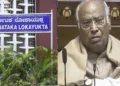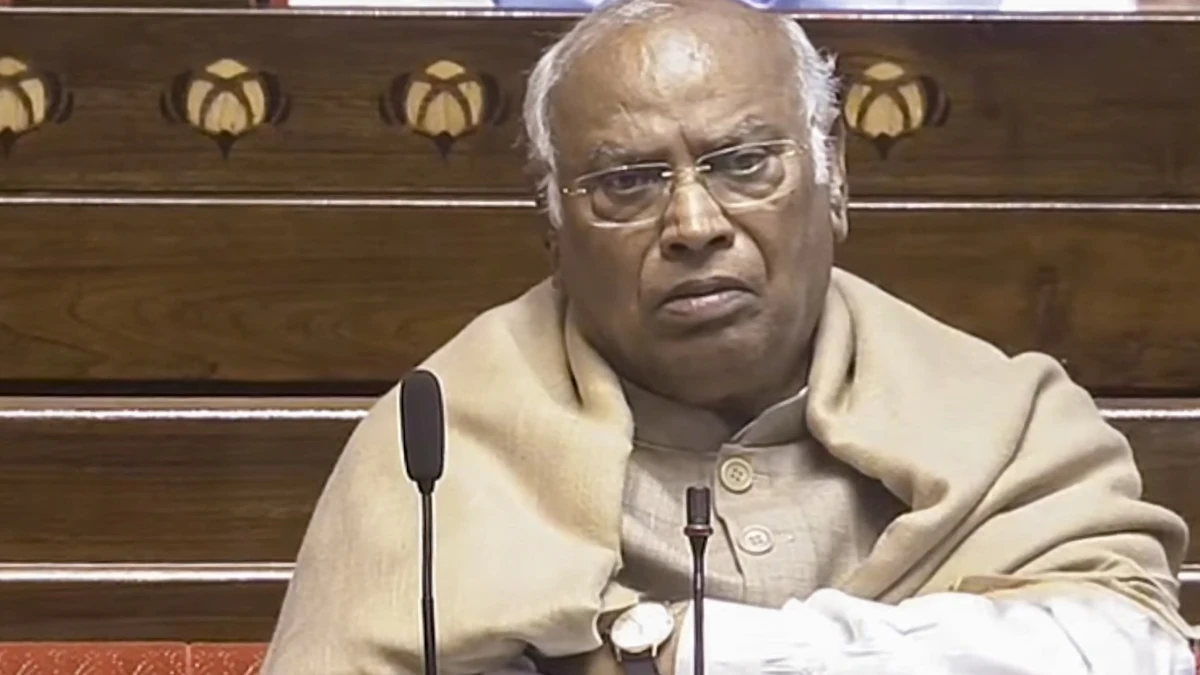
BENGALURU: The legal proceedings concerning the Siddhartha Vihar Trust, whose trustees include AICC president and Rajya Sabha Opposition Leader Mallikarjun Kharge, Karnataka Home Minister Priyank Kharge and members of their family, have moved forward after complainant Vijay Raghav Marathe of the Lanchamukta Karnataka Vedike corrected a defect in the affidavit filed along with his private complaint.
Marathe has submitted a fresh affidavit before the Additional City Civil and Sessions Court for Elected Representatives, stating that the procedural defect pointed out earlier has been rectified. The court noted the correction and said it did not impede the proceedings.
The court has also issued notice to the Bengaluru Superintendent of Police and the Karnataka Lokayukta. The Lokayukta police have been directed to submit their response or views under Section 175(3) of the Bharatiya Nagarik Suraksha Sanhita (BNSS) by October 6, 2026.
The development follows an earlier intervention by the Karnataka High Court in a criminal petition filed by Marathe. In September, Justice M. Nagaprasanna partially allowed the petition and set aside the special court’s earlier direction to proceed directly under Section 223 of the BNSS. The High Court directed the matter to be reconsidered under the procedure contemplated under Section 175 of the BNSS after allowing the complainant to cure the defect in the affidavit.
The private complaint relates to alleged irregularities concerning land allotments and concessions involving the Siddhartha Vihar Trust. The allegations include questions over land allotted by government agencies and a concession claimed by the trust. The complaint also raises objections regarding the trust’s eligibility and experience in relation to an allotment at the Devanahalli Aerospace Park.
Marathe made the allegations, but no court has established them. In its earlier proceedings, the High Court did not record a finding that the land allotments or concessions were illegal or that the persons named in the complaint had committed any offence. The present proceedings concern the procedure to be followed in dealing with the complaint and the request for investigation.
The affidavit issue arose after the special court, in an August 11 order, pointed out deficiencies in the verification and certification of the document submitted by the complainant. The court had considered proceedings under Section 223 of the BNSS rather than directing an investigation through the Lokayukta police.
Marathe subsequently approached the High Court through Criminal Petition No. 12406/2026, challenging that course of action. His petition argued that a technical defect in the affidavit should not prevent the competent agency from investigating the complaint.
While examining the matter, the High Court observed that the defect was curable and that the complainant should be allowed to correct it. The court also distinguished between a judicial inquiry into a private complaint and a police investigation, particularly where evidence collection may be required.
The High Court observed that requiring a complainant to establish the entire chain of events through his own evidence could amount to placing on the complainant a burden to prove matters that may only emerge through an investigation. It held that where investigation is necessary to discover evidence, an inquiry by the court should not automatically become a substitute for such investigation.
Following the High Court’s directions, Marathe filed the corrected affidavit on September 10. He also placed before the special court a copy of the High Court’s September 18 order in the connected criminal proceedings.
The special court’s latest order records that the defect identified in the affidavit has now been cured. It has therefore sought the response of the Lokayukta police under the relevant provisions of the BNSS.
The case has attracted attention because of the involvement of senior political figures and allegations concerning public land and concessions. However, the matter remains at the procedural stage. The court has not adjudicated the substantive allegations against the trust or its trustees.
The High Court had earlier made it clear that the complaint could proceed after the procedural defect was rectified. Reports on the September High Court proceedings said the court had paved the way for the special court to reconsider whether the matter should be referred for a Lokayukta investigation.