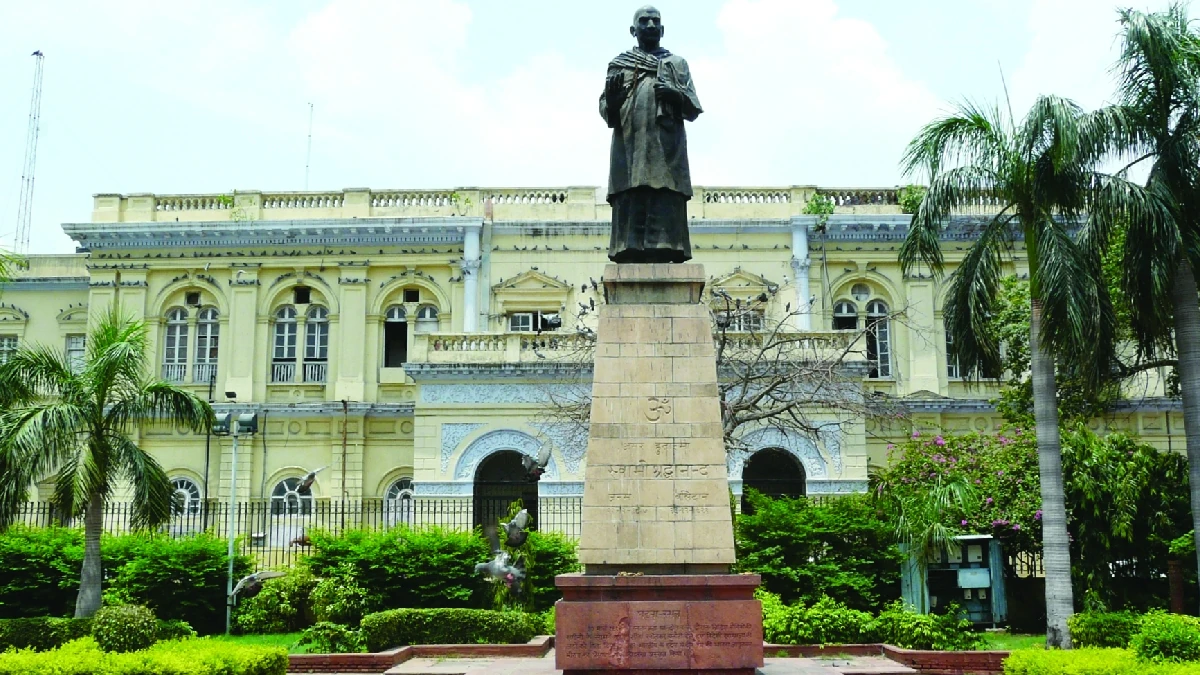
NEW DELHI: A landmark of Old Delhi’s architectural and civic history is set for a major transformation. The historic Town Hall complex in Chandni Chowk will be redeveloped as a Global Heritage Centre, bringing a museum, cultural activities and tourism facilities under one historic roof.
The Delhi government and the Municipal Corporation of Delhi (MCD) have signed a Memorandum of Understanding (MoU) to conserve and redevelop the Grade-I heritage property, marking a major step towards giving the long-unused complex a new purpose.
The MoU was signed between the Delhi Tourism and Transportation Development Corporation (DTTDC) and the MCD in the presence of Chief Minister Rekha Gupta at the Delhi Secretariat on September 20.
A 160-year-old landmark gets a new chapter
Built between 1860 and 1866, the Town Hall complex has been an important part of Delhi’s civic history. The MCD headquarters operated from the premises for decades before the civic body moved to the Dr SP Mukherjee Civic Centre on Minto Road in 2010.
The project will cover the Town Hall, Press Building and adjoining park, spread across approximately 12,180 square metres in the historic Chandni Chowk and Shahjahanabad areas.
Rather than replacing the historic character of the property, the redevelopment is planned around conservation and adaptive reuse, allowing the buildings to serve modern tourism and cultural purposes while retaining their architectural identity.
A museum at the heart of the project
The proposed Global Heritage Centre is expected to feature a museum along with facilities for cultural and tourism activities. Located close to Chandni Chowk and Old Delhi Railway Station, the complex could become a major stop for visitors looking to explore Delhi’s history, architecture and cultural heritage in one location.
Historical records, artefacts and archival material associated with the Town Hall will continue to remain with the MCD.
Survey first, redevelopment next
The tourism department has been tasked with conducting surveys, assessing the structural condition of the buildings and preparing a Detailed Project Report (DPR) before redevelopment begins.
A Joint Working Group comprising officials from the DTTDC and MCD will monitor the project.
The initial MoU will remain valid for 30 years, with provision for an additional 30-year extension through mutual consent. The project could subsequently be implemented through public investment or a public-private partnership model.
Connecting old Delhi with a new generation
Chief Minister Rekha Gupta described the Town Hall as an important part of Delhi’s history and heritage, saying the government is committed to protecting its historical and architectural identity.
The redevelopment is also intended to make Old Delhi’s heritage more accessible to younger generations while creating a stronger attraction for domestic and international tourists.
Tourism Minister Kapil Mishra said the government wants historical monuments to become more attractive and useful to visitors while preserving their heritage value.