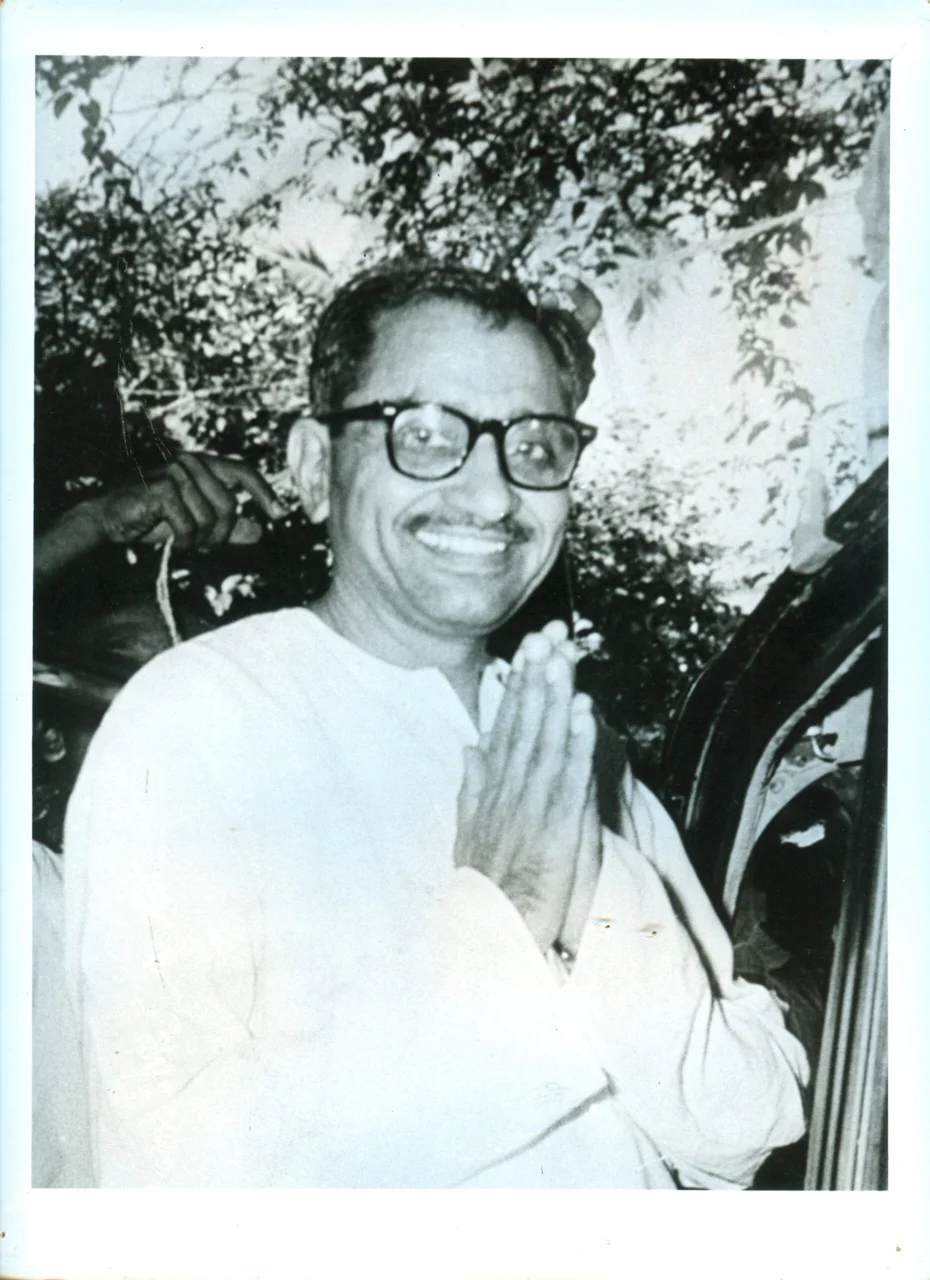
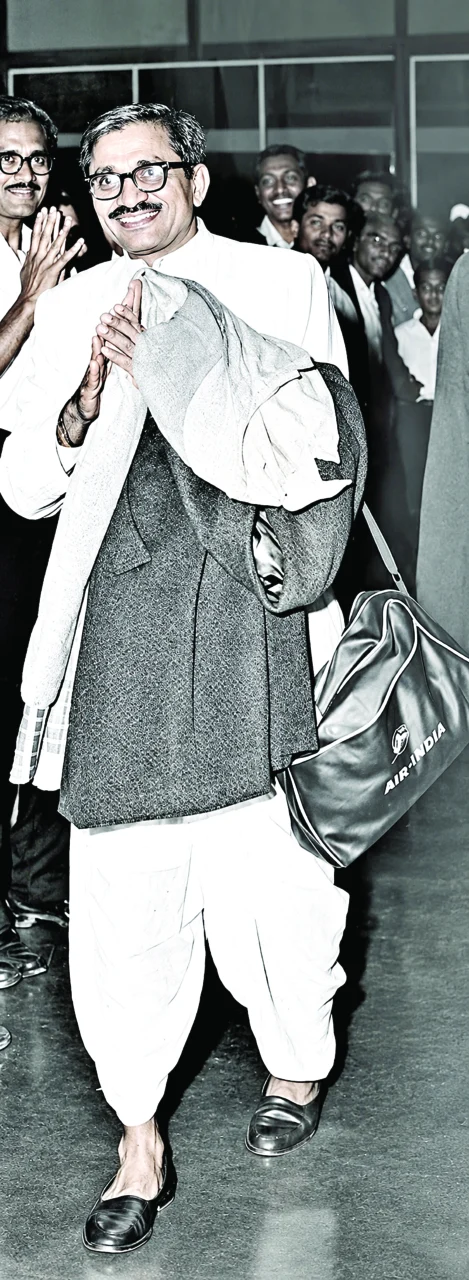
The lectures delivered by Pandit Deendayal Upadhyaya in 1965 represented a retrieval of the continuity of Bharatiya philosophy rather than an imitation of Western thought. During these historic lectures, Panditji articulated a distinctive Bharatiya value framework Ekatma Manav Darshan, or Integral Humanism, which is neither merely a political ideology nor a model of sociological order for society. Human beings constitute an indivisible unity, Ekatma, comprising the visible dimensions of Sharira (body), Manas (mind), Buddhi (intellect). Human existence, therefore, cannot be reduced to any single material or economic dimension.
After six decades, Ekatma Manav Darshan continues to possess profound relevance. It perceives the cosmic totality of existence as Virat and society as an organic unity. Chiti, the collective consciousness of a people, manifests itself through ethics, culture and collective life, thereby contributing to the shaping of the Rashtra.
Rashtra is not merely a State or a nation-state. It is the living embodiment of Samskara, Sanskriti and Parampara. In contrast, Western thought has predominantly approached society through contractual relationships and the institutional mechanism of the State. Ekatma Manav Darshan, therefore, offers a vision of Dharma for restoring social harmony (Samarasata). Dharma is not merely ritualism or religious practice; it represents ethical principles and the assertion of rights through the consciousness of Kartavya (duties).
Relationships are guided and governed by principles such as Yama (universal morality), Niyama (personal discipline), Pratyahara (withdrawal of the senses), Asteya (non-stealing), Satya (truth), Ahimsa (non-violence), Seva (service) and Dama (self-restraint).
Dharma As Social Conduct
These principles were expressed in a simple and socially accessible form by the 12th century reformer and leader of the Bhakti movement, Sri Basaveshwara, regarded as the founder of the first Parliament, through his celebrated Vachanas: “Kala beda” : do not touch another’s property; “Kola beda” : do not inflict physical or mental torture; “Muniya beda” : do not be angry; “Husiya nudiyalu beda” : do not speak untruth; “Anyarige asahya pada beda” : do not treat human beings with hurtful words; “Tanna bannisa beda” : do not praise yourself; “Idiru aliyalu beda” : do not speak ill of others.
In another Vachana, Sri Basaveshwara declares: “Do not say, ‘Who is he? Who is he? Who is he?’ Say, ‘He is ours! He is ours! He is ours!’ Say that Kudalasangamadeva, in human form, is ours, son.” Dharma represents an inclusive way of thinking concerning the good practices of everyday life, enriched by humaneness and natural friendliness. Religion, by contrast, is primarily concerned with faith, Panth, and allegiance to a particular book or representative of God.
Beyond Materialism
The developmental models of capitalism, socialism and communism primarily concentrate on production and consumption, often treating planet Earth as a resource for human consumption. Such approaches can reduce the human being to an economic animal. Deendayalji’s Ekatma Manav Darshan provides a comprehensive framework through the Purusharthas : Dharma, Artha, Kama and Moksha, which constitute essential dimensions of human aspiration.
Dharma gives ethical direction to the earning and enjoyment of wealth. It regulates material pursuits while maintaining social harmony and ecological justice. Swami Vivekananda expressed it, “To be good and to do good, that is the whole of Dharma.” Thus, the Bharatiya approach, with reverence, recognises the services of each and every living or non-living by according them the status of God. Every Bharatiya feels that Bhoomi is not an asset, it is the mother of all creations either living or non-living. Similarly, Ganga is Mata, Vriksha (tree) Mata, and cow is Gau Mata.
Within the ethical horizon of Dharma, human beings may create and consume Artha (wealth and material prosperity) but such pursuits must be monitored and regulated by moral principles. Human beings are not the sole owners of the Earth; they are trustees of Prakriti. Prosperity is therefore to be achieved through reverence, respect and love, with the responsibility to preserve wealth, add value to it and hand it over responsibly to the next generation.
Bharatiya lifestyle is autonomous, ecologically friendly, highly relevant to contemporary global sustainability challenges, and founded upon ethical and trust-based relationships. Kama, the pursuit of desires, is acceptable when pursued within the framework of Dharma. Moksha represents the highest aspiration of human potential: the liberation of consciousness. Thus, the Purusharthas constitute a harmonious combination of Laukika (worldly and ethical aspirations) with Paramarthika (the fulfilment of the highest truth). They offer an integrated psychological, ethical and civilisational philosophy with a higher dimension.
In the contemporary democratic world, the ideal of Surajya, moral and good governance, appears to be gradually declining. Ekatma Manav Darshan proposes Swarajya (self-rule with righteous thought), Swalamban (self-reliance), Swadeshi (local for vocal), Vikendrikaran (decentralisation) and Samajik Samarasata (social harmony).
Earlier, the principle was expressed as “Yatha Raja Tatha Praja,” as is the ruler, so are the people. In the democracy, it becomes “Yatha Praja Tatha Raja,” as are the people, so are their ministers. Likewise, “Samaaj Aage, Satta Pichhe,” signifies that society is sovereign over the State. The State must administer according to rules that respond to the people’s aspirations and respect their rights. In turn, society must remain duty-conscious and law-abiding. A leader is one who remains a step ahead of his fellow human beings, not merely a politician who wears a Khadi kurta and topi. Leadership requires statesmanship rather than the pursuit of short-term political gains. Good governance should provide basic amenities, law and order, a peaceful environment, support for cultural and ethical aspirations, social harmony, freedom of speech and assembly, freedom of religious activities, and speedy administration of justice. Good governance is thus a combination of political imagination and the ability to restrain both authoritarian State-centrism and vacuous liberal proceduralism.
Technology Under Human Values
In the twenty-first century, the world is moving rapidly towards modern technology, including Artificial Intelligence. This presents a challenge not only for students of technology but also for those concerned with its ethical orientation. Modern science and technology must not leave behind morality, spirituality, human values and feelings. Further, Microbiology, Artificial Intelligence, biotechnology and digital dominance raise profound questions concerning individual identity, freedom and dignity of labour.
Ekatma Manav Darshan offers a clear principle: “Buddhi must govern Yantra”. But not the vice versa. Technology must be adopted and governed by ethical and moral values. Loka Sangraha provides a proper orientation for technological ethics, creating a civilisational thought process rooted in Drishti — an ethical and moral vision — to create a Srishti of happy life.
Education For Wholeness
The purpose of education is to provide a holistic approach to life and enable the attainment of happiness. Bharatiya educational philosophy is not merely the learning of alphabets, words and sentences. Education is that which makes a person self-reliant, self-respecting (Swabhimani) and ultimately a Sampoorna Purusha — a holistic human being. As Swami Vivekananda stated: “Education is the manifestation of the perfection already in man.”
Bharatiya lifestyle unfolds Samagra Vikas through Shravana (attentive hearing and learning), Manana (effective understanding) and Nididhyasana (practical and experiential assimilation). Further, the five dimensions of human existence are expressed through Annamaya Kosha (physical embodiment), Pranamaya Kosha (vital energy), Manomaya Kosha (mental and emotional dimension), Vijnanamaya Kosha (discriminative intelligence) and Anandamaya Kosha (consciousness).
Education is therefore a transformative journey integrating Jnana (pure knowledge), Vijnana (applied knowledge) and Samskara (value formation).
From Wisdom to Harmony
To achieve Samagra Vikas and sustainable development, one must think globally and act locally. Materialistic equality, centralisation and instrumental rationality in Western thought have often overlooked adhyatmik dimensions and civilisational diversity. Bharatiya thought, however, has articulated for thousands of years the universal aspiration: “Loka Samasta Sukhino Bhavantu” (May all the people of the world be happy).
Ekatma Manav Darshan is rooted in plurality: “Ekam Sat Vipra Bahudha Vadanti,” Truth is One, though the wise speak of it in many ways, together with Vasudhaiva Kutumbakam, the world as one family, sanskritik diversity, ethical and moral foundations, and social harmony.
Ultimately, Ekatma Manav Darshan invites humanity to recognise the integrated personality of the human being, Vishwaroopa. Just as the different parts of the human body must remain united and integrated for the healthy functioning of the whole body, the diverse constituents of human society and civilisation must work in harmony.
Thus, Ekatma Manav Darshan is the thought process essential for shaping the future of the world towards peace, harmony, sustainability and human fulfilment. Let us work together in the light of Ekatma Manav Darshan and
Bharat shall become a natural leader for the world’s distressed societies and states.