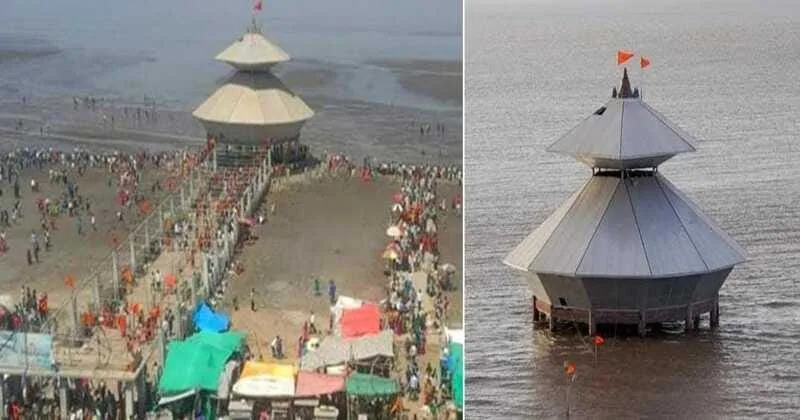
AHMEDABAD: Imagine standing before a Shiva mandir, watching the waves slowly move towards it. The water rises higher and higher until the mandir and its sacred Shivling disappear beneath the sea. Hours later, as the tide retreats, the shrine emerges once again. This extraordinary sight unfolds regularly at Shree Stambheshwar Mahadev Mandir in Kavi Kamboi, Gujarat, earning the sacred shrine the fascinating title of the “Disappearing Mandir.” But behind this remarkable natural phenomenon lies a deeper story of faith, devotion and ancient Hindu belief.
A mandir where the sea performs abhishek
Stambheshwar Mahadev is located near the Gulf of Khambhat, at a place where the movement of the tides has become inseparably linked with the mandir’s spiritual identity. Twice a day, as the tide rises, seawater reaches the mandir and gradually covers the Shivling. When the tide turns and the waters recede, the shrine becomes visible once again.
For devotees, this is far more than a natural spectacle. The seawater touching the Shivling is revered as a form of jal abhishek, as though the ocean itself comes to worship Bhagwan Shiva. The sight is particularly powerful because there is no human hand directing this sacred ritual. The waves arrive according to nature’s own rhythm, perform their offering and retreat.
The mandir is deeply associated with an ancient Hindu belief involving Bhagwan Kartikeya, the son of Bhagwan Shiva and Mata Parvati. According to the traditional belief, the powerful demon Tarakasura was a great devotee of Bhagwan Shiva. He was ultimately defeated by Kartikeya. However, after learning of Tarakasura’s devotion to his father, Kartikeya is said to have felt remorse for killing a devotee of Bhagwan Shiva. Seeking atonement, Kartikeya worshipped Bhagwan Shiva and established Shivlings as an act of repentance and devotion. The sacred tradition of Stambheshwar Mahadev connects the shrine with this ancient belief, giving the mandir significance beyond its unusual location on the coast.
The mandir stands at Kavi Kamboi in Bharuch district, close to the meeting point associated with the Mahisagar and the Gulf of Khambhat. Here, the landscape itself adds to the spiritual atmosphere. There are no walls completely separating the shrine from the sea. Instead, the waters become part of the mandir’s daily rhythm. The changing landscape means that the experience of visiting Stambheshwar Mahadev can be dramatically different depending on the time of day.
Why does the mandir disappear?
The mystery becomes easier to understand through the science of tides. The Gulf of Khambhat experiences significant tidal variations. During high tide, seawater advances towards the mandir and submerges the shrine. As the tide falls, the water withdraws, leaving the mandir accessible once again. The phenomenon is therefore a natural tidal cycle rather than the mandir literally vanishing. Yet science does not diminish the spiritual experience. For devotees, the regular arrival of the sea has become a beautiful expression of Bhagwan Shiva’s connection with nature. The ocean becomes an offering, and the rising and falling waters become part of the mandir’s sacred landscape.
A pilgrimage shaped by the tide
Unlike most mandirs where visitors can plan their darshan around fixed opening hours, Stambheshwar Mahadev requires devotees to pay attention to the tide timings. Those wishing to reach the shrine generally visit during low tide, when the waters have receded and the mandir becomes accessible. As high tide approaches, visitors can witness the transformation of the surroundings as seawater gradually moves towards the shrine. This makes a pilgrimage here unlike an ordinary mandir visit. The sea itself determines when the sacred Shivling can be approached.
The mandir attracts devotees throughout the year, with occasions such as Mahashivratri and Shravan holding particular religious importance. For Shiva devotees, the shrine offers a unique combination of sacred tradition and natural wonder. The experience is not limited to entering a mandir, offering prayers and leaving. It involves witnessing a recurring phenomenon that has become an inseparable part of the shrine’s identity. The sight of the waves reaching the Shivling has also made Stambheshwar Mahadev increasingly popular among visitors interested in India’s unique sacred places and Hindu traditions.
In a world where almost everything follows a clock, Stambheshwar Mahadev follows the tide. The sea arrives when it must. The mandir disappears when the waters rise. And when the tide retreats, the sacred shrine quietly returns. For devotees, it is a moment of faith. For others, it is a lesson in nature. And for anyone who stands on the shore watching the waves slowly cover the sacred shrine, it is an unforgettable sight.