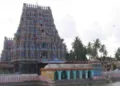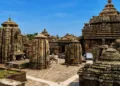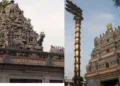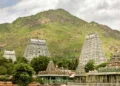
The Tamil Nadu Government’s move to categorise 79% of temples examined under the Hindu Religious and Charitable Endowments (HR&CE) Department’s Agama temple survey as ‘non-Agamic temples’ has drawn criticism from temple activists, devotees and experts.
Temple activist TR Ramesh criticised the Tamil Nadu Government’s move to classify temples under its “Agama temple survey”, saying that the attempt to classify Agama temples as non-Agama temples amounted to an attempt to “hijack” them. He said the “DMK subterfuges and deceit in Hindu temples continue under TVK Vijay HQ”.
Ramesh further said that, by virtue of law and a judgement of a Constitution Bench of the Supreme Court of India, “the Government and TN HR and CE Dept. have absolutely ZERO role or powers in religious matters.”
The Tamil Nadu Government’s move to categorise temples under its “Agama temple survey” has come under criticism from devotees and temple activists. They allege that several ancient temples have been wrongly classified as non-Agamic temples, meaning they do not follow Agama traditions.
The Madras High Court and the Supreme Court of India have issued landmark rulings concerning the classification of temples in Tamil Nadu into Agamic and non-Agamic categories.
The core objective of this classification is to ascertain whether government-legislated service rules or traditional religious scriptures govern the appointment of temple priests.
The HR&CE Department has published details of nearly 34,971 temples examined by an expert Agama Committee to classify them into Agama and non-Agama categories.
Following the directives, a five-member committee was formed on 6 October 2025. Its goal is to identify and list temples under HR&CE control that were built according to traditional Agama rules and non-Agamic temples.
This classification allows the Government to go ahead with filling archaka vacancies in non-Agamic temples, as directed by the Supreme Court.
The HR&CE Department invited devotees and the public to review the list and submit feedback, omissions or corrections. The deadline to submit comments has been extended to October 10, 2026.
A report in a Tamil daily said, “TN government has been trying to destroy the identity of ancient and several thousand years old temples by taking a survey to classify Agama and non-Agama temples.”
The HR&CE Department, in a classification list released, said, “34,971 temples were examined, of which 7,461 were classified as following Agama traditions, while 27,510 were classified as not following Agama traditions.”
The latter figure accounts for around 79% of the temples examined. The department has invited members of the public to submit corrections or objections to the published details.
Director of Alayam Kappom (Protect Temple movement) Vijay Narayanan said the Agama-related decisions should be taken by temple trustees, as trustees are still to be appointed in several temples across the State.
The temples, he said, are being managed by Executive Officers (EOs) or Fit Persons, or EOs additionally holding Fit Person posts, who signed the Agama survey forms themselves.
Sevak Sathya, an SM influencer, in a post on X attaching a letter from temple archakas, said, “In some temples the Gurukkal has said they are performing pooja as per Agama. But the HRCE has classified it as non-Agamic. It shows their intentions to erase our historical traces. Attaching some images that are being uploaded in HRCE site. Also getting information that they were threatened by the official & forced to give a standard statement ‘கிராம வழக்கப்படி, or பழக்க வழக்கபடி.’ Court directed the dept to find which are the temples that have been constructed in Agamic way.
But dept collecting the data of the temple based on the puja. The list was taken by earlier DMK govt. But the minister Ramesh who states that they will safeguard temples but doing all required corrections. Must first act on his department staff. Or else everyone can understand the real motive of this TVK govt. Also, the govt has taken three years to set up an Agama finding committee but wants devotees to just submit their objection in a month,” he added.
In some temples the Gurukkal has said they are performing pooja as per agama. But the Hrce has classified it as Non Agamic. It show their intentions to erase our historical traces.
Attaching some images that are being uploaded in hrce site.
Also getting information that they… pic.twitter.com/f8VWbURBY3— Sevak Sathya – மோடியின் குடும்பம் (@Sevakofmata) October 3, 2026
YouTuber Karthik Gopinath said, “There are multiple discrepancies found in this report of the HRCE… activists have raised their voices against this. Somehow majority of the mainstream media is muted in this issue … D stocks wanted to attribute Agamas to Brahminical hold and make this a non-issue. It’s much deeper! The current gov should not toe the line of the DMK government and destroy our culture. More on this soon ….”
The court directed HRCE to catalogue Agama and non agama temples . Specifically temples that were “built” according to the agama . Now this is what they have found . There are multiple discrepancies found in this report of the HRCE… activists have raised their voices against… pic.twitter.com/IOlA082AuG
— karthik gopinath (@karthikgnath) October 2, 2026
Author and historian TS Krishna, in three posts on X, said, “There appears to be no mention of the key criteria used to determine whether a temple is Agamic or non-Agamic, apart from the poojas and rituals currently being performed. As I mentioned earlier, this alone cannot be the deciding factor, since the present-day poojas may be performed without adequate knowledge of the temple’s historical practices or traditions.
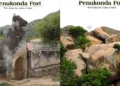
“Further, there are some glaring errors in the data collected. For example, the Brahma Nandeeswarar Temple at Patteeswaram has been mentioned as belonging to the 17th–18th century and categorised as non-Agamic. However, the temple is an early Chola temple associated with the period of Aditya Chola. It also possesses important elements associated with the traditional temple layout, including the Bali Peedam and Mukha Mandapam, among other features. One can look at these pictures and decide. Unless there is another temple with the same name at Patteeswaram, the information recorded here appears to be incorrect.”
Did a cursory analysis of the process followed and the data collected for a few temples. There appears to be no mention of the key criteria used to determine whether a temple is Agamic or non-Agamic, apart from the poojas and rituals currently being performed. As I mentioned… https://t.co/1P6sbo5xgQ pic.twitter.com/Jr4uOkMg3F
— 𑀓𑀺𑀭𑀼𑀱𑁆𑀡𑀷𑁆 🇮🇳 (@tskrishnan) October 3, 2026
He said, “This is absolutely a sham. Chola temples were constructed within the framework of the Agamic tradition, and classifying temples in the very heartland of the Chola country as ‘Non-Agamic’ defies logic. What exactly were the criteria used for this classification? Were qualified…”
Vijay Narayanan, referring to the Madhyapuriswarar Temple at Parakkalakkottai in Thanjavur district, alleged that the temple had been classified as a temple that does not follow Agama traditions and as being less than 100 years old, despite being a historical site dating back to the 16th century.
The archakas of the temple had conducted its consecration ceremony in accordance with Agama traditions. Like this, Vijay said that several ancient Chola- and Pandya-period temples in the Thanjavur and Thiruvarur regions had similarly been classified as being less than 100 years old or as non-Agamic temples.
He said, “EOs, in a clear violation of court orders, are signing the Agama reports saying court directions were only to identify temples that were constructed according to Agama traditions and did not require an assessment of whether Agama-based worship was currently being conducted at a particular temple.”
What is Agama?
Srilasri Swaminatha Sivachariyar, head of the Sri Maha Sadasiva Peetham in Mayiladuthurai and an Agama expert, explained that temples across Tamil Nadu had traditionally been constructed and operated according to Agama principles.
He said Agamas are regarded within Hindu traditions as authoritative texts governing temple construction, consecration and worship practices, adding that Shaiva temples follow the 28 Shaiva Agamas, while Vaishnava temples follow traditions including the Pancharatra and Vaikhanasa Agamas.
The seer further said that temples dedicated to deities such as Mariamman and Durga also follow Agama-based worship practices in accordance with their respective traditions. Agama is a set of scriptural ritual manuals.
Contending further, he said the presence or absence of certain physical features or the frequency of worship should not by itself categorise a temple as following or not following Agama tradition.
Explaining, he said that if temples do not have tanks or flagstaffs, or if worship is held once a day, the temple can still remain within the Agama tradition, and the absence of annual festivals is not necessary to determine it as non-Agamic.
This exercise started when DMK president M Karunanidhi brought legislation to allow persons from all castes, including non-Brahmins, to be appointed as temple archakas during his term in 1970–71.
In 2006, his government issued a fresh policy and ordinance in May 2006, stating that qualified persons from any caste could undergo training and be appointed.
MK Stalin made it DMK's 2021 election manifesto promise to make further appointments of these non Brahmin priests within 100 days of his governance. Out of these 207 trained priests only 175 were left below, mandatory age of 35 year. These 58 appointments are from them only. pic.twitter.com/DzfEUfkWjP
— Happy Singh (@HappySi79054951) August 14, 2021
MK Stalin, in 2021, appointed 24 persons, five of them belonging to the SC community, as priests after undergoing a one-year crash course.