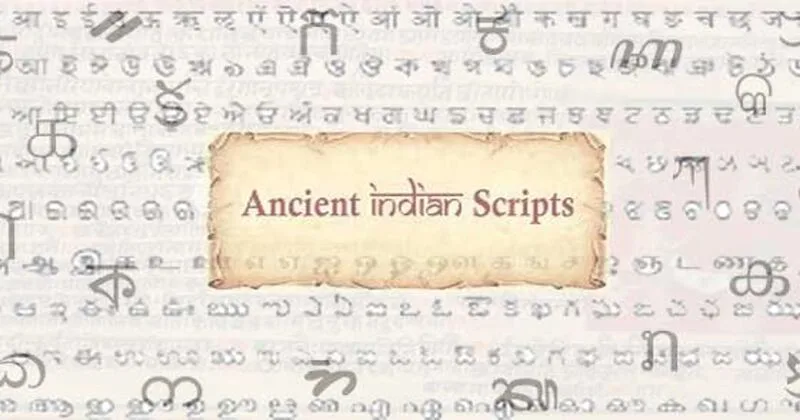
India today is debating how many languages its children should study. It ought to ask a more important question: who will read Bharat if future generations cannot read and understand the languages in which Bharat has spoken for millennia?
The debate India is having and the debate it should be having
The implementation of the CBSE revised Three-Language Formula from the 2026–27 academic session, starting from July 1, has reignited one of India’s most contentious educational debates. Introduced to align school education with the vision of the National Education Policy (NEP) 2020, the policy seeks to strengthen multilingual education by requiring students to study three languages, at least two of which must be Bharatiya languages, while continuing to provide flexibility in language choices.
The policy, however, immediately became the subject of widespread public debate. Questions relating to alleged imposition of Sanskrit and Hindi, federal autonomy, teacher availability, textbooks, and the academic burden upon students have dominated the discussion.
Yet, amidst this discussion, a far more fundamental question has received comparatively little attention: Why should Indian children learn Bharatiya languages in the first place?
This article argues that the present debate should not remain confined to questions of legality or implementation alone. Rather, it must be situated within the broader context of Bharat’s civilizational continuity. It seeks to demonstrate why learning Bharatiya languages—particularly Sanskrit and Hindi—is indispensable for enabling young Indians to engage directly with Bharat’s intellectual heritage, reconnect with their civilizational roots and strengthen a shared national consciousness.
More importantly, it argues that the present initiative should be embraced not merely as an educational reform but as a historic opportunity to reconnect India’s youth with the linguistic foundations of one of the world’s oldest and most enduring civilizations.
The Present Controversy: Three-language policy and the national debate
At its core, the policy requires students to study three languages, from which at least two must be Bharatiya languages. Contrary to some public perception, the emphasis of the framework is not on excluding English or other foreign languages but on ensuring that every student acquires meaningful proficiency in at least two Indian languages.
The framework also provides considerable flexibility in language selection. Students may choose different combinations of Bharatiya languages depending upon their State, school, and individual circumstances. It seeks to cultivate multilingual citizens capable of understanding both the diversity and the underlying unity of Bharat. A child in Kerala who learns Sanskrit or Hindi gains a deeper connection with the broader civilizational vocabulary of Bharat.
A student in Uttar Pradesh who studies Tamil, Bengali, Marathi, or another Bharatiya language acquires a richer appreciation of the country’s linguistic diversity. Every such exchange strengthens mutual understanding while reinforcing the shared civilizational consciousness that binds Bharat’s extraordinary plurality together. In this sense, multilingualism is not merely an educational objective; it is an instrument of national integration.
Notwithstanding these clarifications, the revised framework soon became the subject of legal challenge before the Apex Court. However, observing that “learning a language never goes waste”, the Court declined to put an interim stay on the implementation of the policy.
Why Bharatiya languages matter; Language as the soul of civilization
A language is not merely a collection of words or grammatical rules. It is the medium through which a civilization preserves its memory, transmits its values, records its knowledge, and shapes its collective consciousness. Every language carries within it a distinct worldview, embodying the history, philosophy, literature, customs, and intellectual traditions of the society that nurtures it.
For this reason, nations throughout history have regarded their languages as strategic cultural assets rather than optional academic subjects. Languages are repositories of civilizational continuity. They preserve not merely vocabulary but entire systems of thought accumulated over centuries.
This is particularly true in the case of Bharat.
For millennia, Bharat’s philosophical inquiry, scientific exploration, jurisprudence, literature, artistic traditions, mathematics, astronomy, medicine, grammar, political theory, ethics, and spirituality were articulated and preserved in Bharatiya languages.
Consequently, learning Bharatiya languages is not merely about acquiring an additional linguistic skill. It is about gaining direct access to one of humanity’s oldest and richest civilizational archives. A student who learns these languages acquire the ability to engage with India’s intellectual heritage in its own voice rather than exclusively through translations, interpretations, or secondary narratives.
This distinction is crucial, for it determines whether one encounters the Indian knowledge system directly or through interpretative filters.
Translations, however valuable, inevitably involve interpretation. Every translation requires choices regarding vocabulary, context, nuance, and meaning. Philosophical concepts rooted in one civilization often lack precise equivalents in another language. Terms such as Dharma, Ṛta, Satya, Nyaya, Moksha, Yoga, Atman, Shraddha, Yajna, or Samskara embody layers of philosophical, ethical, cultural, and spiritual meaning that often resist precise translation into English, the language most readers encounter India’s classical texts today.
Sanskrit: The key to Bharat’s knowledge civilization
If Bharatiya languages collectively preserve India’s civilizational memory, Sanskrit occupies a unique place within that tradition. It is not merely one among many Indian languages. It is the principal language in which most of Bharat’s philosophical, literary, scientific, legal, and spiritual heritage was composed, preserved, and transmitted across generations.
For centuries, Sanskrit functioned as the primary intellectual language of Bharat. The country’s greatest minds—philosophers, jurists, grammarians, mathematicians, physicians, astronomers, poets, theologians, and political thinkers—used Sanskrit to debate ideas, record discoveries, and preserve knowledge. Its significance, therefore, lies not merely in its antiquity but in the unparalleled corpus of knowledge it preserves.
The foundational texts of Sanatan Dharma—including Vedas, Upanishads, Bhagavad Gita, and the vast literature of Indian philosophy— are predominantly preserved in Sanskrit. This is precisely why Sanskrit deserves renewed attention—not because it belongs to the past, but because it continues to unlock one of the world’s largest repositories of civilizational knowledge.
Hindi and Bharatiya languages; Living bridges to civilizational continuity
While Sanskrit occupies a unique position as the principal repository of Bharat’s classical knowledge traditions, the task of preserving and transmitting that wisdom has never rested upon Sanskrit alone. India’s civilizational continuity has always depended upon the rich family of Bharatiya languages, each of which has carried forward different dimensions of the country’s intellectual, literary, cultural, and spiritual heritage.
From Tamil in the South to Kashmiri in the North, from Bengali in the East to Gujarati in the West, every Bharatiya language embodies centuries of literature, philosophy, folklore, devotional movements, historical memory, and local knowledge. Together, they form an interconnected civilizational ecosystem rather than isolated linguistic identities. To promote Bharatiya languages, therefore, is not to privilege one region over another; it is to strengthen the cultural foundations of Bharat itself.
Within this larger linguistic family, Hindi occupies a distinctive place. Spoken and understood across larger parts of the country, it has evolved as one of the principal languages of inter-regional communication and national discourse. It enables millions of Indians from different linguistic backgrounds to communicate with one another while simultaneously serving as an important medium through which India’s literary, philosophical, and cultural traditions continue to reach contemporary society.
Its constitutional significance is equally noteworthy. Article 351 of the Constitution places a positive obligation upon the Union to promote the spread and development of Hindi while ensuring that, in doing so, it draws upon the richness of Sanskrit and assimilates expressions from the other languages of India.
The Three-Language Formula should be viewed against this broader background. It does not seek to replace Tamil with Hindi, Bengali with Sanskrit, or Kannada with English. Nor does it require students to abandon their mother tongue. On the contrary, it seeks to ensure that every student develops competence in three complementary linguistic spheres: the mother tongue or regional language that anchors local identity; another Bharatiya language that broadens national understanding; and a global language, such as English, that facilitates international engagement. Properly implemented, these languages perform complementary rather than competing functions.
Reconnecting with the language of our civilization
The debate over the Three-Language Formula is, at one level, a debate about educational policy. At a deeper level, however, it is a debate about civilizational continuity.
The purpose of learning Bharatiya languages extends far beyond acquiring another academic qualification. It is about enabling future generations to engage with Bharat’s intellectual heritage in its own voice, appreciate its literary and philosophical traditions without intermediaries, and preserve the cultural continuity that has sustained one of the world’s oldest living civilizations.
Bharat was once revered as Vishwaguru because it nurtured a civilizational tradition whose philosophy, jurisprudence, grammar, mathematics, medicine, astronomy, literature, and spirituality enriched not only this land but generations across the world. Yet one of the greatest ironies of contemporary India is that countless educated Indians today remain unaware of this extraordinary intellectual inheritance.
Even those who wish to explore it often have little choice but to rely upon translations, which, however valuable, can never fully capture the linguistic, philosophical, and cultural nuances of the original—and are, at times, incomplete or even misleading. A civilization gradually loses its voice when its own people can no longer understand it in the language through which it has expressed itself for millennia.
This disconnect did not emerge overnight. It is the cumulative consequence of a long process of intellectual and linguistic alienation that began during the colonial period and especially through Macaulay’s education system. If political independence marked the first stage of decolonization, intellectual decolonization must necessarily involve reconnecting Indians with the languages through which their civilization has thought, debated, created, and evolved for centuries.
The Three-Language Formula, therefore, deserves to be viewed as far more than a curricular reform. Properly implemented, it can become a meaningful step towards restoring that broken civilizational link. But language learning must never become an empty academic exercise. Students should not merely learn how to frame everyday sentences in Sanskrit or any other Bharatiya language; they should encounter the ideas that made these languages civilizational treasures. A child who reads “सत्यं वद। धर्मं चर।” from the Upanishad carries home something far more enduring than vocabulary—he carries home a civilizational ethic.
विद्या ददाति विनयं, विनयाद् याति पात्रताम्।
पात्रत्वाद्धनमाप्नोति, धनाद्धर्मं ततः सुखम्॥
Likewise, a child who studies and understands the timeless maxim, does not merely learn another Sanskrit verse; he encounters Bharat’s enduring philosophy of education: Knowledge gives humility; humility leads to worthiness; worthiness brings prosperity; prosperity enables the practice of dharma; and from dharma comes lasting happiness.
This single verse reminds us that education was never understood merely as a pathway to employment. Livelihood has always been important, but it was never regarded as the highest purpose of learning. How different might our educational culture be if more young minds grew up internalizing this vision? They might be less inclined to measure their worth solely by examination results or career prospects. Equally, they also understand that genuine learning nurtures humility, not arrogance; and that education should produce enlightened minds, not inflated egos.
Reconnecting young Indians with Sanskrit and other Bharatiya languages is not an exercise in linguistic nostalgia; it is an investment in India’s intellectual confidence, cultural continuity and civilizational future. The Three-Language Formula is a significant step in this long-overdue process, provided it teaches not merely the language, but the timeless wisdom that gives the language its civilizational soul.