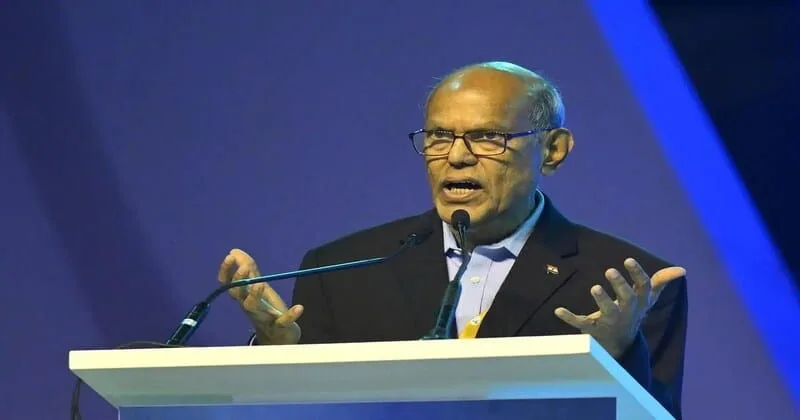
New Delhi: Former Reserve Bank of India (RBI) Governor Duvvuri Subbarao has revealed in his memoir that the United Progressive Alliance (UPA) government repeatedly pressured the central bank to adopt a softer monetary stance and project more optimistic growth and inflation estimates to improve market sentiment.
https://twitter.com/ARanganathan72/status/2088906809289613648
In his book Just A Mercenary?: Notes from My Life and Career, Subbarao recalls that during Pranab Mukherjee’s tenure as Finance Minister, senior government officials, including then Finance Secretary Arvind Mayaram and Chief Economic Adviser Kaushik Basu, challenged the RBI’s economic projections. According to Subbarao, the discussions went beyond differences over economic assumptions and eventually included suggestions that the RBI should project higher growth and lower inflation to help “shore up sentiment.”
Subbarao described the episode as an example of the government expecting the RBI to act as its “cheerleader”, rather than maintain independent professional assessments. He recalled that Mayaram had argued that governments and central banks elsewhere were cooperating, while suggesting that the RBI was being “recalcitrant”. Subbarao, however, maintained that the central bank could not alter its projections merely to improve public sentiment.
According to the former governor, changing economic estimates for political or market considerations could undermine the credibility of the institution. He argued that the RBI’s projections had to remain consistent with its monetary policy stance and professional assessment of the economy.
Differences Over Interest Rates
Subbarao also described his difficult working relationship with both Pranab Mukherjee and P Chidambaram, saying that both finance ministers pushed for lower interest rates, although they adopted different approaches. He characterised Chidambaram as someone who argued his case like a lawyer, while Mukherjee, whom he described as a “quintessential politician”, would make his position known and leave it to officials to argue the case. The former RBI governor said this eventually resulted in an “uncomfortable relationship” between the Finance Ministry and the central bank.
A particularly sharp confrontation came in October 2012, when Chidambaram returned as Finance Minister after serving as Home Minister. Subbarao recalled that Chidambaram wanted a softer monetary policy while simultaneously attempting to tighten fiscal policy. The RBI, however, refused to lower interest rates on the grounds that economic conditions did not justify such a move.
Following a hawkish RBI policy statement that highlighted concerns over inflation, Chidambaram publicly expressed his disagreement. Subbarao recalled the then Finance Minister saying that growth was as much a concern as inflation and that the government would “walk alone” if necessary to confront the growth challenge.
One of the central themes of Subbarao’s memoir is the importance of RBI autonomy. Having served both as Finance Secretary and RBI Governor, he said he had observed the relationship between the government and the central bank from both sides.
Subbarao wrote that there was “little understanding and sensitivity” within the government regarding the importance of central bank independence. His account highlights a fundamental tension in economic policymaking: elected governments often prioritise growth, employment and market confidence, while central banks must also focus on inflation, financial stability and the credibility of monetary policy.
For Subbarao, the RBI’s responsibility was not to create an artificially positive economic narrative but to present its best professional assessment, even when that assessment was uncomfortable for the government.
From Finance Secretary to RBI Governor
Subbarao served as Finance Secretary in 2007-08 before becoming RBI Governor on September 5, 2008. His tenure began just days before the collapse of Lehman Brothers on September 16, 2008, which triggered one of the most severe global financial crises in decades. His five-year tenure subsequently coincided with major economic challenges, including the global financial crisis and India’s 2013 exchange-rate crisis.
In his memoir, Subbarao reflects on his career with considerable candour, discussing both his achievements and failures and the lessons he learnt during his years in government and at the central bank.
His latest revelations have once again brought the long-standing debate over RBI autonomy, government pressure, interest rates, inflation and economic projections into focus. The account also underscores the difficult balancing act faced by central bankers when their professional assessments conflict with the government’s immediate economic and political priorities. Subbarao, now a senior fellow at Yale Jackson School in the United States, served as RBI Governor from 2008 to 2013.