Remembrance Daya: RSS' silent shield in India's hour of Partition
August 14, 2026
  • Read Ecopy
  • Circulation
  • Advertise
  • Careers
  • About Us
  • Contact Us
Android AppiPhone AppArattai
Organiser
  • ‌
  • Bharat
    • Assam
    • Bihar
    • Chhattisgarh
    • Jharkhand
    • Maharashtra
    • View All States
  • World
    • Asia
    • Europe
    • North America
    • South America
    • Africa
    • Australia
  • Editorial
  • International
  • Opinion
  • RSS @ 100
  • More
    • Op Sindoor
    • Analysis
    • Sports
    • Defence
    • Politics
    • Business
    • Economy
    • Culture
    • Special Report
    • Sci & Tech
    • Entertainment
    • G20
    • Azadi Ka Amrit Mahotsav
    • Vocal4Local
    • Web Stories
    • Education
    • Employment
    • Books
    • Interviews
    • Travel
    • Law
    • Health
    • Obituary
  • Subscribe
    • Subscribe Print Edition
    • Subscribe Ecopy
    • Read Ecopy
  • ‌
  • Bharat
    • Assam
    • Bihar
    • Chhattisgarh
    • Jharkhand
    • Maharashtra
    • View All States
  • World
    • Asia
    • Europe
    • North America
    • South America
    • Africa
    • Australia
  • Editorial
  • International
  • Opinion
  • RSS @ 100
  • More
    • Op Sindoor
    • Analysis
    • Sports
    • Defence
    • Politics
    • Business
    • Economy
    • Culture
    • Special Report
    • Sci & Tech
    • Entertainment
    • G20
    • Azadi Ka Amrit Mahotsav
    • Vocal4Local
    • Web Stories
    • Education
    • Employment
    • Books
    • Interviews
    • Travel
    • Law
    • Health
    • Obituary
  • Subscribe
    • Subscribe Print Edition
    • Subscribe Ecopy
    • Read Ecopy
Organiser
  • Home
  • Bharat
  • World
  • Operation Sindoor
  • Editorial
  • Analysis
  • Opinion
  • Culture
  • Defence
  • International Edition
  • RSS @ 100
  • Magazine
  • Read Ecopy
Home Bharat

Remembrance Day: RSS’ silent shield in India’s twilight hour of Partition in 1947

The Partition of India was a civilisational wound. In those dark days, there emerged a disciplined, organised, and selfless force that stood firm during the chaos, to strengthen the shattered remains of Bharat’s people

WEBDESKWEBDESK
Aug 14, 2026, 08:00 am IST
inBharat, RSS News, RSS in News
Follow on Google News
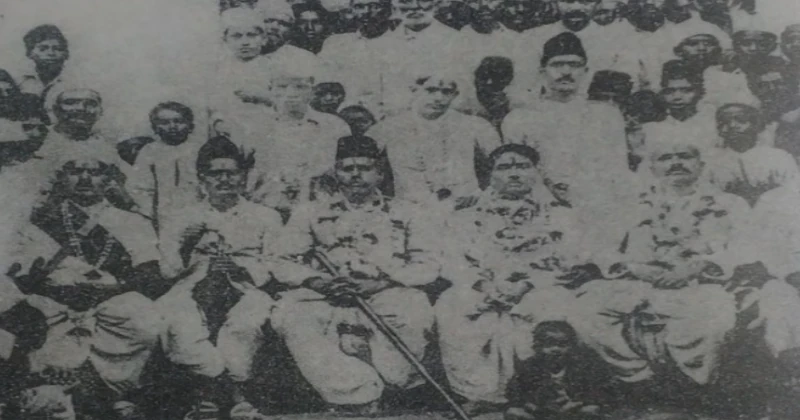
Dr Hedgewar participating in the 1930 satyagraha against the British

Dr Hedgewar participating in the 1930 satyagraha against the British

Facebook
Twitter
WhatsAppTelegramEmail

True freedom is never tested on the day it is declared, it is tested in the days when survival itself hangs by a thread

August 15, 1947, came with the tricolour soaring in Delhi’s fresh breeze, but in Punjab and Bengal, that same wind carried the stench of blood and smoke. While India celebrated the end of centuries of colonial rule, millions of Hindus and Sikhs were fleeing their ancestral homes, facing the fury of mobs, dishonour of women, and the uncertainty of refugee camps.

Dr Hedgewar participating in the 1930 satyagraha against the British

The Partition of India was a civilisational wound. In those dark days, there emerged a disciplined, organized, and selfless force that stood firm during the chaos, to strengthen the shattered remains of Bharat’s people. That disciplined force was none other than the Rashtriya Swayamsevak Sangh (RSS).

Directing individual potential for the struggle Pre-Independence

The Sangh’s service during Partition was not born out of sudden necessity. Its founder, Dr. Keshav Baliram Hedgewar, had envisioned from the very inception in 1925 that Bharat’s freedom would be meaningless without a united and fearless society. Hedgewar himself had deep roots in the freedom movement. He had infact resigned temporarily from the position of Sarsanghachalak in 1930 to join the Dandi March, anticipating the imprisonment of the participants and thus responsibly also deciding the fate of RSS’s aim ‘Rashtra Nirman’. In Yavatmal, he led Satyagraha, faced nine months of hard labour, and returned to his post with the conviction that political freedom and societal unity were inseparable.

Even when the British branded the Sangh “communal” and barred government employees and teachers of the Central Province from joining, the RSS did not retreat. Hedgewar’s foresight for the nation and RSS was that political movements may win independence, but only an awakened and disciplined society can sustain it, something the Sangh upholds even today.

Standing in the Flames of 1942

When the Quit India Movement of 1942 erupted, RSS cadres in Vidarbha, where the Sangh was born, joined hands with Congress leaders. Many were jailed, some, like young swayamsevak Balaji Raipurkar, even gave their lives. Across Bharat, swayamsevaks sheltered revolutionaries like Aruna Asaf Ali and Nana Patil, hoisted the tricolour under fire, and drew the attention of British intelligence, which described them as “anti-British volunteers ready to sacrifice their lives.”

The same discipline and courage that defied the British became a lifeline in 1947.

Partition & RSS’s spectrum stretching from ‘Seva’ to Civilisational Defence

When independence arrived wrapped in the horror of Partition, RSS moved into action without waiting for any official orders, because the goal for the organization was clear, may it be for a Pracharak or a swayamsevak. In Punjab’s burning villages and Bengal’s crowded camps, swayamsevaks organised protection squads, guarded refugee convoys, rescued abducted women, carried the wounded, and stood watch over temples and neighbourhoods under threat.

Famous Quotations

The Bastuhara Sahayata Samiti and other relief committees became lifelines for displaced families. Food, shelter, medicine, whatever was needed, was delivered with the same discipline that had been drilled into shakhas for decades. Government machinery was paralysed, yet swayamsevaks were on the ground, filling the vacuum as “the biggest organised force apart from security forces.”

The Sangh believed that Swaraj was not just about raising the flag. It was also about protecting the civilisation that the flag represented. And thus the organization was functioning accordingly.

Strategic Intervention: The Kashmir Question

The Sangh’s role during Partition was not limited to the humanitarian work. M.S. Golwalkar, who had taken charge after Hedgewar’s passing, travelled tirelessly to boost the morale aof swayamsevaks across nation and had also warned of the dangers. In October 1947, as Pakistan’s designs on Kashmir unfolded, Golwalkar met Maharaja Hari Singh in Srinagar. The private meeting led to the Maharaja’s accession to India—a political intervention that proved vital to the territorial integrity of the nation.

Golwalkar rejected the label “refugee” for those fleeing East and West Pakistan, asking, “How can one be a refugee in his own home?” His vision turned relief work into a statement of national unity: This nation belongs to everyone.

RSS’s Civilisational Message of Seva and Unity

The jail cells of Akola, the blood-soaked roads of Punjab are all witness to the fact that RSS’s contribution in those years was never merely of a socio-cultural group, or just a political ally in the freedom movement. It was, and remains, a civilisational force.

Partition Horrors Remembrance Day is not only a time to mourn those we lost; it is also a moment to acknowledge or in Sangh’s case at least accept those who stood guard over Bharat when she was bleeding. The RSS preserved honour, guarded life, and defended the soul of a nation in its most fragile moment.

And perhaps that is why, even if history books choose silence, the memory of swayamsevaks patrolling the night, escorting terrified families, and holding the tricolour high will always remain etched in the living memory of Bharat. For in that hour, they proved that freedom is not won only once but it is defended every day thereafter.
Topics: 1930 satyagrahaRSSDr HedgewarPartitionindian civilisation
Share
Tweet
SendShareSend
✮ Subscribe Organiser YouTube Channel. ✮
✮ Join Organiser's WhatsApp channel for Nationalist views beyond the news. ✮
Previous News

Protest against Japan’s Fujisawa Mosque Deepens: Locals oppose Islamic burials and sermons, cite water & air pollution

Next News

Remembrance Day and Partition’s Other Architect: The CPI’s role in dividing India

Related News

Remembrance Day and Partition’s Other Architect: The CPI’s role in dividing India

Partition Remembrance Day

Partition Horrors Remembrance Day: Sindhis committed to nation-building, despite losing the homeland of Sindh

August 14 is observed as Partition Horrors Remembrance Day

From Crushing 1857 Jihad to Muslim Appeasement: British and Gandhi’s policies that helped partition India

Shri Y. V. Gopala Krishna Murthy, Shri Bharath Kumar, Sri Ranjith Mohan, Sri G Prithvi Teja
The 20th Janamanchi Gouri Shankar Memorial Lecture at the PGRRCDE Auditorium, Osmania University, Hyderabad, on August 12

Illegal infiltration must be viewed as a national security and demographic challenge: Bharath Kumar ji at AVBP event

RSS Sarsanghchalak Dr Mohan Bhagwat

RSS Sarsanghchalak Dr Mohan Bhagwat to visit US, Canada, UK from August 25

Family is the first school for a Child’s development, sanskars received at home shape society & Nation: Bhaiyyaji Joshi

Load More

Latest News

1947 Partition and Remembrance Day: When Congress preached unity but fueled the Islamist bloodbath

Remembrance Day and Partition’s Other Architect: The CPI’s role in dividing India

Dr Hedgewar participating in the 1930 satyagraha against the British

Remembrance Day: RSS’ silent shield in India’s twilight hour of Partition in 1947

Fujisawa residents raise concerns over religious practices and the growing presence of non-native culture in their community

Protest against Japan’s Fujisawa Mosque Deepens: Locals oppose Islamic burials and sermons, cite water & air pollution

Partition Remembrance Day

Partition Horrors Remembrance Day: Sindhis committed to nation-building, despite losing the homeland of Sindh

Partition Horrors Remembrance Day

Partition Horrors Remembrance Day: Know why it is important to remember those who became victims of mindless violence

Ram Temple CEO Candidates Faced No Questions on Religion or Personal Lifestyle

Ram Mandir Trust’s CEO Interview: Professional governance takes precedence over personal life in selection process

Representative Image

Why Bharat needs to pursue independence from big tech

India corner opens at Kenya school library; Echoes nation’s freedom struggle, civilisational heritage & growth story

Keralam: NIA seizes massive 89,600 explosive sticks in Malappuram, reports suggest Kerala Kumbh Mela was target

Load More
  • Privacy
  • Terms
  • Cookie Policy
  • Refund and Cancellation
  • Delivery and Shipping

© Bharat Prakashan (Delhi) Limited.
Tech-enabled by Ananthapuri Technologies

  • Home
  • Search Organiser
  • Bharat
    • Assam
    • Bihar
    • Chhattisgarh
    • Jharkhand
    • Maharashtra
    • View All States
  • World
    • Asia
    • Africa
    • North America
    • South America
    • Europe
    • Australia
  • Editorial
  • Operation Sindoor
  • Opinion
  • Analysis
  • Defence
  • Culture
  • Sports
  • Business
  • RSS @ 100
  • Entertainment
  • More ..
    • Sci & Tech
    • Vocal4Local
    • Special Report
    • Education
    • Employment
    • Books
    • Interviews
    • Travel
    • Health
    • Politics
    • Law
    • Economy
    • Obituary
  • Subscribe Magazine
  • Read Ecopy
  • Advertise
  • Circulation
  • Careers
  • About Us
  • Contact Us
  • Policies & Terms
    • Privacy Policy
    • Cookie Policy
    • Refund and Cancellation
    • Terms of Use

© Bharat Prakashan (Delhi) Limited.
Tech-enabled by Ananthapuri Technologies