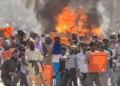
When the Narendra Modi government assumed power in 2014, India was still reeling from a decade of relentless terror strikes that had turned cities into targets and valleys into battlegrounds. For those who lived through the years before 2014, the memory of terror was never abstract. It lived in the habits of ordinary people: the glance toward the exits in a crowded market, the held breath on a Metro platform, the phone calls home after every blast to say “I’m fine.” Cities had become targets, and valleys had become battlegrounds.
After 2014, the pattern began to change. Government figures show terror incidents in Jammu & Kashmir falling by nearly seventy percent, with civilian casualties dropping even more sharply. The serial bombings in major cities, once so frequent that they seemed a feature of urban life, largely stopped. Tighter security, stronger intelligence and a harder policy line pushed back the terror plots.
But for a generation of Indians, the change was felt in small, private ways: a mother who stopped dreading her son’s commute, a shopkeeper who no longer closed early out of fear.
Ironically, as physical terror attacks declined, a different form of sustained pressure began rising — this time through campuses, streets and prolonged mobilisations. From 2016 onwards, India witnessed a series of major protest movements: campus agitations, the anti-CAA stir, farmers’ protests, Agnipath recruitment unrest, and later the NEET and SIR-linked demonstrations that culminated in the Cockroach Janta Party (CJP) protests of 2026. Students remained a constant presence across almost every major agitation.
And through this entire decade of street politics, one regional group stood out with striking consistency in Delhi: Malayalis from Kerala.
The Persistent Malayali Footprint
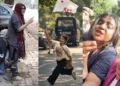
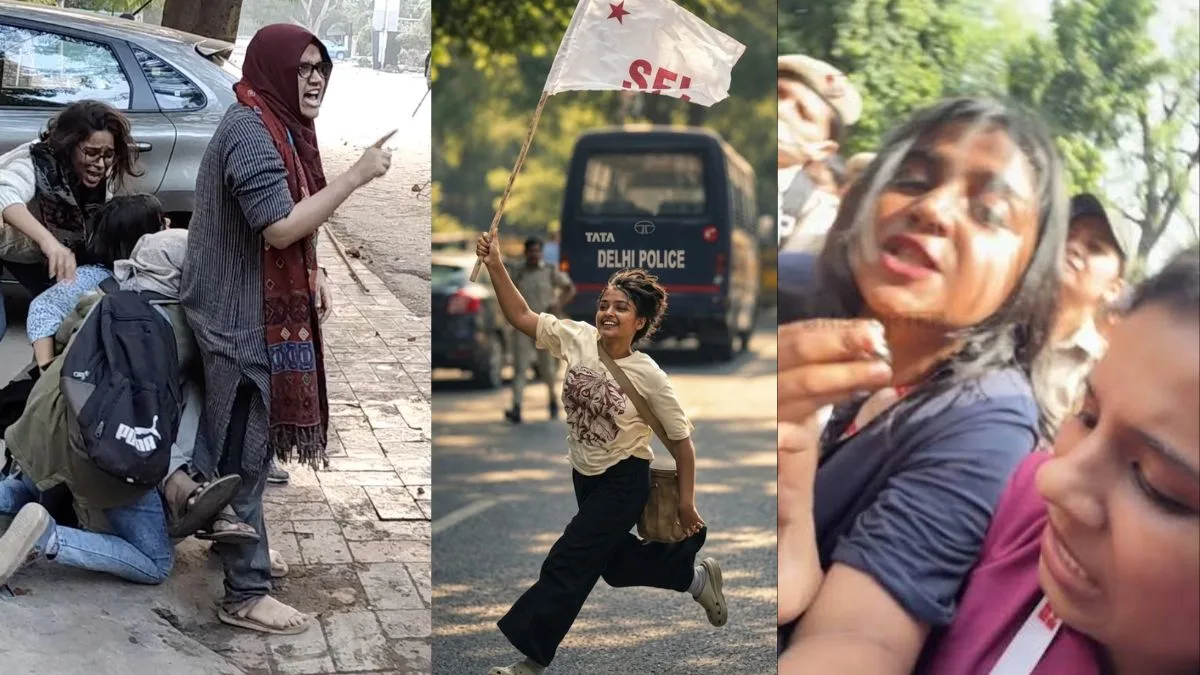
In the anti-CAA protests of 2019–20, two young women from Kerala studying at Jamia Millia Islamia — Ayesha Renna and Ladeeda Sakhaloon — became national faces after videos showed them confronting police and shielding a fellow student. Their images travelled far beyond the campus walls. They were portrayed by the Congress and Left as icons of resistance despite their alleged support for Islamic fundamentalism. Their expressions of support for jihad, tributes to Yakub Memon and Afzal Guru, and criticism of India as fascist and anti-Muslim raise serious questions about the ideological positions being celebrated.
Their social media posts reportedly expressed support for jihad, rejected secularism, and paid tribute to Yakub Memon and Afzal Guru, both convicted in major terror cases. Such expressions raise serious questions about the ideological positions being celebrated. Presenting these women as symbols of progressive resistance without scrutinising their publicly expressed views risks blurring the line between democratic activism and religious fundamentalism. Ayesha Renna and Ladeeda Sakhaloon were subsequently celebrated in Keralam, where Islamist radical Irfan Habib was also present.
A large number of students from Keralam reportedly participated in the protests, with allegations that Left, Congress and other unidentified individuals facilitated their mobilisation to amplify demonstrations against Bharat. Leaders from Left-affiliated student organisations, including DYFI, SFI, AISF and AISA, were seen leading protests, with reports of anti-India slogans being raised. There were also claims of international funding to sustain the demonstrations. Keralam’s participation attracted considerable national and international media attention, with some protesters becoming prominent faces of the wider anti-government agitation.
A similar pattern of political mobilisation and competing narratives was evident during the protests against the Agnipath recruitment scheme, when Kerala also witnessed demonstrations and a strong political campaign against the Centre’s policy. The protests became another flashpoint in the broader contest over how the government’s decisions and the opposition’s mobilisation were portrayed. Reports suggest that more than 1,000 people participated in the protests in Delhi and even more inside the state. At that time, the contribution from other states remained comparatively less.
Anti-CAA Protests in 2019–20
The anti-CAA protests of 2019–20, including the prolonged sit-in at Shaheen Bagh, mobilised students, women and civil society groups around opposition to the Citizenship Amendment Act. This was another protest where the Keralite presence stood out. There was also an indefinite protest outside the Secretariat in Thiruvananthapuram in solidarity with Shaheen Bagh.
By 2026, the pattern had only grown sharper. During the CJP-led protests against the Chief Election Commissioner and electoral roll revisions, Keralites were once again highly visible. Puzhakkal Pavithra, a student from Palakkad studying at Hansraj College and an active SFI member, became one of the defining visuals of the agitation when photographs of her running with an SFI flag amid heavy police deployment went viral. She remained a poster girl for international media, as if she had attained a high position or achieved something extraordinary. Critics questioned the disproportionate prominence given to such visuals, arguing that the coverage risked presenting a narrow protest narrative as a broader indictment of India’s democratic institutions. The episode also raised questions about how individual protesters are elevated into international symbols of dissent, sometimes without comparable scrutiny of their organisational roles, the wider context of the agitation or the claims being advanced against Indian institutions.
Malayalam Reporters Turn to Activists During CJP Protest, Detained
Two Malayalam-speaking media personnel from Reporter TV, T.M. Farsa and Roshni Rajan, who arrived at Jantar Mantar to cover the protest, appeared to cross the line between reporting and activism. Instead of limiting themselves to documenting the events, they reportedly began raising slogans and confronting women police personnel, eventually leading to their detention. Even after being detained, their apparent eagerness to participate in the confrontation seemed undiminished.
The episode raises serious questions about the conduct and professional ethics of journalists who appear unable to separate their political leanings from their reporting responsibilities. When those entrusted with documenting a protest become active participants in it, the distinction between journalism and political activism begins to blur. Critics of the Left-liberal media ecosystem may see this as another example of reporters allowing their ideological commitments to overshadow journalistic restraint. If the objective is to report the facts, why turn the reporter into a protagonist? Journalism demands scrutiny of those in power, but it also demands discipline, objectivity and accountability — not the use of a press identity as a cover for political activism.
Watch Video Here
Malayalee journalists Roshmi and Farza being detained by Delhi Police #JantarMantar #CP pic.twitter.com/F8w3t8g8Fp
— Madhuri Adnal (@madhuriadnal) October 10, 2026
A decade in Power: Left Leaders Preach Electoral Integrity as Kannur’s Bogus Voting Record Haunts Kerala
Senior CPI(M) leaders from Kerala repeatedly travelled to the national capital to join protests against the Election Commission’s Special Intensive Revision (SIR) of electoral rolls. On October 10, 2026, former Chief Minister Pinarayi Vijayan, CPI(M) general secretary M. A. Baby, Rajya Sabha MP John Brittas, K. N. Balagopal, M. V. Govindan, K. K. Shailaja and other party leaders were detained by Delhi Police while attempting to march towards Jantar Mantar. SFI and other Left-affiliated student organisations also mobilised cadres for the demonstrations. Meanwhile, there are reports that intelligence agencies were examining the movement of young Malayalis arriving in Delhi, particularly those without an apparent affiliation to established political or student organisations, to ascertain who was arranging their travel, accommodation and funding.
Watch Video here
Former Kerala CM Pinarayi Vijayan detained near Kerala House in Delhi ahead of the CJP protest at Jantar Mantar
CPI(M) says senior leaders MA Baby, Brinda Karat, KN Balagopal and MP John Brittas have also been detained
Vijayan, Balagopal and Brittas were reportedly… pic.twitter.com/p5hV2tsL6c
— Nabila Jamal (@nabilajamal_) October 10, 2026
The irony is difficult to ignore. Leaders who have governed Kerala and exercised considerable political influence in the state are now positioning themselves as defenders of electoral integrity and democratic accountability at the national level. Yet Kerala itself has witnessed serious controversies involving recruitment examinations and electoral malpractice. In the 2019 Kerala PSC police constable recruitment examination case, SFI leaders R. Shivaranjith and A. N. Naseem were accused of cheating using electronic devices, with investigators examining alleged outside assistance.
Separately, Kerala’s Chief Electoral Officer confirmed 13 instances of bogus voting across two Kannur polling booths in 2019, prompting criminal proceedings against 10 people. These cases raise legitimate questions about institutional accountability and the consistency with which electoral and recruitment irregularities are condemned.
Kannur has a documented history of electoral malpractice allegations, including cases of impersonation and repeat voting. In 2019, Kerala’s Chief Electoral Officer confirmed 13 instances of bogus voting across two polling booths in the district, Pamburuthi and Dharmadom. Ten people faced criminal cases, and officials also came under scrutiny over alleged lapses in preventing the malpractice. The CEO specifically stated that three individuals had voted twice, including one person who cast a vote at a booth where he was not registered.
The issue resurfaced during the 2026 Kerala Assembly elections, when opposition leaders alleged impersonation, misuse of assisted voting and irregularities in constituencies including Dharmadom and Payyannur. These were allegations and should not be presented as proven instances of widespread rigging.
The irony is that Kannur’s electoral controversies have repeatedly raised questions about the integrity of the very democratic process that political leaders now claim to be defending through protests against the Special Intensive Revision (SIR) of electoral rolls. Demanding electoral transparency in Delhi cannot mean ignoring the need for accountability over alleged electoral malpractice at home.
This was not an isolated occurrence. Over the years, students and activists from Kerala studying in Delhi University and JNU, along with organised contingents of SFI and Left organisations, have repeatedly featured in major capital protests.
The Dubai Connection: A New Dimension
The 2026 CJP protests added a striking new layer to this pattern. Dubai-based Malayali businessman Mohammad Shaji (also referred to as Mohammed Shaji Nilambur), owner of Abreco Freight, suddenly found himself in the spotlight after 23 of his employees went viral celebrating what they called the “victory” of the Cockroach Janata Party following the end of the Jantar Mantar agitation.
The 23-member group, led by Irshad, Anfas and Toyo, was flown from Dubai to Delhi entirely at Shaji’s expense. According to reports, the businessman bore the full cost — flights, accommodation, food, and additional incentives — turning his workers into participants in the protest. The employees were handpicked, funded and dispatched like a private contingent. They returned “with pride” after the Education Minister’s resignation.
Questions quickly arose. Sources indicated that Shaji does not come from a visibly wealthy or high-profile business background. He has reportedly been accused in multiple cheque bounce and cheating cases in Dubai. This naturally led to the larger question: Where did the money to fly 23 employees, accommodate them in Delhi, and pay them extra remuneration come from? Why would a person facing financial legal issues in a foreign country suddenly spend significant sums to send his workers into a political protest on Indian soil?
The timing was equally noticeable. The group was sent at the peak of the CJP agitation, which many critics described as politically motivated. All 23 employees were provided free travel, stay, food and other expenses under what was allegedly presented as a complete “Bharat Package.”
Echoes of the Past
This incident revived memories of earlier controversies. During the anti-CAA protests of 2019–20, similar questions had surfaced over the logistics and sustained funding of long-running demonstrations, particularly at Shaheen Bagh. Those protests continued for months, supported by a steady supply of food, tents, medical facilities, volunteers and infrastructure. Central agencies later probed allegations that the Popular Front of India (PFI) had mobilised significant resources to support the agitation — a factor that eventually contributed to the organisation’s ban.
The Dubai episode involving Mohammad Shaji has therefore drawn attention as another instance where external funding and organised mobilisation from the Kerala diaspora appear to have intersected with street protests in the national capital.
As physical terror attacks receded after 2014, the theatre of sustained confrontation shifted increasingly to streets, campuses and prolonged agitations. And in the national capital, through successive waves of protest, voices, faces and, increasingly, organised contingents from Kerala — both from within India and from the diaspora — have remained consistently prominent.