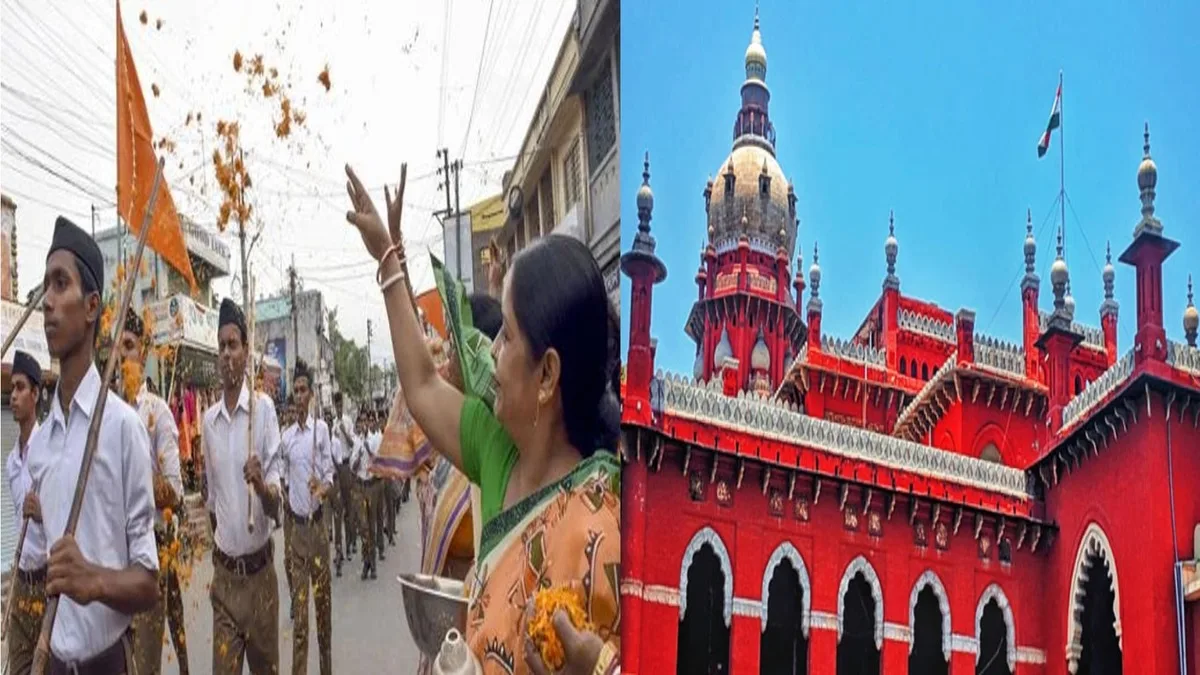
NEW DELHI: The Madras High Court on October 14 questioned why Tamil Nadu police were denying permission for Rashtriya Swayamsevak Sangh (RSS) path sanchalan when such processions were permitted in J&K despite terrorist threats. The court’s oral observations came during a hearing on a petition seeking permission for a path sanchalan followed by a public meeting.
Justice V Lakshminarayanan questioned the refusal in a State described as a haven of peace and observed that denying permission was itself generating unnecessary publicity for the organisation. The judge asked the petitioner’s representatives to discuss the matter with State Public Prosecutor R. John Sathyan.
“The government is seeing citizens as enemies,” the judge orally remarked. He also questioned refusals affecting both the RSS and Dravidar Kazhagam, which compelled its representatives to approach the court.
The petition, filed by RSS member V.G. Jagadeesan, sought consideration of his representation for a uniformed path sanchalan led by a musical band, followed by a public meeting, on October 18, October 25, November 1 or another date.
Senior Advocate N.L. Rajah, appearing for the petitioner, submitted that the RSS was repeatedly forced into litigation to hold its founding-day celebrations associated with Vijayadashami. He said police cited law-and-order concerns and questioned how smaller organisations without comparable resources could secure judicial relief.
The State submitted that the proposed public-meeting venue was not a notified location for such gatherings. The court asked five representatives from the petitioner’s side to meet the State Public Prosecutor to work out peaceful arrangements. It sought a report from the State and adjourned the hearing to October 15.
The dispute follows earlier judicial directions intended to avoid annual litigation over RSS path sanchaln marches. In its October 1, 2024 judgment in K. Sethuraj v. State of Tamil Nadu and connected petitions, the High Court recorded that applications for marches at 58 locations had initially been rejected. Following judicial intervention, police granted permission in stages, leaving six applications requiring further consideration.
Justice G. Jayachandran explained that guidelines had already been settled after considering proposals from the Director General of Police and responses from organisers. Those conditions were intended to guide future applications so that organisers would not have to return to court every year.
The judgment also held that the presence of religious institutions or organisations subscribing to different ideologies along a route could not, by itself, bar a procession. It addressed practical issues concerning venue consent, traffic and alternative routes, while expressing hope that police would follow the settled guidelines instead of devising fresh grounds for rejection.