New Delhi/Beijing: India and China held 36th round of the Working Mechanism for Consultation and Coordination on India-China Border Affairs (WMCC) in New Delhi. During the border talks India insisted Beijing for greater transparency regarding the upstream projects on trans-border rivers. New Delhi also called for an early meeting of the expert-level mechanism to resolve trans-boundary bottlenecks on hydrological issues.
The talks also focused on boundary delimitation, border management and mechanisms to maintain peace & tranquility along the Line of Actual Control (LAC). Both sides also resolved to consolidate normalcy and strength gradually in bilateral ties. The two sides also officially focused on mechanisms to prevent misunderstandings and miscalculations along the LAC and reiterated the importance of maintaining peace and tranquillity in border areas.
The Indian delegation was led by Sujit Ghosh, Joint Secretary (East Asia) in the MEA, while the Chinese delegation was headed by Hou Yanqi, Director General of the Boundary and Oceanic Affairs Department of China’s Ministry of Foreign Affairs.
India seeks transparency on Chinese projects on upstream rivers, particularly Brahmaputra
According to the Ministry of External Affairs(MEA), New Delhi and Beijing held “frank discussions” and reviewed the overall situation along the LAC. India underlined that maintaining peace and tranquillity in the border areas remain essential for the broader progress in bilateral relations.
A key issue raised by New Delhi during the talks was trans-border river cooperation. India reiterated the need for an early convening of the next meeting of the Expert Level Mechanism on trans-border rivers and emphasised the importance of China sharing technical details relating to its upstream projects.
This demand by New Delhi assumes significance amid concerns over China’s massive hydropower project along the upper reaches of the Yarlung Tsangpo in Tibet. The river enters India as the Siang in Arunachal Pradesh and subsequently becomes the Brahmaputra in Assam before flowing into Bangladesh.
The mega Chinese hydropower project, is estimated to cost well over $100 billion and is expected to become the world’s largest hydropower facility. Its scale has triggered concerns in India over potential consequences on the lower riparian states. This includes ecological disruption, changes in water flows and the impact on the Indian communities dependent on the river system for livelihood.
New Delhi has thus repeatedly called for transparency and consultations with downstream countries regarding projects on trans-border rivers. India has also sought the resumption of hydrological data-sharing, which has become an important component of its concerns over China’s upstream activities.
The issue was raised at the previous border talks in May as well, when India called for an early meeting of the expert-level mechanism. The latest discussions indicate that water security remains a priority and prerequisite for India as New Delhi and Beijing aims to stabilise relationship.
Border delimitation, management remain key priorities
Beyond river cooperation, the 36th WMCC meeting also covered several longstanding elements of the boundary dispute. As a follow-up to the outcomes of the 24th round of Special Representatives-level talks, India and China held detailed exchanges on boundary delimitation, border management, mechanism-building and trans-border cooperation.
Both sides agreed to continue using established diplomatic and military channels to deal with outstanding issues and prevent fresh tensions along the LAC. These mechanisms include the WMCC, local commander-level meetings and other agreed communication channels.
Both sides also emphasised on avoiding “misunderstanding and miscalculations”, given the prolonged military confrontation & stand-off following the 2020 Galwan clash in eastern Ladakh. The confrontation severely damaged bilateral ties and resulted in the deployment of large numbers of troops and military equipment along the disputed frontier.
However, New Delhi and Beijing reached an understanding in October 2024 on de-escalation, disengagement from remaining friction points in eastern Ladakh such as Deepsand and Demchok. This paved the way for a gradual resumption of diplomatic engagement. Accordingly, New Delhi and Beijing has resumed direct flight connectivity, distribution of tourist visas and the Kailash Manasarovar Yatra. Lately, India and China also revived cross-border trade via the ancient Himalayan routes.
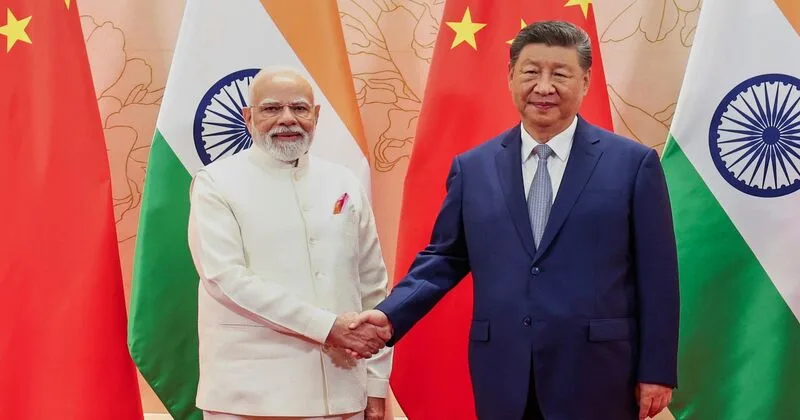
The meeting between Prime Minister Modi and Chinese President Xi jinping on the sidelines of the BRICS Summit in Kazan, Russia, in 2024, was a major breakthrough in the path of reviving the bilateral relations.
As a continued effort to stabilise Sino-India ties that had hit rock-bottom post the 2020 Galwan clash, when Chinese troops crossed LAC and attacked Indian security forces, Foreign Secretary Vikram Misri held meetings with senior Chinese officials in Beijing on July 27. This was following the External Affairs Minister Dr. S. Jaishankar’s meeting with Chinese Foreign Minister Wang Yi on the sidelines of ASEAN meet in Philippines on July 22.
The renewed and rigorous diplomatic engagement also comes at a time when Chinese President Xi Jinping is expected to visit India for the BRICS Summit in September. However, the improvement in ties remain cautious and limited. China’s repeated claims over border regions in Arunachal Pradesh and Ladakh, renaming of the names of the provinces, releasing catrtographic representations remains to be a geopolitical friction as it is against the sovereignty and territorial integrity of India.