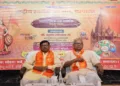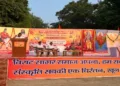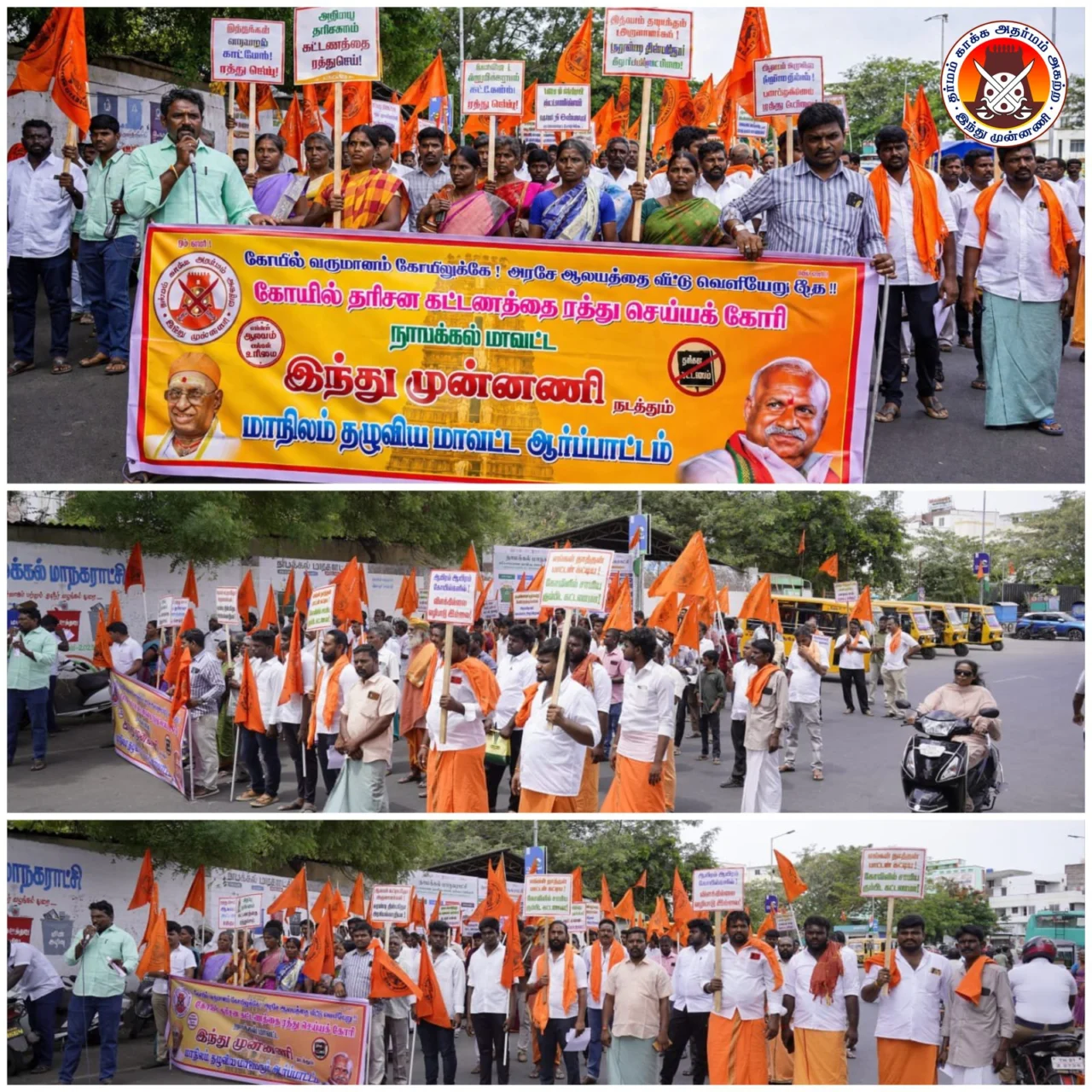
Hindu Munnani held statewide protests across Tamil Nadu on July 26, 2026, demanding the complete abolition of paid darshan fees in temples. It criticised the Hindu Religious and Charitable Endowments (HR&CE) Department’s administration, asserting that temple wealth belongs to the devotees.
It alleged that successive Dravidian governments had been more keen on generating income from temples than on their upkeep and maintenance, including providing facilities to devotees such as toilets and drinking water. It further alleged that temple funds were largely diverted for non-temple-related activities, including paying salaries to HR&CE staff, purchasing luxury vehicles, besides the alleged swindling of hundi offerings and permitting the alienation of temple properties.
It also pointed to various collections under different heads, including VIP darshan, tonsuring fees, abishekam (sacred bathing of deities), festivals, golden chariot processions, archanas and others.
Similar views have been expressed by Justice G.R. Swaminathan and Justice V. Lakshminarayanan. They emphasised that all worshippers are equal and that wealth or political office should not provide closer proximity to, or faster access to, the deity. They remarked that paid VIP and special darshan systems in temples are wrong and discriminatory. They also pointed out that preferential treatment based on status or wealth goes against the core principle of equality.
“The levying of entry fees for devotees to have darshan of their favourite deities deprives the poor and local devotees of their rights. Such practices are not found in places of worship belonging to minority communities,” said Hindu Munnani functionary Brahmanayagam.
In June this year, the Tiruchendur temple administration issued a public notice proposing substantial revisions to charges for several temple services, including Abhisheka Darshan, Shanmugarchanai, Moolavar Abhishekam, Nine-Time Pooja and the temple’s popular golden chariot procession. However, the proposal was later denied by the HR&CE Minister.
According to the proposal published by the temple administration, the fee for the golden chariot procession was to be increased from ₹2,500 to ₹5,000, while the mandatory deposit was proposed to be doubled from ₹50,000 to ₹1 lakh.
The charge for Shanmugarchanai was proposed to be increased six-fold, from ₹5,000 to ₹30,000. The fee for Moolavar Abhishekam for two devotees was proposed to be increased from ₹1,500 to ₹10,000.
While, the Nine-Time Pooja (Onbadhu Kala Pooja) charge was proposed to be revised from ₹1,500 to ₹6,500, while the associated deposit amount was proposed to be increased from ₹20,000 to ₹90,000.
Against this backdrop, Hindu Munnani called for statewide protests, demanding the abolition of all temple fees. It argued that temples could be maintained, including the payment of archakas’ salaries, through the proper administration of temple assets and rental income.
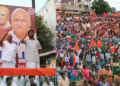
Accordingly, on July 26, Hindu Munnani held protests across the state at district headquarters. Among its demands, it called upon the government to ensure greater transparency in temple administration.
In Chennai, State General Secretary Manali Manohar told the media that the government should make public the complete details of temple lands and assets. He said such information should be openly accessible. He also urged the HR&CE Department to act against illegal encroachers of temple properties and recover rental arrears.
Temple assets should be protected and the income generated should be used strictly for temple purposes. If there are illegal encroachments, they should be removed, he added.
Manohar further said that all daily poojas, abhishekams and festivals should be conducted according to customs and Agamas, while ancient and rare antique idols should remain in their respective temples rather than being shifted to common idol storage facilities.
In Chennai’s Tambaram, Hindu Munnani cadres organised a protest led by State Vice-President C. Parameswaran and Tambaram city president Kanagaraj.
In Kurundhancode, Kanyakumari district, Hindu Munnani held a demonstration.
அரசே ஆலய தரிசனத்தை ரத்து செய் என்ற தலைப்பில் மாநிலம் தழுவிய ஆர்ப்பாட்டம், கன்னியாகுமரி மாவட்டம், குருந்தன்கோடு ஒன்றியத்தில் நடைபெற்றது..#Kurunthancode #Freehindutemples #கட்டணமில்லா_தரிசனம் #JulyProtest #July26 #HRCE #TNGovt #ஆர்ப்பாட்டம் #HinduMunnani pic.twitter.com/ZUuGCEASsY
— Hindu Munnani (@hindumunnani_tn) July 27, 2026
In Coimbatore, Hindu Munnani held a protest demanding the cancellation of all temple fees under the leadership of district president K. Dasarathan.
#கோவை மாநகர்
கோவை மாநகர் மாவட்ட இந்து முன்னணி பேரியக்கம் சார்பில், ஆலய கட்டண தரிசன முறையை ரத்து செய்யகோரி, மாவட்டத் தலைவர் கே.தசரதன் அவர்கள் தலைமையில் மாபெரும் கண்டன ஆர்ப்பாட்டம் நடைபெற்றது..
கோவை கோட்ட செயலாளர் உருவை பாலன் அவர்கள் முன்னிலை வகித்தார்.. மாநில நிர்வாக குழு… pic.twitter.com/84nHIuJ2rI
— Hindu Munnani (@hindumunnani_tn) July 27, 2026
More than 2,000 cadres, including Coimbatore division secretary Uruvai Balan, general secretary Baba A. Krishnan and State Executive Council member S. Sathish, participated in the protest.
Hindu Munnani members also staged a protest near the Head Post Office on Anna Salai in Vellore. Raising slogans against darshan fees in Tamil Nadu temples, they said, “Almost all temples generate substantial income from various other sources. Therefore, charging devotees for darshan is unnecessary.”
Hindu Munnani also staged a demonstration in Rameswaram demanding that the paid darshan system in temples across Tamil Nadu be withdrawn.
Rameswaram, Tamil Nadu: As part of statewide protests, members of Hindu Munnani staged a demonstration in Rameswaram demanding that the temple darshan system implemented in temples across Tamil Nadu be withdrawn pic.twitter.com/c80Ddfogee
— IANS (@ians_india) July 26, 2026
More than 100 Hindu Munnani members staged a protest near the Meemisal bus stand in Pudukkottai district’s Aranthangi Assembly constituency, demanding the abolition of temple darshan fees. The protest, held at Meemisal Market Street, also called for temples to remain under Hindu control, asserted that temple income belongs to the Hindu community, and demanded an end to the HR&CE Department’s administration of temples.
In another incident, in Salem, as part of TVK Minister Aandh’s birthday celebrations, Salem West Assembly MLA Lakshmanan allegedly organised a function at which non-vegetarian food was distributed. The event was reportedly held on temple land, raising concerns over the sanctity of the temple premises.
கோவில் திடலில் அசைவ விருந்து?
சேலம் மேற்கு தொகுதி #TVK MLA லட்சுமணன், அமைச்சர் ஆனந்தின் பிறந்தநாளைக் கொண்டாடும் விதமாக, சேலத்தில் திருப்பணி நடந்து வரும் ஒரு கோவில் திடலில் பொதுமக்களுக்கு அசைவ விருந்து வழங்கியது அதிர்ச்சியை ஏற்படுத்தியுள்ளது.
கோவில் புனிதத் தன்மையைக் கெடுக்கும்… pic.twitter.com/sLkwV9f2cU
— M Nachiappan (@NDCNach) July 20, 2026
Devotees have urged the HR&CE Minister to prevent such activities on temple properties. They also recalled the recent four-day debate over whether prasadam sold in temples should carry expiry dates and MRP details, and questioned what the Minister’s response would be to the present controversy.