Nearly three centuries after it was written, a forgotten manuscript celebrating the statecraft of Maharani Ahilyabai Holkar has emerged from private custody, offering historians an extraordinary opportunity to better understand one of India’s greatest women rulers.
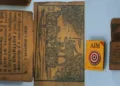
The approximately 1,500-page manuscript in Marathi language, titled Ahilya Kamadhenu, has been identified under the Centre’s Gyan Bharatam Mission, an ambitious nationwide initiative to locate, preserve and digitise India’s manuscript heritage.
According to reports, the manuscript remained safely preserved for nearly 14 generations by descendants of the Holkar state’s traditional Rajpurohit family (royalty’s officiating priestly family) in Indore before coming to light during the ongoing manuscript survey.
It will now undergo scientific conservation, cataloguing and digitisation while remaining with its lawful custodians. The newspaper report suggests that the manuscript is believed to date back nearly 300 years and contains detailed discussions on governance, public administration, ethical conduct, social welfare, water management, civic administration and justice as practised during Ahilyabai Holkar’s reign.
If authenticated through scholarly examination, it could become one of the most valuable contemporary sources on her administration.
The pillars of governance in Ahilya Kamadhenu
What makes Ahilya Kamadhenu particularly remarkable is that it is not merely a biographical tribute to Maharani Ahilyabai Holkar.
According to preliminary descriptions, it is conceived as a comprehensive treatise on Rajdharma, the ethical duties of a ruler, and presents an integrated framework for ideal governance.
The text, reportedly compiled by scholar Khushaliram around 1771, is divided into thematic chapters, or Vatsas (“a cow’s babies or calves”), each devoted to a specific aspect of administration and statecraft.
The newspaper report suggests that several foundational pillars emerge from the manuscript:
Lok-Kalyan (Public Welfare): The foremost responsibility of the state is the welfare of its people. The ruler is portrayed not as an absolute sovereign but as a trustee whose legitimacy rests on ensuring justice, prosperity and security for every subject. Welfare is treated not as charity but as the central purpose of governance.
Nyaya (Justice): The manuscript reportedly emphasises impartial and accessible justice. Ahilyabai’s administration was known for allowing ordinary citizens to petition the queen directly, ensuring that justice remained swift, humane and free from arbitrary favouritism. Contemporary accounts similarly praise her open courts and people-centric approach to dispute resolution.
Jal Prabandhan and Civic Administration: Water conservation, irrigation, wells, tanks, stepwells, river ghats and urban planning form another important theme. The manuscript recognises that prosperity depends upon sound management of natural resources and civic infrastructure, principles that remain central to modern public administration.
Naitik Shasan (Ethical Governance): Good governance, according to the text, cannot exist without personal integrity. It links administration with ethical conduct, accountability, honesty and moral restraint, expecting public officials to lead by example rather than by fear.
Samajik Samarasata (Social Harmony): The manuscript reportedly advocates a society held together by shared ethical values, mutual respect and social responsibility. Rather than viewing governance solely through taxation or military power, it presents the state as a custodian of social cohesion.
Jnan and Sanskriti (Knowledge and Culture): It also places emphasis on preserving learning, religious institutions, cultural traditions and civilisational memory. Maharani Ahilyabai’s own reign reflected this philosophy through her patronage of scholars, Sanskrit learning, temples, dharamshalas and public works across the Indian subcontinent.
Dharma and Rajdharma: Above all, the manuscript appears to present Dharma not merely as religious observance but as righteous, accountable and compassionate governance. The ruler’s highest duty is portrayed as protecting life, preserving justice and ensuring the welfare of society as a whole rather than pursuing personal glory. Scholars studying the text argue that it advances a philosophy of governance where ethical statecraft and public welfare are inseparable.
Viewed together, these principles bear striking similarities to what are today described as the hallmarks of good governance: rule of law, accountable administration, sustainable resource management, public welfare, ethical leadership and social inclusion.
While historians will await the manuscript’s critical edition before drawing definitive conclusions, Ahilya Kamadhenu promises to offer a rare eighteenth-century Indian articulation of governance that was rooted in Rajdharma yet remarkably relevant to contemporary discussions on welfare-oriented administration.
Saluting a Visionary Queen – Punyashlok Ahilyabai Holkar
On 31-May-1725 Punyashlok Ahilyabai Holkar descended to save our temples across Bharat. Prachyam salutes her vision and urges everyone to follow in her footsteps.#hindutemples #sanatan #ahilyabaiholkar pic.twitter.com/vncSZelsD1
— Prachyam (@prachyam7) May 31, 2026
A queen who rose from a village to rule an empire
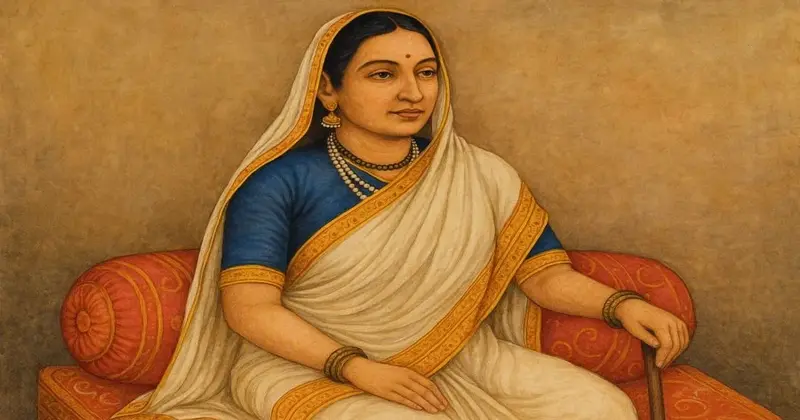
Maharani Ahilyabai was born in 1725 in the village of Chondi in present-day Maharashtra to Mankoji Shinde, a respected village patil.
Story of Rani Ahilyabai who rebuilt Kashi Vishwanath.
Ahilyabai was born on 31st may 1725 in the village of Chondi. She was the Holkar queen of Malwa Kingdom.
Save this thread such a rare thread. Read the thread till the end.. pic.twitter.com/kKHU6gjHlN
— Priyamvada S 🇮🇳🚩 (@Priyamvada227s) January 4, 2025
Tradition holds that Malhar Rao Holkar, the celebrated Maratha commander serving the Peshwas, noticed the young girl while she was attending a village temple. Impressed by her intelligence, discipline and character, he arranged her marriage to his son, Khanderao Holkar.
Following the deaths of her husband in 1754, her father-in-law in 1766 and later her only son Male Rao in 1767, Devi Ahilyabai assumed the administration of the Holkar state. At a time when women rulers were rare, she overcame opposition from sections of the nobility and established herself as one of the most capable sovereigns of the eighteenth century.
From her capital at Maheshwar on the banks of the Narmada, she governed territories stretching across present-day Madhya Pradesh and adjoining regions for nearly three decades until her death in 1795.
Governance rooted in justice and welfare
Ahilyadevi’s administration has long been remembered for combining compassion with administrative discipline.
— Prashant Pandya 🇮🇳 (@pHphilatelist) May 31, 2026
Historical records consistently describe her as holding open courts where ordinary citizens could directly present grievances. Revenue collection was expected to remain moderate, with officials instructed not to burden cultivators during years of poor harvest. Agricultural recovery, irrigation and local infrastructure received sustained attention, helping stabilise the Holkar territories during a politically turbulent era.
The newly discovered Ahilya Kamadhenu appears to reinforce this image. According to the newspaper report, the manuscript discusses principles resembling what modern scholars would describe as welfare-oriented governance, including fair justice, public accountability, ethical administration, water conservation, urban management and social harmony.
One section reportedly discusses “Lok-Kalyan” (public welfare) as the central duty of government, while another links good governance with moral values and social responsibility. Although scholars will need to critically edit and authenticate the manuscript before drawing firm conclusions, these themes closely correspond with Ahilyabai’s long-established historical reputation.
Protecting pilgrims in dangerous times
Perhaps one of Devi Ahilyabai Holkar’s greatest achievements lay beyond the boundaries of her kingdom.
In the North, you’ll find Kashi and Kedarnath.
In the South, Srisailam.
In the East, Puri.
In the West, Somnath.Across the country, you’ll find the hands of Maa Ahilyabai, quietly rebuilding, preserving, and shaping the identity of Bharat – The Hindu Rashtra#AhilyabaiHolkar pic.twitter.com/T7JtD4TfJx
— Kashmiri Hindu (@BattaKashmiri) May 31, 2026
Eighteenth-century India presented enormous challenges to pilgrims. Long-distance travel meant traversing forests inhabited by wild animals, crossing rivers without permanent bridges and passing through territories vulnerable to banditry.
Several regions also continued to experience political instability following repeated invasions and warfare during the decline of the Mughal Empire. Travellers often faced attacks by robbers, organised criminal groups commonly referred to in later records as thugs, and local armed factions.
Recognising these hardships, Maharani Ahilyabai invested extensively in creating safer pilgrimage networks across India. She financed the construction and repair of roads, wells, tanks, baolis, ghats, rest houses (dharamshalas) and temples along important pilgrimage routes.
These public facilities were intended not merely for religious merit but also to ensure that travellers had access to drinking water, food, shelter, and as secure resting places during long journeys. She is credited with rebuilding or renovating major temples destroyed or damaged over earlier centuries, including the Kashi Vishwanath Temple at Varanasi, where the present shrine owes much to her eighteenth-century reconstruction.
She also sponsored works at Somnath, Gaya, Ujjain, Dwarka, Omkareshwar, Rameswaram, Badrinath, Haridwar, Nashik, Ayodhya and numerous other sacred centres of key importance and reverence to Sanatani Hindu pilgrims.
Many of the ghats that continue to serve pilgrims today bear her name, reflecting the scale of her investment in public religious infrastructure. Modern historians may distinguish between documented architectural works and broader popular traditions, but there is little dispute that few rulers devoted comparable resources to facilitating pilgrimage throughout the subcontinent.
Administration with moral authority
Maharani Ahilyabai was equally respected for her personal conduct. Despite commanding considerable wealth, contemporary accounts describe her leading an austere lifestyle, wearing simple white clothing and maintaining rigorous daily religious observances.
Yet her spirituality never translated into administrative weakness. She personally reviewed petitions, monitored officials and insisted on financial accountability. Corruption was discouraged, and local administrators were expected to remain accessible to the people.
Military preparedness also remained important. Although she preferred peace, the Holkar state maintained capable armed forces under experienced commanders such as Tukoji Rao Holkar, enabling stability in a period marked by frequent regional conflicts.
Her reign became known for combining religious patronage with efficient administration, making her one of the few eighteenth-century rulers remembered more for institution-building than conquest.
Why the manuscript matters
The discovery of Ahilya Kamadhenu is significant because much of what historians know about Ahilyabai comes from scattered correspondence, Maratha administrative records, inscriptions and later biographies. A contemporary manuscript devoted specifically to her governance could provide invaluable insights into how her administration was understood during or soon after her lifetime.
According to the report, the manuscript covers topics ranging from justice and civic administration to moral governance and public welfare. If authenticated, it may reveal administrative concepts that anticipated many principles associated today with good governance, including transparency, citizen welfare, ethical leadership and accountable public institutions.
Researchers will, however, need to undertake careful textual analysis, establish authorship, determine the date of composition and compare its contents with existing archival records before treating it as a definitive historical source.
Preserving India’s manuscript heritage
The discovery also underlines the importance of the Gyan Bharatam Mission, launched by the Ministry of Culture to identify, document, conserve and digitise manuscripts preserved in temples, monasteries, libraries and private family collections across India. The mission aims to create a nationwide digital repository while allowing manuscripts to remain with their owners wherever appropriate. Scientific conservation, metadata creation and secure digital archiving form key components of the programme.
The Ahilya Kamadhenu manuscript is expected to undergo a multi-stage preservation process that includes documentation, physical verification, conservation support and high-resolution digitisation before scholars begin detailed study.
A legacy that still inspires
More than two centuries after her death, Devi Ahilyabai Holkar continues to occupy a unique place in Indian history.
She is remembered not simply as a queen or temple builder but as a ruler who viewed governance as a moral responsibility. Her emphasis on justice, public welfare, infrastructure, religious freedom, water conservation and compassionate administration continues to resonate in contemporary discussions on ethical governance.
If the newly discovered Ahilya Kamadhenu ultimately confirms the themes reported so far, it will not merely add another manuscript to India’s archives. It will provide a rare primary window into the philosophy of a ruler whose ideals continue to influence public memory, and whose reign remains widely regarded as one of the finest examples of enlightened administration in eighteenth-century India.