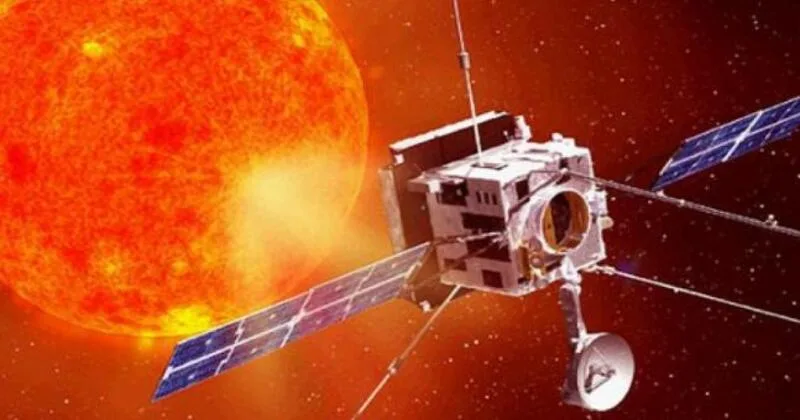
New Delhi: Union Minister of State for Prime Minister’s Office and Personnel, Public Grievances and Pensions, Atomic Energy and Space, Dr. Jitendra Singh, in a written reply to the Rajya Sabha on July 23, Wednesday, enlisted the accomplishments of Aditya L1, India’s maiden ambitious mission to sun.
The scientific objectives of Aditya-L1 are to study the solar wind particles, Solar corona, near UV signatures on the solar disc, as well as the solar magnetic fields (the Interplanetary Magnetic Field – IMF). The position of Aditya-L1 around the Sun-Earth L1 point facilitates continuous view of the Sun, making it a dedicated solar physics observatory.
ACHIEVEMENTS OF ADITYA-L1 MISSION
The scientific objectives of Aditya-L1 are to study the solar wind particles, Solar corona, near UV signatures on the solar disc, as well as the solar magnetic fields (the Interplanetary Magnetic Field – IMF). The position of Aditya-L1 around… pic.twitter.com/3P3VVbFvsK
— PIB India (@PIB_India) July 23, 2026
A few major achievements of Aditya-L1 include:
- Capturing the first-ever spectroscopic signatures of the onset phase of a Coronal Mass Ejection (CME), a phenomenon in which a chunk of the solar plasma material is ejected by the Sun.
- By combining global ground measurements with direct particles and fields observations from Aditya-L1, scientists brought out insights to some of the interesting observations during the intense geomagnetic storms of May and October 2024.
- Aditya-L1 observations also yielded the first comprehensive analysis of photospheric iron fluorescence on the Sun, capturing this phenomenon across 47 massive X-class solar flares during the peak of Solar Cycle 25 in 2024.
- Aditya-L1 captured unprecedented, high-resolution details of powerful solar flares in near-ultraviolet (NUV) wavelengths. Using these observations, Aditya-L1 recorded a first-of-its-kind, highly detailed view of a rare solar plasma ejection in ultraviolet light, expanding our understanding of the localized dynamics of solar eruptive events.
There are several other science results from Aditya-L1. All these results are published in reputed peer reviewed scientific journals.
Aditya-L1 is a solar physics mission, and does not fall under the category of a space weather mission. However, the data from Aditya-L1 facilitate the understanding of the behavior of the Sun in different phases of the solar cycle.
- Combining Aditya-L1 observations with ground-based observations, scientists get an understanding of the Sun-Earth connection, which eventually helps understanding the space weather impacts.
- The experience gained from Aditya-L1 will be useful to move forward to configure space-based systems towards the prediction of the space weather.
Thus, Aditya-L1, despite being a Solar physics mission, is a significant step for India’s journey towards having a space weather prediction capability.
The major scientific outcomes of India’s recent lunar mission near the Moon’s south pole include the following:
Minister also highlighted the milestones achieved by India in recent lunar missions. especially Chandrayan-3.
- The Chandrayaan-3 mission has, so far, been the only successful mission to the polar region of the Moon.
- The ChaSTE thermal probe of Chandrayaan-3 penetrated up to 10 cm deep to record the first-ever in-situ high-latitude temperature profile. It revealed a massive vertical temperature gradient during the lunar morning and sub-zero temperatures below 8 cm. A sharp variation in thermal conductivity and diffusivity at a depth of ~6 cm revealed a distinct two-layer “cake-like” regolith structure.
- ChaSTE measurements also showed that the top 2 to 6 cm of lunar regolith is hyper-porous but highly cohesive, acting as an effective thermal blanket that insulates potential subsurface water-ice molecules.
- Measurements by the Alpha Particle X-ray Spectrometer (APXS) on the Pragyan rover within 50 meters of the landing site showed a highly uniform elemental composition. APXS detected elevated abundances of magnesium-rich minerals, supporting the Lunar Magma Ocean (LMO) hypothesis and suggesting deep mantle elements were ejected during the formation of the nearby South Pole-Aitken (SPA) basin. This confirms that the landing site contains primitive mantle material absent from existing equatorial Apollo/Luna collections.
- The RAMBHA-LP Langmuir probe onboard the Vikram lander conducted the first-ever high-latitude near-surface plasma measurements. It recorded electron densities ranging from 300 to 650 electrons/cm³ and elevated kinetic temperatures of 3000 to 8000 K, proving that the near-surface plasma is energetic, non-thermal, and heavily modulated by the solar wind and Earth’s geomagnetic tail.
- The ILSA seismometer recorded over 250 distinct vibration events at the Shiv Shakti point. While ~200 events were successfully correlated to known mechanical operations of the rover and instruments, the remaining signals provide a pristine look into local lunar seismic activity.
All these results have been published in reputed scientific journals.
The success of Aditya-L1 and Chandrayaan-3 represents a turning point in India’s space program, India becoming a major producer of primary, high-impact space science data.
- Beyond the initial national milestones, these missions are actively laying the empirical groundwork for India’s long-term science roadmap, the upcoming Venus Orbiter Mission, Chandrayaan-4 and Chandrayaan-5/LuPEX (Lunar Polar Exploration), and next-generation planetary exploration.
- The deep-space navigation, halo orbit maintenance and autonomous payload operations perfected via Aditya-L1 are directly feeding into the trajectory planning and thermal management architectures required for the Venus Orbiter Mission.
- The high-precision landing, sensor fusion and autonomous hazard avoidance algorithms proven by Chandrayaan-3 form the baseline guidance systems for future sample return mission configurations, the immediate such mission being Chandrayaan-4.
These missions are also inspiring the studies of more complex missions from other Lagrange points in the Sun-Earth system and in a broader sense, are integral parts of a long-term plan of space exploration.
(With Inputs from Agencies)