The history of the North East is marked by a remarkable continuity of indigenous political institutions spanning nearly two millennia. From the rise of the Manipur kingdom in 33 CE, the Varman, Salasthambha and Pala rulers of Kamarupa, to the rulers of the Dimasa-Kachari, Jaintia, Tripura, Koch kingdoms and the nearly six-century-long Ahom Kingdom, along with chieftainship flourishing in hilly regions, the political landscape of the region reflects an extraordinary tradition of State formation, institutional continuity and indigenous governance. While dynasties changed, capitals shifted and territorial boundaries evolved, the institutions that sustained these kingdoms endured, allowing successive generations to preserve political authority and social order across vast and diverse landscapes.
Such continuity was not merely political; it was the outcome of a stable and well-organised society.
The material legacy of the region further reinforces this conclusion. Enduring political centres such as Kangla, Garhgaon, Rangpur, Maibang and Jaintiapur, monumental creations like the Unakoti rock carvings, and remarkable feats of indigenous engineering such as the Living Root Bridges are not the products of transient or unstable societies. They reflect communities willing to invest labour and resources in projects whose benefits would be realised for decades, and sometimes centuries. Likewise, the continued existence of kingdoms such as the Jaintia Kingdom for over thirteen centuries, the Dimasa Kingdom through successive capitals, the Tripura Kingdom across changing political circumstances, the Ningthouja dynasty through seventy-four successive rulers, and the Ahom Kingdom for nearly six hundred years demonstrates that institutional resilience, rather than the achievements of individual rulers, formed the bedrock of the region’s history.
This institutional continuity found expression not only in kingdoms but also in the everyday organisation of society. Systems of governance, customary law, community institutions, collective resource management and inter-polity cooperation ensured that political authority rested upon an orderly and resilient social structure.
Political Continuity
Political stability in the pre-colonial North East did not rest upon the authority of individual rulers alone. Rather, it emerged from institutions that distributed power across multiple levels of governance. While kingdoms such as the Ahoms developed elaborate administrative hierarchies extending from the royal court to the village, the hill polities evolved equally sophisticated systems in which chiefs governed alongside councils and assemblies.
The stability of a society is measured not merely by the strength of its rulers but by the institutions that regulate everyday life. Justice was not conceived as an instrument of state coercion but as a means of preserving social harmony, while community institutions ensured that every generation inherited not only knowledge and skills but also a sense of responsibility towards society. Governance, therefore, did not end with political administration; it became a part of everyday lives of the people through customary laws, collective decision-making and shared obligations.
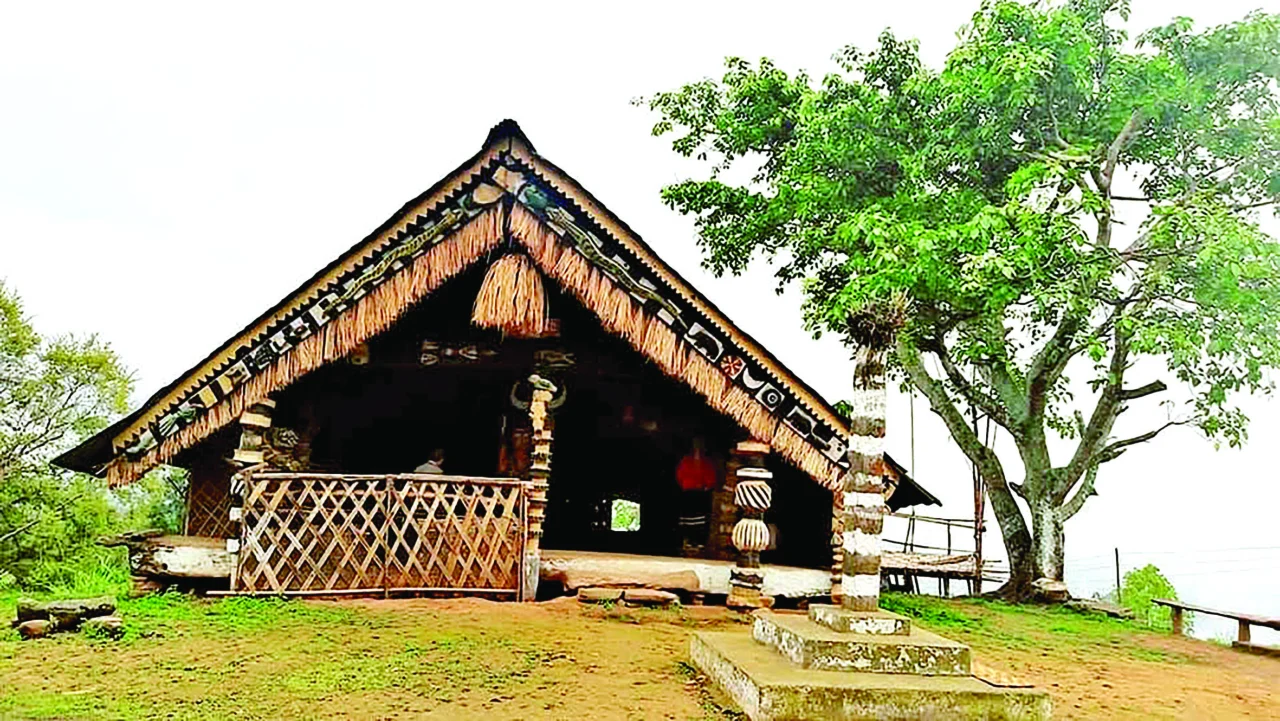
Justice therefore, was largely administered within the community itself. Among the Lushais for example, public affairs were governed by Khawtlang Dan, while matters concerning individuals were regulated through Mimal Dan, with disputes resolved by the village chief in consultation with the Upas, or council of elders.
Equally significant were the institutions through which communities transmitted knowledge, discipline and civic responsibility. The Morung among several Naga communities and in parts of Arunachal Pradesh functioned not merely as a youth dormitory but as an institution where elders instructed younger generations in history, warfare, craftsmanship, customary law and their obligations towards society.
The enduring strength of pre-colonial North East lay in the institutions that nurtured responsible citizens, resolved disputes, preserved social harmony and enabled communities to act together when circumstances demanded.
The Apatanis of the Ziro Valley for example, developed an integrated system in which paddy, fish and finger millet were cultivated simultaneously on the same terraced fields. Community-managed irrigation channels diverted perennial streams across carefully engineered terraces, while fish naturally fertilized the soil, controlled pests and improved the productivity of the paddy. Every element of the system complemented the others, producing multiple sources of food without exhausting the land or relying upon artificial inputs. Such agricultural innovation could not possibly emerge from a society that was worried about wars and instability. It is reflective of a society that has enough peace to be able to brainstorm and innovate while also thinking of long-term goals like food management. Communities did not merely produce grain; they created institutions to safeguard it against uncertainty. During the Lushai Expedition of 1871-72, British forces deliberately burnt the communal granary of Chief Zakapa Fanai’s village, an act that crippled the entire settlement rather than a single household. The incident reveals that food storage was organised collectively, with the community assuming shared responsibility for securing provisions against future scarcity. Such systems would have held little meaning in unstable or transient settlements. They instead point towards societies that consciously planned beyond immediate needs and recognized food security as a collective obligation. The same spirit of collective responsibility shaped the organisation of production. Economic activities rarely depended upon isolated individuals. Instead, communities functioned as interconnected links within larger production networks, each contributing a specialized skill that sustained an industry across generations. Whether in silk production, metallurgy, salt manufacturing, shipbuilding or limestone extraction, production followed an organised sequence in which one group extracted raw materials, another processed them, another refined them, while yet others transported and traded the finished products.
The scale of these economic systems is further reflected in the region’s participation in long-distance trade. The limestone of the Khasi-Jaintia Hills, for instance, entered commercial networks extending to distant merchants, including the Greeks. Such trade was not simply the result of geographical advantage. It presupposed stable political institutions, secure routes, reliable production and sustained commercial relationships maintained over long periods. Long-distance commerce of this nature cannot flourish in societies characterized by instability or arbitrary resource extraction; it depends upon predictable systems of production that was immune to sudden collapses and governance capable of inspiring confidence among trading partners.
Interdependence & Social Cohesion
The strength of pre-colonial North East did not lie in any single kingdom, industry or ruler, but in the remarkable ability of its societies to function as interconnected systems. Stability emerged because every level of society, from the individual to the community, from political institutions to economic organisation, and from ecological knowledge to spiritual life operated within an established framework of mutual responsibility. Rather than existing as isolated achievements, governance, agriculture, trade, education and justice reinforced one another, creating societies capable of adapting, innovating and enduring over centuries. This interconnectedness is perhaps the defining characteristic of the region’s pre-colonial civilisation. The celebrated Muga silk tradition, sophisticated shipbuilding, indigenous salt production, metallurgy, gold washing, sustainable agricultural systems and flourishing trade networks to name a few were not isolated inventions. They were the products of communities that had learned to organise labour, preserve specialised knowledge and transmit skills across generations. Equally significant was the relationship between society and its environment. Rather than treating nature as an object of unrestricted exploitation, communities developed systems that worked with the landscape. Agriculture followed ecological rhythms, industries drew upon locally available resources, and generations accumulated an intimate understanding of forests, rivers ˘ and mountains.
North East stands as a glorious reminder of the fact that sustainable progress is built not upon exploitation or isolation, but upon a deep-rooted understanding of one’s relationship with oneself, family, community, environment and ultimately the spiritual consciousness in that order
This close engagement with the natural world enabled the evolution of sustainable production systems as well as traditions of indigenous medicine, demonstrating that knowledge itself emerged through centuries of interaction with the environment. The ecology was not viewed as separate from society; it was understood as an extension of it.
This realisation also challenges another persistent assumption that the hills and plains of North East existed as isolated and disconnected worlds. Historical evidence points in the opposite direction. Political alliances, matrimonial ties, shared trade routes, reciprocal administrative arrangements and integrated production networks reveal continuous interaction across ecological and political boundaries.
Long before colonial intervention sought to fragment these institutions, North East stands as a glorious reminder of the fact that sustainable progress is built not upon exploitation or isolation, but upon a deep-rooted understanding of one’s relationship with oneself, family, community, environment and ultimately the spiritual consciousness in that order.