

Waterman Rajendra Singh revives sacred Mandir ponds
September 17, 2026
  • Read Ecopy
  • Circulation
  • Advertise
  • Careers
  • About Us
  • Contact Us
Android AppiPhone AppArattai
Organiser
  • ‌
  • Bharat
    • Assam
    • Bihar
    • Chhattisgarh
    • Jharkhand
    • Maharashtra
    • View All States
  • World
    • Asia
    • Europe
    • North America
    • South America
    • Africa
    • Australia
  • Editorial
  • International
  • Opinion
  • RSS @ 100
  • More
    • World Hindu Congress 2026
    • Op Sindoor
    • Analysis
    • Sports
    • Defence
    • Politics
    • Business
    • Economy
    • Culture
    • Special Report
    • Sci & Tech
    • Entertainment
    • G20
    • Azadi Ka Amrit Mahotsav
    • Vocal4Local
    • Web Stories
    • Education
    • Employment
    • Books
    • Interviews
    • Travel
    • Law
    • Health
    • Obituary
  • Subscribe
    • Subscribe Print Edition
    • Subscribe Ecopy
    • Read Ecopy
  • ‌
  • Bharat
    • Assam
    • Bihar
    • Chhattisgarh
    • Jharkhand
    • Maharashtra
    • View All States
  • World
    • Asia
    • Europe
    • North America
    • South America
    • Africa
    • Australia
  • Editorial
  • International
  • Opinion
  • RSS @ 100
  • More
    • World Hindu Congress 2026
    • Op Sindoor
    • Analysis
    • Sports
    • Defence
    • Politics
    • Business
    • Economy
    • Culture
    • Special Report
    • Sci & Tech
    • Entertainment
    • G20
    • Azadi Ka Amrit Mahotsav
    • Vocal4Local
    • Web Stories
    • Education
    • Employment
    • Books
    • Interviews
    • Travel
    • Law
    • Health
    • Obituary
  • Subscribe
    • Subscribe Print Edition
    • Subscribe Ecopy
    • Read Ecopy
Organiser
  • Home
  • Bharat
  • World
  • Operation Sindoor
  • Editorial
  • Analysis
  • Opinion
  • Culture
  • Defence
  • International Edition
  • RSS @ 100
  • Magazine
  • Read Ecopy
Home Bharat

Rajendra Singh: How India’s ‘Waterman’ is reviving Mandir ponds to restore heritage and fight the water crisis

Rajendra Singh, known as India's "Waterman," has championed the revival of sacred Mandir ponds and traditional water bodies, blending environmental conservation with India's rich cultural heritage. His work highlights how restoring ancient water systems can help tackle modern water crises while preserving centuries-old traditions

Nandini NairNandini Nair
Jul 18, 2026, 01:30 pm IST
inBharat
Follow on Google News
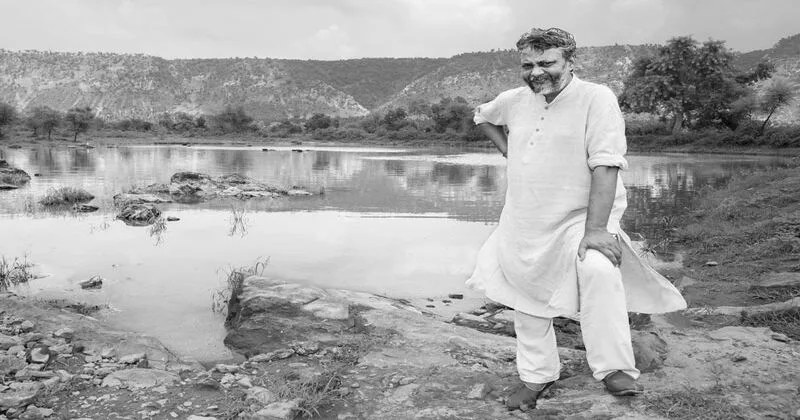
India's "Waterman" Rajendra Singh has revived sacred temple ponds, blending faith with water conservation

India's "Waterman" Rajendra Singh has revived sacred temple ponds, blending faith with water conservation

Facebook
Twitter
WhatsAppTelegramEmail

By restoring ancient Mandir ponds and traditional water bodies, India’s ‘Waterman’ Rajendra Singh has shown that environmental conservation and spiritual heritage can go hand in hand.

Across India, thousands of Mandirs were once built around ponds, tanks, stepwells, and sacred lakes that served both religious and ecological purposes. For centuries, these traditional water bodies provided drinking water, recharged groundwater, supported agriculture, and became centres of community life. However, rapid urbanisation, neglect, and encroachments have left many of these sacred water systems polluted or dry.

Few people have worked as tirelessly to revive this forgotten heritage as Rajendra Singh, popularly known as the “Waterman of India.” While he is globally recognised for rejuvenating rivers in Rajasthan, his work has also highlighted the importance of restoring temple ponds and traditional water structures that have sustained Indian civilisation for centuries.

Restoring India’s Ancient Water Wisdom

Rajendra Singh, through his organisation Tarun Bharat Sangh, has spent over four decades reviving traditional rainwater harvesting systems such as johads, ponds, tanks, and check dams across Rajasthan. Many of these water bodies were historically linked to temples and sacred sites. Villagers once considered them holy, ensuring regular maintenance and protection. Singh believes that restoring these traditional systems not only solves water scarcity but also revives cultural traditions that respected nature as sacred. His philosophy is simple: India’s ancestors understood that worshipping nature meant protecting it.

Mandir Ponds: More Than Religious Structures

Mandir ponds, known by different names across India, Pushkarini in the South, Kund in North India, Sarovar, Talab, or Pokhar elsewhere, were designed with remarkable ecological understanding. These ponds collected rainwater, replenished underground aquifers, reduced flooding, and supplied water during droughts. They also supported fish, birds, and biodiversity while maintaining local microclimates.

Also Read: 500-year-old murti recovered from Bay of Bengal by fishermen; Authorities probe origin & possible smuggling link

Today, many Mandir tanks have become dumping grounds or remain dry due to blocked natural drainage channels. Rajendra Singh argues that reviving these traditional water bodies can become one of India’s most effective climate adaptation strategies.

His campaigns encourage villagers, Mandir committees, local administrations, and volunteers to work together in cleaning ponds, removing encroachments, restoring catchment areas, and ensuring rainwater naturally flows into these tanks. By involving religious institutions, water conservation becomes a people’s movement rather than just an environmental project. According to Singh, when communities consider water bodies sacred, they protect them naturally for generations.

Climate Change Makes Traditional Systems Relevant Again

India is witnessing more frequent droughts, erratic monsoons, declining groundwater levels, and extreme heat. Experts increasingly recognise that traditional water harvesting systems can complement modern infrastructure.

Mandir ponds require minimal energy, use locally available materials, and naturally recharge groundwater. Restoring them can reduce dependence on borewells while improving water security for nearby communities. Singh has repeatedly stressed that India’s future water security lies not only in large dams but also in reviving millions of small traditional water bodies that once dotted the landscape.

Recognition for a Lifetime of Service

Rajendra Singh’s contribution has earned national and international recognition. He received the Ramon Magsaysay Award in 2001 for community leadership and the Stockholm Water Prize in 2015, often described as the “Nobel Prize for Water.” Yet, Singh continues to work closely with rural communities, advocating sustainable water management rooted in India’s traditional knowledge.

As India undertakes large-scale initiatives to restore rivers and promote water conservation, Rajendra Singh’s work offers a powerful lesson: protecting heritage and protecting nature are not separate goals. Reviving temple ponds preserves history, strengthens faith, restores biodiversity, recharges groundwater, and builds resilience against climate change, all at the same time.


 

Topics: Temple PondsTraditional Water BodiesSustainable Water ManagementIndian heritagewater conservationRajendra SinghEnvironmental conservationWaterman of India
Nandini Nair
Nandini Nair
Nandini Nair is a Subeditor-cum-Content Manager at Organiser Digital with more than 3.5 years of experience covering international, national, cultural and current affairs. Also tracks and develops impactful stories emerging from social media discourse, delivering engaging digital reporting [Read more]
Share
Tweet
SendShareSend
✮ Subscribe Organiser YouTube Channel. ✮
✮ Join Organiser's WhatsApp channel for Nationalist views beyond the news. ✮
Previous News

Senior Journalist and Former ‘Panchjanya’ Associate Editor Alok Goswami passes away in Delhi; Huge loss to Hindi media

Next News

Rahibai Soma Popere: The Padma Shri Awardee protecting India’s forgotten seed varieties for future generations

Related News

Kollakkayil Devaki Amma turned adversity into a green legacy by creating a 4.5-acre forest with over 3,000 trees in Kerala

Kollakkayil Devaki Amma: The Kerala woman who turned her backyard into a 4.5-acre forest with 3,000+ trees

Mundeshwari Mandir

Mundeshwari Mandir: Exploring India’s 1,900-year-old Hindu shrine and its ancient legacy in Bihar

Gangaram Samrat

Gangaram Samrat Death Anniversary: The historian who refused to let Sindh’s history be erased

The Kanwar Yatra is more than a sacred pilgrimage; it reflects values of discipline, fitness, service, and harmony with nature

Kanwar Yatra 2026: How the sacred pilgrimage promotes scientific living, discipline & environmental responsibility

Madhya Pradesh's Chaturbhuj Mandir at Gwalior Fort preserves one of the world's earliest known zero symbols

The Story of Gwalior’s Zero Temple: How Chaturbhuj Mandir became a milestone in mathematical history

Dr Vasudev Sharan Agrawal

Dr Vasudev Sharan Agrawal Birth Anniversary: Archaeologist who gave scientific depth to India’s civilisational heritage

Load More

Latest News

Arunachal Pradesh Congress leader and activist Bhanu Tatak

CBI books Arunachal Congress leader Bhanu Tatak over Rs 20.94 lakh foreign funding, FCRA violations

EAM Jaishankar extends series of developmental aid to Bhutan

43 Jersey Cows, Hydropower, Healthcare & Connectivity: India’s assistance to Bhutan echoes Neighbourhood First Policy

Hyderabad Liberation Day: September 17 is reminder of nation-building, says VP CP Radhakrishnan

Madurai Meenakshi Amman Temple Kumbabhishekam commences after 17 years amid lakhs of devotees

Breaking the 17-year deadlock: Six states sign historic Kishau multipurpose project pact to transform Yamuna basin

ED conducted searches across four states in connection with the Ranchi RSS office bomb attack, probing the financial trail of the accused

Ranchi RSS Office Bomb Attack: ED conducts raids in Delhi, Bihar, Jharkhand and Karnataka to trace money trail

Pakistani Beauty Creams Sold in India Despite Restrictions? CDSCO Issues Health Alert

Toxic Pakistani fairness creams in India? Drug regulator warns of toxic heavy metals

India rejects Pakistan-China Joint Boundary Commission as no real geographic border exists between the two countries

India Rejects Pakistan-China Boundary Commission: Hails sovereignty as no real border exists in the occupied territory

Shahzad Bhatti network added to UAPA terror list after security agencies bust alleged ISI-backed terror network

Centre designates ISI-backed Shahzad Bhatti network as terrorist organisation under UAPA over terror activities

BrahMos brings India’s high-speed strike capability into focus against Pakistan’s Chinese-made HQ-17AE

BrahMos vs HQ-17AE: How India’s missile strike power exposes cracks in Pakistan’s latest Chinese air defence shield

Load More
  • Privacy
  • Terms
  • Cookie Policy
  • Refund and Cancellation
  • Delivery and Shipping

© Bharat Prakashan (Delhi) Limited.
Tech-enabled by Ananthapuri Technologies

  • Home
  • Search Organiser
  • Bharat
    • Assam
    • Bihar
    • Chhattisgarh
    • Jharkhand
    • Maharashtra
    • View All States
  • World
    • Asia
    • Africa
    • North America
    • South America
    • Europe
    • Australia
  • Editorial
  • Operation Sindoor
  • Opinion
  • Analysis
  • Defence
  • Culture
  • Sports
  • Business
  • RSS @ 100
  • Entertainment
  • More ..
    • Sci & Tech
    • Vocal4Local
    • Special Report
    • Education
    • Employment
    • Books
    • Interviews
    • Travel
    • Health
    • Politics
    • Law
    • Economy
    • Obituary
  • Subscribe Magazine
  • Read Ecopy
  • Advertise
  • Circulation
  • Careers
  • About Us
  • Contact Us
  • Policies & Terms
    • Privacy Policy
    • Cookie Policy
    • Refund and Cancellation
    • Terms of Use

© Bharat Prakashan (Delhi) Limited.
Tech-enabled by Ananthapuri Technologies