China’s economy expanded at its slowest pace in three years during the second quarter of 2026, underscoring mounting pressure on Beijing as weak domestic demand, a prolonged property downturn, rising unemployment, and a fresh wave of COVID-19 infections weigh on the country’s growth outlook.
Official data released by China’s National Statistics Bureau (NBS) on July 15 showed that gross domestic product (GDP) grew by 4.3 per cent year-on-year in the April-June quarter, slowing significantly from the 5 per cent growth recorded in the first quarter. The figure also fell short of the 4.5 per cent expansion forecast by economists surveyed by Reuters.
The latest reading marks China’s weakest quarterly growth since the fourth quarter of 2022, when the country was still struggling under its stringent COVID-19 restrictions. It also places growth below Beijing’s full-year target of 4.5 to 5 per cent, the lowest official growth target the country has adopted in more than three decades.
The disappointing figures have intensified expectations that the Chinese Communist Party leadership could announce additional stimulus measures during the Politburo meeting scheduled later this month. While policymakers broadly agree that domestic demand must be revived, economists remain divided over the most effective way to achieve that objective.
Domestic demand remains the economy’s weakest link
Alongside the GDP figures, official economic indicators presented a mixed picture of the Chinese economy.
Retail sales, considered a key indicator of consumer spending, rose 1 per cent year-on-year in June, recovering from a 0.6 per cent decline in May. Although the improvement suggests some stabilisation in consumption, spending remains subdued compared to historical levels.
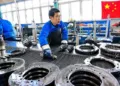
Industrial production, however, continued to outperform domestic demand. Factory output increased 5.3 per cent from a year earlier in June, accelerating from 4.5 per cent growth recorded in May.
Exports have emerged as one of the few bright spots. Customs data released on July 14 showed overseas shipments surged 27 per cent year-on-year in June, measured in US dollar terms.
Despite robust exports and industrial activity, economists argue that China’s recovery has become increasingly unbalanced. The economy is being driven largely by high-tech manufacturing and export-oriented industries, while household consumption, private investment and the property sector continue to weaken.
Many analysts also contend that if even China’s official statistics present such a bleak picture, the underlying economic conditions could be considerably worse, noting longstanding concerns over the reliability of official data.
Property collapse and investment slump deepen structural concerns
Investment indicators released alongside the GDP data highlighted the continuing drag from China’s real estate crisis. During the first six months of 2026, fixed-asset investment, which includes long-term investment in infrastructure, transport, ports, land and industrial facilities, declined 5.7 per cent compared with the same period last year.
The property market remained one of the economy’s weakest sectors, with real estate investment plunging 18 per cent year-on-year.
Economists described the continued contraction in fixed-asset investment as unprecedented and warned that persistent weakness in investment could significantly undermine China’s broader economic ambitions.
The labour market also remains under strain. Analysts pointed to elevated unemployment, particularly among young people aged 16 to 24, cautioning that unless employment opportunities improve alongside investment, achieving sustainable economic growth will become increasingly difficult.
The slowdown has also accelerated the expansion of China’s gig economy. Tens of millions of workers have reportedly shifted from formal employment into flexible jobs such as ride-hailing and food delivery services, often facing extended working hours, lower incomes and limited access to social security protections.
Reports from the Chinese households and small business also painted a pessimistic picture of domestic sentiment. Several families said they had postponed or reduced discretionary spending due to concerns over employment prospects and stagnant wages, while the prolonged property crisis has continued to erode household wealth.
External pressure mounts despite export boom
China’s strong export performance has not eased growing international trade tensions. The European Union has become increasingly vocal about its widening trade imbalance with Beijing. EU Trade Commissioner has set an October deadline for China to demonstrate meaningful progress in addressing trade imbalances and what Brussels describes as unfair trade practices.
According to available figures, the European Union recorded its largest-ever trade deficit with China last year, amounting to approximately 1 billion euros (about US$1.1 billion) every day.
European Commission President Ursula von der Leyen recently warned that Brussels is prepared to respond if Beijing fails to deliver tangible results.
“Dialogue is essential, but the dialogue has to deliver,” von der Leyen said while speaking to reporters in Cork, Ireland, earlier this month, adding that the European Union has “all the instruments on the table” should negotiations fail to produce meaningful outcomes.
The combination of record exports alongside weak domestic demand has further highlighted the structural imbalance within China’s economy, where manufacturing capacity continues to expand while internal consumption struggles to recover.
COVID-19 cases surge as new variants spread across China
At the same time that economic pressures are mounting, China is also witnessing a significant resurgence of COVID-19 infections.
The Chinese Center for Disease Control and Prevention (China CDC) reported on July 8 that the country recorded approximately 79,000 confirmed COVID-19 cases during June, a sharp increase from 21,861 cases reported in May. Among the June infections, authorities reported 130 severe cases and one death, compared with 35 severe cases and one death during May.
Although Chinese authorities maintained that only one fatality occurred, many observers questioned the credibility of the figures given China’s previous record of underreporting COVID-19 infections and deaths.
According to official genomic surveillance, every sequenced sample in June belonged to the Omicron variant, with the NB.1.8.1 lineage and its sub-lineages emerging as the dominant circulating strains nationwide.
Separate national surveillance covering the week from June 29 to July 5 (Week 27) showed that influenza virus accounted for 11.6 per cent of acute respiratory infections, followed by SARS-CoV-2 at 9.6 per cent, while enterovirus represented 9.1 per cent.
The rapid increase in reported infections generated widespread debate on Chinese social media. Talk show host Lin Buli questioned the official claim that only one COVID-related death had occurred, asking whether authorities were ignoring long-term complications including immune disorders, chronic fatigue, tachycardia, chest pain, chronic cough, allergies, diabetes, kidney damage, anxiety, depression and autonomic nervous system dysfunction.
Health influencer Yixue Shouza, who has nearly 2 million followers on Weibo, also urged the public not to dismiss COVID-19, noting that many people struggle to distinguish between common colds, influenza and coronavirus infections, while stressing that COVID-19 remains an ongoing public health concern.
Experts question official figures as new variants emerge
Medical experts have also expressed concerns regarding the apparent inconsistency between China’s reported infection numbers and its extremely low mortality figures.
Taiwan reported 2,811 COVID-19 cases during the week ending July 6, including 17 severe cases and no deaths, indicating that infections are also rising elsewhere in the region.
Taiwanese infectious disease specialist Cheng Yuan-yu told to media that the overall COVID-19 situation across East Asia is worsening. Given China’s vast population and the number of reported infections, he argued that the officially reported numbers of severe cases and deaths appear unusually low. He said it remains impossible to determine whether the discrepancy reflects insufficient healthcare reporting, inaccurate statistics or deliberate concealment by Chinese authorities.
Because of Beijing’s long-standing record of publishing unreliable COVID-19 data since the early stages of the pandemic in 2020, anecdotal accounts from local residents and healthcare workers continue to serve as important supplementary sources for assessing conditions on the ground.
Experts have also drawn attention to PQ.16.1.1, a rapidly spreading and heavily mutated Omicron sub-lineage that descended from NB.1.8.1 and emerged in early 2026. Publicly available information indicates that the variant is spreading across mainland China and Southeast Asia and carries several significant spike protein mutations.
Multiple genomic surveillance platforms are also tracking additional emerging SARS-CoV-2 lineages, including RF.5, RV.1, PQ.16.1.1, RE.1.1.5, and several related descendant variants.
Researchers noted that while mortality from PQ.16.1.1 remains below 1 per cent among individuals experiencing their first COVID-19 infection, repeated infections pose greater risks. They warned that people who have previously contracted COVID-19 three or more times may face severe illness or even death following infection with the latest strain.
Experts further cautioned that the combination of respiratory damage and immune stress caused by COVID-19, together with airway obstruction, myocarditis and neurotoxicity associated with diphtheria toxin, could transform what initially appears to be a routine respiratory illness into a potential medical emergency requiring immediate attention.
With economic growth slowing to a three-year low, domestic consumption remaining fragile, the property market continuing to contract, unemployment persisting, trade tensions escalating and COVID-19 infections rising once again, Beijing now faces growing pressure to stabilise both public confidence and the broader economy as policymakers prepare for key decisions at the upcoming Politburo meeting.