As China struggles with slowing growth, business failures and the lingering impact of its COVID-era policies, millions of citizens are finding themselves trapped in debt. Beijing’s vast blacklist system, designed to punish defaulters, is increasingly exposing the social costs of China’s debt-driven growth model and raising questions about the sustainability of the country’s economic governance.
Accounts emerging from different parts of China suggest that a growing number of entrepreneurs, workers and small-business owners are being pushed into financial ruin as economic opportunities shrink and debt burdens accumulate. Many of those affected have spoken anonymously or disclosed only their surnames, fearing repercussions from authorities and creditors.
China’s debt enforcement framework relies heavily on a nationwide blacklist for individuals who fail to repay loans or comply with court-ordered financial obligations. Once blacklisted, debtors can face sweeping restrictions that extend far beyond financial penalties.
Individuals on the list can be barred from purchasing airline tickets, travelling on high-speed rail services, staying in luxury hotels, accessing certain entertainment venues and obtaining various financial services. Restrictions can also affect access to credit cards, loans, educational opportunities and even company registrations, creating barriers that make economic recovery increasingly difficult.
Business collapse and the road to blacklisting
One man from Guizhou Province described how a small-business venture transformed into a financial disaster that ultimately left him blacklisted and struggling to survive. He initially worked in the home-renovation sector before joining partners in 2021 to establish a bar and nightclub business. However, the venture quickly encountered regulatory difficulties and was forced to suspend operations. The disruptions were later compounded by China’s strict COVID-19 lockdown measures, which severely affected commercial activity across the country.
By the end of 2023, the business had collapsed completely. According to the man, the failure left him carrying approximately 5.9 million yuan (about $873,000) in debt. He also became embroiled in legal disputes involving unpaid wages and was eventually placed under court-imposed spending restrictions after a lawsuit filed by a security company.
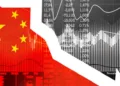
This chart reinforces a view we have held for some time: China’s weakness is no longer confined to the property sector. It is increasingly spreading into the broader consumer economy.
The latest data show retail sales growth slowing sharply, fixed-asset investment contracting,… pic.twitter.com/G27cd9yOYo
— Ricky Ho (@rickyho_1989) June 18, 2026
His experience highlighted what he described as inconsistencies in China’s debt collection practices. While formal restrictions remained in place, he said some banks were less aggressive than private creditors. Certain lenders contacted him directly, while others resorted to public-pressure tactics in attempts to recover money. The man has since relocated to Yiwu, a major manufacturing centre in Zhejiang Province, where he now works as a day labourer. “It’s not to repay debt anymore,” he reportedly said. “It’s just to survive.”
He added that many individuals facing similar financial hardships have also moved to Yiwu in search of temporary employment and opportunities to rebuild their lives.
Lockdowns, debt and mental health pressures
Another entrepreneur from Guangdong Province described a similar trajectory, claiming that a once-successful business with assets worth millions of yuan collapsed during the country’s stringent pandemic restrictions.
The businessman said he is now burdened with more than 3 million yuan (around $444,000) in debt. The liabilities include bank loans, private borrowing and various unpaid obligations. He also continues to face legal disputes and debt-enforcement proceedings. Beyond financial losses, he described severe psychological consequences arising from mounting creditor pressure and legal battles.
According to the entrepreneur, debt collectors at one stage vandalised his family’s grave site, escalating an already tense dispute. He said the situation deteriorated to the point where threats and retaliatory warnings were exchanged. Feeling overwhelmed, he reportedly warned creditors that continued pressure could provoke extreme reactions, illustrating the emotional strain associated with prolonged financial distress.
The dispute was eventually partially settled after creditors agreed to waive interest claims in exchange for repayment of the principal amount owed. The businessman said he was diagnosed with depression during the height of the crisis, although his condition improved following the settlement. Nevertheless, he maintains that repayment remains unrealistic given his current circumstances and that even discounted settlement offers remain beyond his financial reach. He was also critical of China’s debt-enforcement system, arguing that travel restrictions and spending controls effectively prevent many debtors from rebuilding their livelihoods.
According to him, numerous former business owners have chosen to relocate operations to Vietnam and other Southeast Asian countries, seeking business environments they view as more conducive to recovery and growth.
Uneven enforcement and loopholes
Not every debtor interviewed portrayed the system as entirely restrictive. A cosmetics business owner from Guangdong Province said he currently owes more than 6 million yuan (approximately $888,000), with much of the debt owed to private individuals rather than financial institutions. He acknowledged that he had stopped repaying certain obligations, including wages owed to employees. Despite being blacklisted, however, he claimed to have continued operating businesses by using relatives’ names and complex ownership arrangements.
The businessman said his initial response to mounting debt was panic, but that he eventually resigned himself to the situation. “I’ve basically accepted it,” he reportedly stated. According to his account, family-controlled accounts and proxy structures have allowed him to maintain commercial activities despite formal restrictions. He also suggested that some travel limitations can be circumvented through third-party arrangements.
His experience points to another challenge confronting Chinese authorities, which is the uneven implementation of debt-enforcement measures. While Beijing promotes the blacklist as a powerful mechanism for ensuring compliance and repayment, some debtors claim that practical enforcement varies considerably. The businessman noted that despite legal provisions permitting stronger enforcement actions, he has not faced arrest.
The experiences described by these debtors reveal a troubling dimension of China’s economic slowdown. Years of debt-fuelled expansion, followed by regulatory disruptions, pandemic-era lockdowns and weakening growth, have left many individuals trapped between overwhelming liabilities and a punitive enforcement system.
For a growing number of Chinese citizens, financial failure no longer means merely owing money. It increasingly means exclusion from normal economic life, creating a new class of blacklisted individuals whose prospects for recovery remain uncertain as China’s economic challenges continue to deepen.