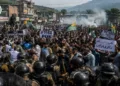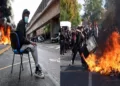
Stone-pelting, large-scale shutdowns or hartals, organised street violence leading to vandalisation of government property once defined the ecosystem that prevailed in Jammu & Kashmir. These were all almost a daily routine, with the security forces battling urchins who had a swagger in their gait defined by the backing of anti-national elements.
The first of these things, stone pelting, which led to many injuries among security personnel and among the youth when those attacked retaliated, have gone done significantly. Believe it or not, this pernicious practice has reduced by a whopping 99 per cent, after Article 35-A was abrogated seven years ago. It gave Article 370 the teeth it had due to several provisions added to it.
Brigadier Anil Gupta (retired), security and strategic affairs analyst, defined the two articles consigned to dustbin of history in these words. He said: Article 370 and Article 35-A were inconsistent with the spirit of the Indian Constitution, particularly the Fundamental Right to Equality. They created an arrangement that fostered inequality and encouraged the notion of a state within a state. This was contrary to the vision of one sovereign, united India envisaged by the framers of the Constitution.
Nehru helped Sheikh Abdullah to get Article 370
He added: Article 370 found its place in the Indian Constitution at the insistence of Sheikh Mohammad Abdullah and with the support of then Prime Minister Jawahalal Nehru. This was done by Nehru-Abdullah duo despite considerable opposition within the Constituent Assembly.
It may be recalled that Article 370 had been included in the Constitution as a temporary measure. To strengthen it, Nehru later included Article 35-A in the Indian statute through backdoor by a Presidential order, without any discussions in the Lok Sabha or the Rajya Sabha. In other words, Article 35-A was neither debated nor enacted by Parliament.
These provisions could, and should, have been abrogated much earlier but the policy of appeasement that successive Congress governments followed did not allow this to happen. It was finally left to a National Democratic Alliance (NDA) government, led by the BJP and Prime Minister Narendra Modi to finally repeal these provisions.
Article 35-A is dead and Article 370 sits in the Indian Constitution entirely neutered and rendered harmless because of what Union Home Minister Amit Shah initiated on August 5, 2019. The ecosystem that enabled street protests on the calls by anti-nationals like Massarat Alam, Asiya Anrabi and Yaseen Malik has been destroyed to a large extent, if not completely. This happened, post abrogation, as all those named in the preceding sentence have been put behind bars, in different jails, after prosecuting them for their sins in courts.
Network of Over Ground Workers (OGWs) smashed
Intelligence-led policing, preventive detentions and the weakening of overground support networks has led these changes. During the ongoing Shri Amarnath yatra this year, the Anantnag police has used facial recognition technology to apprehend several Over Ground Workers (OGWs). The use of intelligence tools like this has deterred other OGWs from trying to infiltrate yatra and other public spaces where they are scared of getting caught.
Between June and September 2010, when Chief Minister Omar Abdullah ruled the state of Jammu & Kashmir, with the help of the Congress, 110 people had died, due to rampant stone pelting on streets all through Kashmir. In 2026, till the beginning of this month ie August, the contrast with those days is sharp as there have only been 12 terror incidents so far.
These have resulted in two civilian deaths, two fatal casualties among the security personnel casualties and 11 terrorists have been killed. The months of January, February and July recorded three terror incidents each, with two such incidents happening in March, one in May, and none in April and June. July has seen some terror incidents in which three persons, including one policeman and two non-locals have been killed.
After August 2019 abrogation, it took some years for things to stablise as a good number of political leaders were put behind bars in preventive custody, lest they lead protests against the move. A couple of years after that, things started changing for the better. This has been a steady trend, with almost each new year better than the one before.
In 2025, there was a total of 35 terror incidents as compared to 151 in 2022, a drop of nearly 77 per cent. The number of terrorists killed in operations by security forces went down from 193 to 46 over the same period, while security force casualties declined from 30 to 17.
Civilian deaths fluctuated but stayed far below the peaks of earlier years
Terror incidents, stone pelting things of past
Last year, the year 2025, closed as the least violent year in the Union Territory (UT) of Jammu & Kashmir in over two decades, with total terror-related fatalities at 92 (28 civilians, 17 security personnel and 46 terrorists), according to official data. This despite the fact that a single terror incident on April 22, 2025, at Pahalgam claimed the lives of 26 civilians, including 24 male Hindus.
That incident was the deadliest terror attack on ordinary tourists in the region in recent years. However, it did not go unpunished as used to happened in the past with the government taking little or no retaliatory measures. The terrorists of The Resistance Front (TRF), who carried out this dastardly attacked were killed a couple of months later.
The Pahalgam incident also led to Operation Sindoor against Pakistan which has been backing terrorists that create mayhem in India, particularly J&K. Terror infrastructure at nine places in Pakistan was targeted on May6/7 and lots of other targets were chosen in Pakistan once it tried to retaliate.
In 2022, there were 253 fatalities, 134 in 2023, and 127 fatalities in 2024, and in initial years after 2019, the fatalities remained higher.
Sharp, sustained decline in violence
Overall, official data points to a sharp and sustained decline in terror-related violence across the UT. The figures indicate a significant improvement in the overall security situation over the past several years. Anti-national acts like terror incidents, stone-pelting, infiltration attempts and fatalities have shown a consistent downward trend.
The data shows that this period has been relatively one of the most peaceful phases witnessed in the region in over two decades. With infrastructure and connectivity improving through road network, tunnels and railway, the integration of the UT with mainland India is moving forward smoothly.
Terror incidents have fallen by nearly 83 per cent since 2020, stone-pelting by 99 per cent as already stated and all other indicators that signify peace and tranquility have been improving. Pakistan, as in the past, has been steady in its mischief mongering ways, propping up terror proxies but its capabilities, and willingness to directly confront India, have reduced significantly in these seven years since 2019.
Contrast between J&K, POJK becoming more stark
One very significant thing happened after August 2019 abrogation of constitutional articles that bred and fostered feelings of being special or different. The integration of J&K with rest of the country has been smooth, with zero deaths recorded in any protests. The ongoing transition is going in the right direction, with people of J&K witnessing unprecedented crackdowns in Pakistan Occupied Jammu Kashmir (POJK).
Development deficit in PoJK, the part of India which was illegally occupied by Pakistan in 1947-48 is becoming more stark with every passing day for ordinary people of J&K. These were the people who were being sought to be misled by Pakistan and its proxies like late SAS Geelani. At one level, it can seem amusing that the people of POJK are now demanding merger with India, calling Pakistan as an illegal occupier openly.
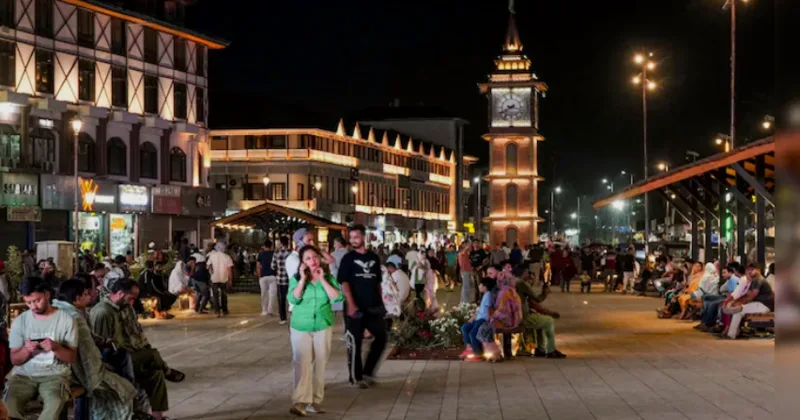
Peace prevails on streets of Kashmir
Tight security arrangements were put in place throughout J&K on Wednesday to thwart protests by political parties on the seventh anniversary of the abrogation of Article 370, according to officials.
The ruling National Conference (NC) and the People’s Democratic Party (PDP) have called for marking the day with protests. However, there was no enthusiasm among ordinary people and they did not join the so-called protests these parties tried to orchestrate at a few places.
As a precautionary measure, roads leading to the NC as well as the PDP headquarters in Srinagar were sealed. This denied the opportunities to both the parties to organise their leaders or workers.