The Aircraft Accident Investigation Bureau (AAIB) has informed the Supreme Court that the investigation into the tragic Air India AI-171 crash is progressing steadily and that a draft final report is expected to be completed by October 2026.
In an affidavit submitted before the apex court, the aviation accident investigation body stated that the inquiry has entered its advanced stages, with investigators working through the remaining technical and procedural requirements before finalising their findings.
The crash, which occurred shortly after take-off from Ahmedabad on June 12, 2025, claimed the lives of 260 people, making it one of India’s deadliest aviation disasters in recent years.
The AAIB told the court that the probe is being carried out in accordance with international aviation standards and involves coordination with multiple agencies and stakeholders across different countries.
According to the agency, aircraft accident investigations are governed by the Chicago Convention and Annex 13 of the International Civil Aviation Organisation (ICAO), which prescribe globally accepted procedures for investigating aviation accidents.
The bureau noted that the inquiry is not merely a domestic exercise, as international regulations require the participation of countries linked to the aircraft through its registration, operation, design and manufacture.
Investigators are therefore working within a complex framework involving technical experts, aviation authorities and international stakeholders to establish the sequence of events that led to the crash.
A significant aspect of the AAIB’s submission before the Supreme Court was its clarification regarding cockpit voice recordings and airborne image recordings recovered from the aircraft.
The agency stated that such material cannot be shared with external committees or placed in the public domain due to legal restrictions governing aviation accident investigations.
According to the affidavit, disclosure of cockpit recordings, communications and other protected information would violate provisions of the Aircraft (Investigation of Accidents and Incidents) Rules, 2025.
The AAIB further explained that several categories of evidence are legally protected from public disclosure, including witness statements, air traffic control communications, medical information and other sensitive investigative records.
Officials argued that maintaining confidentiality is essential to preserving the integrity and independence of aviation safety investigations.
The bureau reiterated that the objective of an aircraft accident investigation is to identify safety lessons and prevent future accidents rather than determine criminal or civil liability.
The AAIB stressed that aviation investigations are designed to improve safety standards, understand technical failures and recommend corrective measures for the industry.
This distinction has been repeatedly emphasised by international aviation regulators, which treat accident investigations as safety-focused exercises rather than judicial proceedings.
The affidavit was filed in response to a petition seeking a court-monitored investigation into the crash.
The plea was moved by Pushkaraj Sabharwal, father of Captain Sumeet Sabharwal, who was piloting the aircraft at the time of the accident and lost his life in the crash. The Federation of Indian Pilots is also associated with the petition.
The petitioners sought greater oversight of the investigation amid concerns regarding the circumstances surrounding the disaster.
Air India flight AI-171 was operating from Ahmedabad to London when it crashed moments after take-off on June 12, 2025.
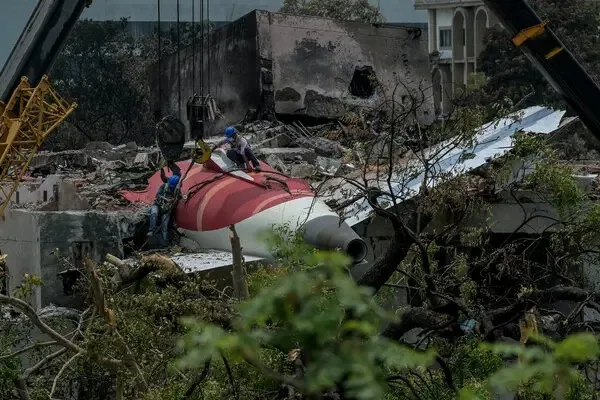
The aircraft came down in the vicinity of the BJ Medical College hostel complex near Ahmedabad airport, causing extensive destruction both onboard and on the ground.
According to official figures, the tragedy claimed the lives of 229 passengers, 12 crew members and 19 people on the ground, taking the overall death toll to 260.
The scale of the disaster prompted one of the most extensive aviation investigations conducted in India in recent years.
During earlier proceedings, the Supreme Court had observed that Captain Sumeet Sabharwal should not be prematurely blamed for the accident.
The court remarked that the deceased pilot should not be made to carry the burden of the tragedy before the completion of a comprehensive investigation and the establishment of factual findings.
As investigators move towards the final stages of analysis, the aviation sector and the families of victims are awaiting the AAIB’s findings, which are expected to provide crucial insights into the causes of the crash and recommendations aimed at preventing similar accidents in the future.