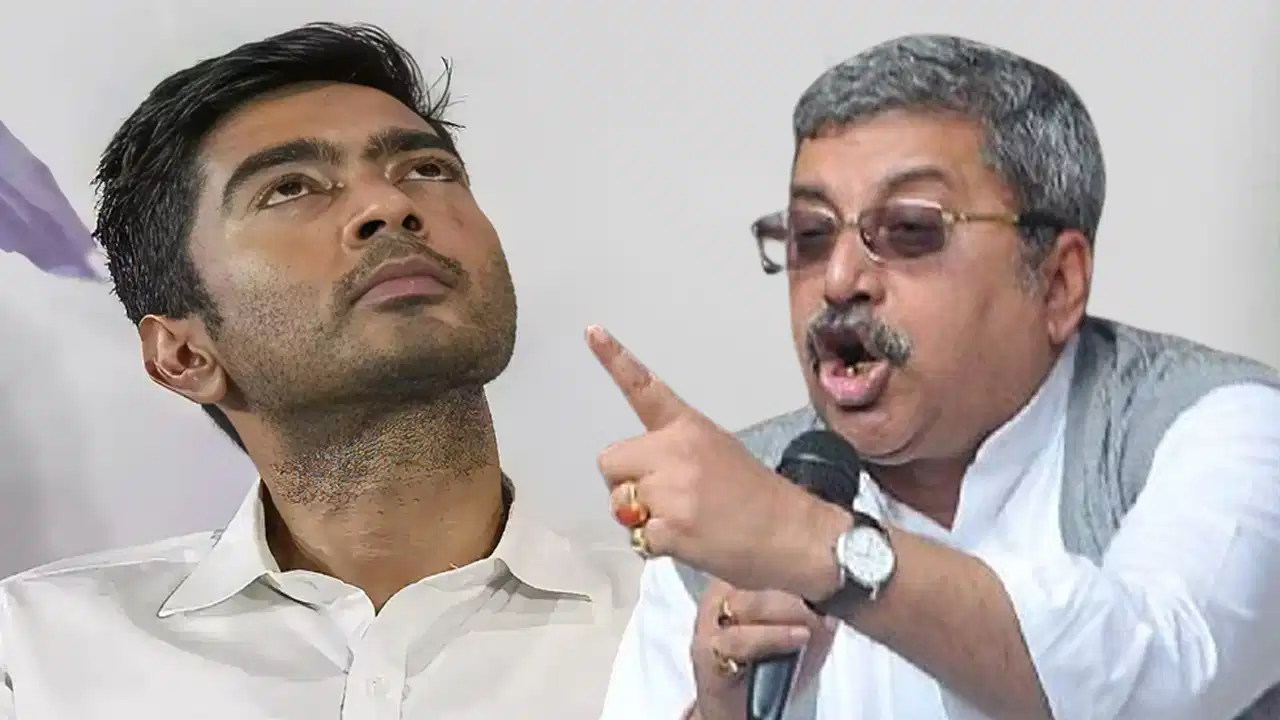
Senior Trinamool Congress (TMC) MP Kalyan Banerjee has intensified his criticism of party national general secretary Abhishek Banerjee, alleging that the political ecosystem built around the latter’s Camac Street office and the influence of election consultancy firm I-PAC were major factors behind the party’s defeat in the 2026 West Bengal Assembly elections.
Speaking amid the growing organisational turmoil within the TMC, Banerjee claimed that the party’s traditional structure had been weakened by a consultant-driven model that sidelined grassroots workers and concentrated influence around a select group of leaders.
“Camac Street has finished the party,” Banerjee said, referring to the office that emerged as a key political and organisational centre under Abhishek Banerjee’s leadership.
Banerjee alleged that many leaders and workers who had operated through the Camac Street office and worked closely with I-PAC were now distancing themselves from the faction led by Abhishek Banerjee.
According to him, several individuals who once projected themselves as representatives of Abhishek Banerjee and enjoyed influence within the organisation are now among his strongest critics.
“They enjoyed every privilege, projected themselves as Abhishek’s representatives and used that identity to exercise influence. Today, they are the ones attacking him the most,” Banerjee claimed.
He also levelled allegations against Abhishek Banerjee’s close aide Sumit Roy, alleging that some grassroots organisers were facing pressure and were being pushed towards joining the rival camp led by former Rajya Sabha MP Ritabrata Banerjee. These claims, however, could not be independently verified.
Reviving a criticism he has voiced repeatedly over the past few years, Kalyan Banerjee accused political consultancy firm I-PAC of replacing the TMC’s traditional political culture with a data-driven and consultant-led approach.
He alleged that I-PAC exercised excessive influence over organisational decisions and candidate selection, often at the expense of experienced party workers and local leaders.
According to Banerjee, political parties cannot be run solely through surveys, analytics and external consultants but require continuous engagement between party workers and the electorate.
He further claimed that the consultancy created unrealistic expectations among hundreds of aspiring candidates by encouraging hopes of receiving Assembly election tickets.
When many of these aspirants were ultimately denied nominations, resentment spread across the party organisation, contributing to internal dissatisfaction and alleged sabotage during the Assembly elections, he claimed.
Kalyan Banerjee maintained that his concerns regarding I-PAC and the party’s increasing dependence on consultants were not new.
He said he had repeatedly cautioned the leadership since 2022 against relying excessively on external strategists and warned that such a model could weaken the party’s organisational foundations.
According to him, those warnings were ignored, resulting in the erosion of the party’s grassroots structure and eventual electoral setbacks.
The latest attack comes at a time when the Trinamool Congress is grappling with its most serious internal crisis since the party was founded by Mamata Banerjee in 1998.
The organisation is currently divided between the faction loyal to Mamata Banerjee and a rebel camp led by former Rajya Sabha MP Ritabrata Banerjee.
The rebellion has largely centred on opposition to Abhishek Banerjee’s growing influence within the party and his emergence as Mamata Banerjee’s political successor after the TMC’s electoral decline.
The crisis has deepened in recent weeks with the rebel faction establishing a parallel organisational structure.
Last month, the Ritabrata Banerjee camp convened what it described as a special organisational session and elected senior MLA Arup Roy as its chairperson. The rebel group also announced structural changes within the organisation and challenged the authority of the existing leadership.
The division widened further when a majority of TMC legislators reportedly backed Ritabrata Banerjee’s claim to the position of Leader of the Opposition, rejecting the candidate supported by the Mamata Banerjee faction.
According to claims made by the rebel camp, it now enjoys the support of around 65 MLAs.
The organisational battle has also spilled over into Parliament.
Several Lok Sabha MPs have distanced themselves from the Mamata Banerjee-led faction, while a large group of former TMC parliamentarians has aligned itself with alternative political formations.
The split has reached a stage where rival factions are preparing to hold separate programmes on July 21, traditionally observed by the party as Martyrs’ Day, marking a symbolic break from the unified organisational structure that had existed for nearly three decades.
Kalyan Banerjee has been among the most vocal critics of Abhishek Banerjee within the party since the TMC’s electoral setbacks.
Soon after the change of government in West Bengal, he had publicly blamed Abhishek Banerjee’s leadership style, alleging that arrogance, centralisation of decision-making and disregard for senior leaders had contributed to the party’s decline.
His latest remarks add another layer to the intensifying political battle within the TMC, as competing factions continue to vie for control of the party’s organisational structure, leadership and future political direction.