A senior Lashkar-e-Taiba (LeT) operative has publicly acknowledged that the Pakistan-based terror outfit has suffered heavy losses over the past few years, with dozens of its members being eliminated across Pakistan and Pakistan-Occupied J&K (PoJK).
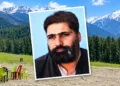
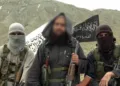
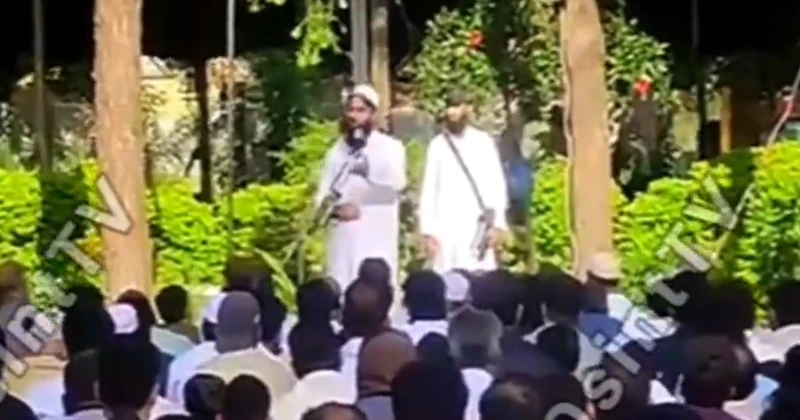
A video of Rizwan Hanif, a senior Lashkar-e-Taiba commander wanted by Indian security agencies, has surfaced online in which he claims that more than 30 while at one point referring to nearly 40 members of the outfit have been killed over the last three to four years in targeted attacks carried out across Peshawar, Karachi, Rawalpindi, Muzaffarabad, and Rawalakot.
First public acknowledgement from within Lashkar-e-Taiba
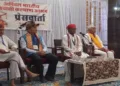
Addressing a gathering in Pakistan, Hanif openly admitted that members of the banned terrorist organisation had been systematically eliminated in different cities.
“In the last four years, 30 of our people were killed by Indian intelligence agents someone in Peshawar, someone in Karachi, someone in Rawalpindi, someone in Muzaffarabad, someone in Rawalakot,” Hanif said during the speech.
Lashkar-E-Taiba's First Ever Explosive Admission 🔥🔥🔥
Lashkar-e-Taiba/JKUM terrorist Rizwan Hanif openly admits that more than 30 members of the outfit were eliminated by unknown gunmen (Indian agents), across Peshawar, Karachi, Rawalpindi, Rawalakot and Muzaffarabad over the… pic.twitter.com/gXr0jIeYmH
— OsintTV 📺 (@OsintTV) August 3, 2026
The remarks are notable because Pakistan has repeatedly maintained that Lashkar-e-Taiba was banned and dismantled years ago. However, Hanif’s speech appears to acknowledge not only the continued existence of the organisation but also its operational network spread across Pakistan and Pakistan-occupied J&K.
Indian agencies verify identity, reject allegation
According to Indian security officials, the authenticity of the video has been verified, and the individual seen delivering the speech has been identified as Rizwan Hanif, a senior Lashkar operative wanted in India.
Indian officials have dismissed such allegations as baseless, maintaining that the country’s counter-terrorism operations are conducted strictly within the framework of its laws and border security policies.
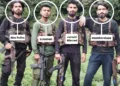
Over the last several years, multiple terrorists associated with Lashkar-e-Taiba, Jaish-e-Mohammed, Hizbul Mujahideen and other Pakistan-based terror groups have been killed by unidentified gunmen inside Pakistan. Most of these attacks remain officially unsolved, fuelling speculation over the identities of those behind the targeted eliminations.
Hanif’s remarks nevertheless represent the clearest acknowledgment from within Lashkar-e-Taiba that the organisation has suffered sustained losses during this period. Beyond admitting the deaths of LeT members, Hanif used the platform to make inflammatory and derogatory remarks targeting other religions.
During his address, he declared, “Our only crime is that we believe in La ilaha illallah. We are not people who worship Hanuman, Ghanshyam, or Hariram. This Hindu wants the cow to be worshipped, the Jew wants the calf to be worshipped…”.
The speech was marked by repeated hate-filled rhetoric, illustrating how terrorist organisations employ religious narratives to justify violence, foster hostility, and recruit supporters. Such messaging has long formed a core component of extremist propaganda, where religious identity is manipulated to radicalise individuals and portray terrorism as a religious obligation.
Lashkar-e-Taiba remains one of the world’s most notorious Islamist terrorist organisations. The group was responsible for orchestrating the 26/11 Mumbai terror attacks in 2008, in which 166 people were killed, including civilians, police personnel and foreign nationals. The organisation has been designated as a terrorist entity by the United Nations and several countries because of its links to global jihadist networks, including Al-Qaeda and the Taliban.
Several of those killed in recent years include:
Razaullah Nizamani (Abu Saifullah Khalid): A senior Lashkar-e-Taiba commander who was killed in Badin, Sindh. India has linked him to the 2005 Indian Institute of Science attack in Bengaluru, the 2006 attack on the RSS headquarters in Nagpur, and the 2008 attack on a CRPF camp in Rampur.
Hamza Burhan (Arjumand Gulzar Dar): An Al-Badr commander killed in Muzaffarabad in Pakistan-occupied Kashmir. Indian authorities have accused him of playing a role in the logistics behind the 2019 Pulwama terror attack.
Shahid Latif: A senior Jaish-e-Mohammed handler shot dead in Sialkot. India has identified him as one of the key conspirators in the 2016 Pathankot airbase attack.
Paramjit Singh Panjwar: Chief of the Khalistan Commando Force, who was killed in Lahore. Indian agencies had accused him of financing cross-border militant activities and facilitating arms smuggling.
Many of these killings were carried out by unidentified gunmen, with no group claiming responsibility.