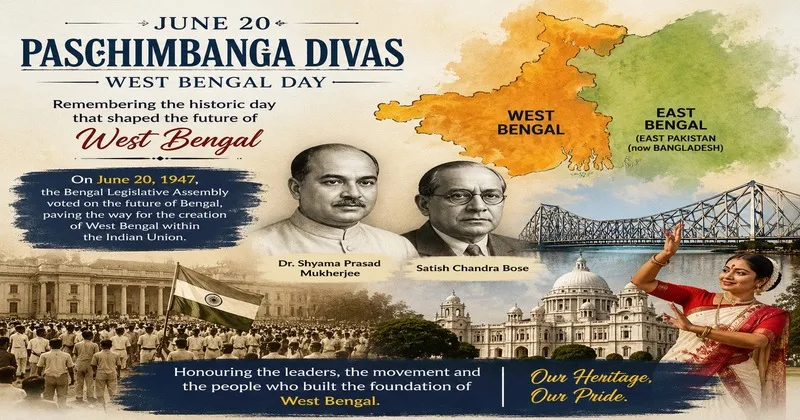
Kolkata: As West Bengal observes Paschimbanga Divas on June 20, attention has once again turned to the dramatic political developments of 1947 that led to the creation of the state. The date marks a crucial moment in Bengal’s history when legislators voted on whether the province should remain united or be partitioned in the lead-up to India’s independence.
Today on 20th June 2026, the first official Poschim Bongo Dibosh/West Bengal Day, as declared by our PM Modi ji, here’s a look back at the historic event of creation of West Bengal from an United Bengal.
Unlike Netaji Subhas Chandra Bose’s elder brother Sarat Chandra Bose, who… https://t.co/b9vCtFPmDL pic.twitter.com/OXsIVWZCp5
— Monidipa Bose – Dey (মণিদীপা) (@monidipadey) June 20, 2026
The partition of Bengal was one of the most consequential decisions taken during the final months of British rule. At the time, Bengal was a vast province comprising regions that now lie in both India and Bangladesh.
The Debate Over Bengal’s Future
In 1947, two competing visions emerged regarding Bengal’s future. One group advocated for a united Bengal that would remain undivided despite the impending partition of India. Among the most prominent proponents of this idea were Sarat Chandra Bose, elder brother of Netaji Subhas Chandra Bose, and Huseyn Shaheed Suhrawardy, the last Premier of undivided Bengal. They argued that Bengal possessed a distinct cultural and historical identity and should remain united as a sovereign entity rather than being divided along religious lines. Opposing this proposal were leaders who believed that the Hindu-majority districts of western Bengal should remain within the Indian Union. The most influential voice in this camp was Dr Shyama Prasad Mukherjee, a prominent nationalist leader and future founder of the Bharatiya Jana Sangh.
Mukherjee argued that if India was to be partitioned, then Bengal too should be divided so that the Hindu-majority regions could remain part of India. He warned that a united Bengal outside India could leave millions of Hindus politically vulnerable.
The Tarakeswar Hindu Mahasammelan
A key moment in this movement came on April 15, 1947, during the Tarakeswar Hindu Mahasammelan. The gathering brought together leaders and representatives who supported the creation of a separate West Bengal within India.
At the conference, Shyama Prasad Mukherjee articulated the demand for partitioning Bengal and creating a province that would remain part of the Indian Union. The resolutions passed at the meeting strengthened the political campaign for the division of the province. Historians generally regard the Tarakeswar conference as one of the significant milestones in the movement that ultimately led to the creation of West Bengal.
Within the distinguished Bose family itself, differing views existed regarding Bengal’s future. While Sarat Chandra Bose continued to support the idea of a united Bengal, another elder brother of Netaji, Satish Chandra Bose, reportedly supported the proposal for creating a separate West Bengal within India. Historical accounts indicate that he aligned with leaders who believed partition was necessary to protect the interests of Bengal’s Hindu-majority districts. This difference of opinion illustrates the complexity of political debates during the final months before independence, when even prominent families found themselves divided over the future of the province.
The Historic Vote of June 20, 1947
The decisive moment arrived on June 20, 1947. Members of the Bengal Legislative Assembly met to determine the province’s future following the announcement of the British partition plan. The assembly first met as a united body before splitting into separate sessions representing the Muslim-majority and Hindu-majority areas. Legislators from the Hindu-majority districts voted in favour of partitioning Bengal and establishing a separate province that would remain within India. The decision paved the way for the creation of West Bengal, while the eastern districts became part of East Pakistan, which later emerged as Bangladesh in 1971.
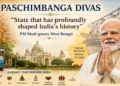
Today, June 20, is being observed as Paschimbanga Divas (West Bengal Day) following its official recognition by the Union Government. Prime Minister Narendra Modi extended greetings to the people of West Bengal on the occasion, describing the day as an opportunity to remember the state’s rich cultural heritage, distinguished personalities and contributions to nation-building.