BHUBANESHWAR: When the first showers of the southwest monsoon touch the parched earth of Odisha, the landscape undergoes a remarkable transformation. Dusty roads become fragrant, fields await cultivation, and villages resonate with laughter, songs, and the rhythmic creaking of swings suspended from banyan and mango trees. This is the season of Raja Parva, one of Odisha’s most cherished festivals, celebrated with unparalleled enthusiasm and cultural pride.
More than a seasonal festival, Raja Parva is a profound celebration of womanhood, fertility, nature, and the intimate relationship between human life and the earth. Rooted in agrarian traditions and enriched by centuries of cultural evolution, Raja stands as a unique festival that honours both Mother Earth and women, recognizing their life-giving power and indispensable role in sustaining society.
A Festival Unlike Any Other
The term Raja is derived from the Sanskrit word Rajas, which etymologically means menstruation. When a woman menstruates, she is called Rajaswala or a menstruating woman. . The festival is based on the belief that Mother Earth undergoes her annual menstrual cycle during this period. Just as a woman is given rest and care during menstruation, the earth too is allowed to rest and rejuvenate.
Celebrated over three days in mid-June, Raja coincides with the transition from the month of Jyeshtha to Ashadha and marks the arrival of the monsoon season. In many parts of Odisha, a fourth day known as Basumati Snana or Basumati Puja is also observed, symbolizing the ceremonial bath of Mother Earth after her period of rest.
The festival begins with Pahili Raja (the first day), followed by Raja Sankranti or Mithuna Sankranti, and concludes with Sesa Raja or Bhuin Dahana. The fourth day, where observed, marks the purification and awakening of the earth, heralding the beginning of agricultural activities.
Unlike many festivals centred around temples and rituals, Raja is primarily a social and cultural celebration. It brings communities together through songs, food, games, and shared festivities while carrying a deeper philosophical message about respect for nature and womanhood.
The Earth as a Living Mother
One of the most remarkable aspects of Raja Parva is its ecological consciousness. The festival reflects an ancient understanding of the earth as a living, nurturing entity rather than a mere resource to be exploited.
During the three days of Raja, activities such as ploughing, digging, construction, or any form of disturbance to the soil are traditionally prohibited. Farmers refrain from tilling the land, allowing it to rest before the onset of intensive agricultural operations.
This practice symbolizes a deep respect for the regenerative cycles of nature. Long before modern discussions on sustainability and environmental conservation emerged, communities in Odisha acknowledged the need for periodic rest and renewal for the earth.
The festival therefore represents an indigenous environmental ethic—one that views humans not as masters of nature but as participants in a larger ecological system.
Celebrating Womanhood
Perhaps the most distinctive feature of Raja Parva is its celebration of women and the menstrual cycle. In many societies, menstruation has historically been surrounded by silence, stigma, and misconceptions. Raja offers a strikingly different perspective.
The festival recognizes menstruation as a natural, life-giving process worthy of respect rather than exclusion. Since Mother Earth is believed to menstruate during Raja, women symbolically share in this experience and are given special consideration.
Traditionally, women and girls are relieved from routine household chores during the festival. They are encouraged to rest, dress in their finest attire, wear ornaments, apply alta to their feet, and enjoy the festivities without the burden of daily responsibilities.
This temporary suspension of domestic duties reflects an understanding of the need for rest, care, and recognition of women’s contributions to family and society. In essence, Raja becomes a celebration of feminine identity, dignity, and freedom.
The festival also serves as a reminder that fertility and creation are central to the continuation of life. By honouring women and Mother Earth simultaneously, Raja establishes a symbolic connection between human fertility and agricultural productivity.
The Joy of Swings
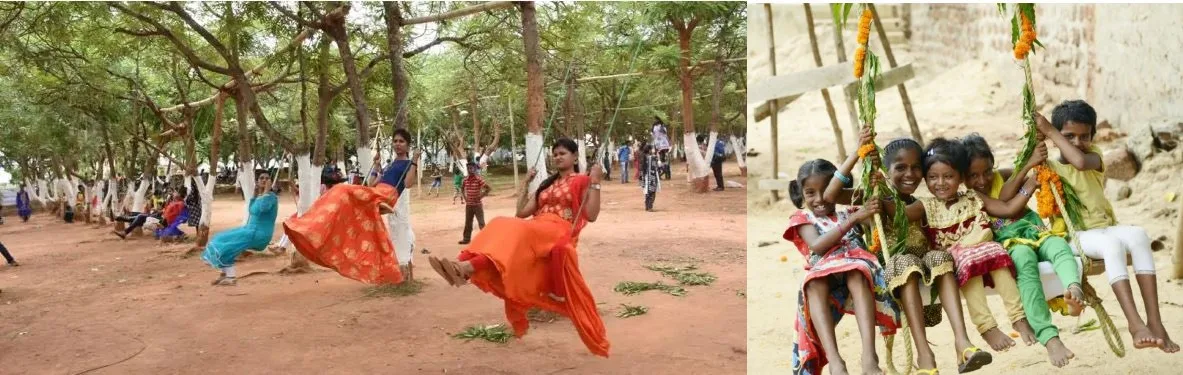
No image captures the spirit of Raja better than the sight of beautifully decorated swings swaying beneath ancient trees.
Known as Doli (jhula), these swings are the heart of the celebration. Villages and neighbourhoods come alive as swings are tied to sturdy branches of banyan, mango, or other large trees and decorated with flowers, leaves, and colourful fabrics.
Raja Festival is a vibrant celebration of the arrival of the monsoon and Odisha’s rich cultural heritage. This three-day festival is marked by colorful swings, traditional delicacies like poda pitha, festive attire, and joyful gatherings, honoring womanhood, fertility, and the… pic.twitter.com/pJN8WDTnuu
— V Satish (@v_shrivsatish) June 14, 2026
Young girls and women spend hours enjoying the swings while singing traditional Raja songs. These songs, passed down through generations, express joy, friendship, love, aspirations, and the beauty of nature.
One of the most popular Raja songs begins with:
“Banaste dakila gaja,
Barashake thare asichi Raja”
(The elephant calls from the forest,
Raja has arrived once again this year.)
The songs create an atmosphere of festivity and nostalgia, linking present generations with the cultural memories of their ancestors.
‘ରଜ ପର୍ବ’ ନାରୀଶକ୍ତିର ସମ୍ମାନ, ଗୌରବ ଓ ସୃଜନଶୀଳତାର ମହାପର୍ବ ଅଟେ l ଓଡ଼ିଶାବାସୀ ଏହି ପବିତ୍ର ଉତ୍ସବକୁ ଅତ୍ୟନ୍ତ ଶ୍ରଦ୍ଧା, ଉତ୍ସାହ ଓ ଆନନ୍ଦର ସହ ପାଳନ କରିଥାନ୍ତି l ଏହି ପର୍ବ ମାତୃଶକ୍ତି ପ୍ରତି ସମାଜର ଆଦର, ସମ୍ମାନ ଓ କୃତଜ୍ଞତାର ଭାବନାର ପ୍ରତୀକ l pic.twitter.com/oYJrOQhJ3D
— Sambit Patra (@sambitswaraj) June 14, 2026
In earlier times, villages often selected a Dolo Rani or “Queen of the Swing,” who would occupy a place of honour while others pushed the swing and sang in chorus. Such traditions fostered community bonding and collective participation.
Raja and the Agricultural Calendar
Odisha has historically been an agrarian society, and Raja Parva occupies an important place in the agricultural calendar.
The arrival of the monsoon signifies hope for farmers. The first rains soften the dry soil, making it ready for cultivation. Raja marks this transition from the harsh summer months to the season of growth and productivity.
The festival is therefore both a thanksgiving and a prayer. It expresses gratitude for nature’s bounty while seeking blessings for a successful agricultural year.
Many traditional festivals in Odisha—such as Raja, Akshaya Tritiya, Nuakhai, and Gamha Purnima—are closely connected with farming activities. Raja, however, is unique because it represents a pause before agricultural labour begins.
This brief period of celebration allows communities to prepare mentally and socially for the demanding agricultural season ahead.
The Rich Culinary Heritage of Raja
No festival in Odisha is complete without food, and Raja Parva is no exception.
Families prepare a variety of traditional delicacies that reflect the culinary richness of the state. The most iconic among them is Poda Pitha, a slow-cooked cake made from rice flour, jaggery, coconut, black pepper, cardamom, and dry fruits.
Baked over low heat for several hours, Poda Pitha develops a distinctive smoky flavour and aroma that has become synonymous with Raja celebrations.
Other festive foods include:
• Chakuli Pitha
• Manda Pitha
• Kakara Pitha
• Arisa Pitha
• Mitha Paan (sweet betel leaf preparation)
• Fried rice preparations and seasonal fruits
The preparation of these delicacies often becomes a collective family activity, strengthening bonds between generations.
Food is also exchanged among relatives, neighbours, and friends, reinforcing the spirit of sharing and community harmony that characterizes the festival.
Games, Entertainment and Community Life
While swings and songs dominate the celebrations for women and girls, Raja also features a wide range of traditional games and cultural activities.
Young men participate in sports such as kabaddi, kho-kho, wrestling, and other indigenous games. In many villages, competitions are organized, attracting participants and spectators from surrounding areas.
Evening celebrations often include:
• Folk music performances
• Traditional dance programmes
• Gotipua dance
• Jatra theatre performances
• Community gatherings
• Literary and cultural events
These activities transform villages into vibrant centres of social interaction and entertainment.
Raja thus serves not only as a religious or cultural observance but also as a platform for strengthening social cohesion and collective identity.
Preserving Oral Traditions
An important contribution of Raja Parva to Odisha’s cultural heritage lies in its rich oral traditions.
For centuries, women have composed and transmitted Raja songs that capture their experiences, emotions, dreams, and relationship with nature. These songs constitute a unique body of folk literature that has survived through oral transmission rather than written texts.
Many songs celebrate friendship and youthful exuberance, while others reflect hopes for marriage, prosperity, and happiness. Together they provide valuable insights into the social history and cultural imagination of Odia society.
The continuity of these traditions demonstrates the resilience of community memory and the important role women have played in preserving cultural knowledge.
Raja and Modern Perspectives
In contemporary times, Raja Parva has acquired new relevance.
Discussions around menstrual health, gender equality, women’s rights, and environmental sustainability have highlighted themes that have long been embedded within the festival.
At a time when menstruation remains a taboo subject in many communities, Raja offers an alternative cultural framework—one that acknowledges menstruation as natural and worthy of respect.
Similarly, the festival’s emphasis on allowing the earth to rest resonates with modern ideas of sustainable development and environmental stewardship.
The symbolic connection between women’s wellbeing and ecological balance reflects a holistic worldview that remains remarkably relevant today.
Many scholars and social observers argue that Raja can serve as a powerful platform for promoting menstrual awareness, gender sensitivity, and environmental consciousness among younger generations.
A Living Heritage
Despite rapid urbanisation and changing lifestyles, Raja continues to occupy a special place in the hearts of Odias across the world.
In cities, apartment complexes and community organizations organize Raja celebrations featuring swings, cultural programmes, traditional food, and competitions. Odia diaspora communities in different countries also celebrate the festival, preserving a vital connection to their roots.
What makes Raja enduring is its ability to combine joy with meaning. It is a festival of leisure, yet it carries profound philosophical messages. It is rooted in ancient traditions, yet speaks directly to contemporary concerns.
Raja Parva is far more than a seasonal festival. It is a celebration of life itself—of the earth that nourishes us, of women who sustain society, and of the delicate balance that connects nature, culture, and humanity.
Through its songs, swings, rituals, food, and collective festivities, Raja reminds us that renewal requires rest, fertility deserves reverence, and community flourishes through shared celebration.
In an age increasingly disconnected from natural cycles, Raja offers a timeless lesson: true progress lies not in dominating nature but in living harmoniously with it. By honouring Mother Earth and womanhood together, Odisha’s Raja Parva stands as one of India’s most meaningful cultural traditions—a festival that celebrates not only the arrival of the monsoon, but also the enduring power of life, renewal, and hope.