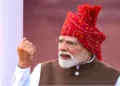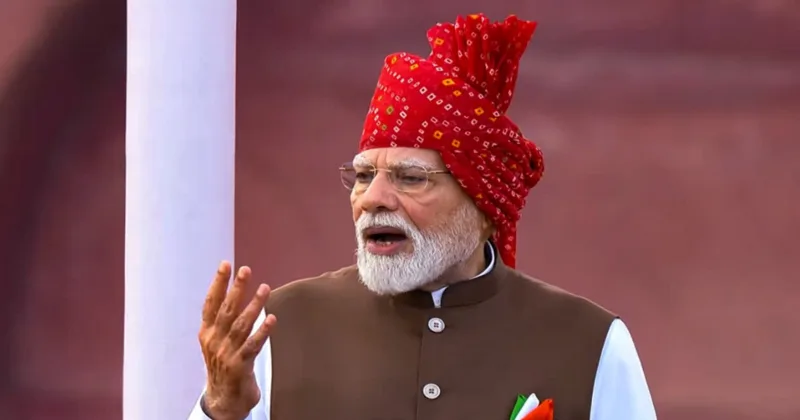
Prime Minister Narendra Modi on August 15, announced a nationwide sports talent identification campaign for children aged between five and 15 years, linking the initiative to India’s preparations for a potential bid to host the 2036 Olympic Games.
Addressing the nation from the ramparts of the Red Fort on the occasion of India’s 80th Independence Day, PM Modi said India’s performance in international sports was steadily improving and the country was now moving forward as a strong contender to host the Olympics in 2036.
“Bharat’s performance in the world of sports is steadily improving, and we are moving forward as strong contenders to host the 2036 Olympics,” the Prime Minister said.
He also highlighted India’s plans to host the Commonwealth Games in 2030, describing the upcoming international sporting events as opportunities to further strengthen the country’s sporting infrastructure and competitive ecosystem.
The proposed talent hunt is aimed at identifying young sporting talent early and creating a larger pipeline of athletes who could represent India at the highest level in the years ahead.
Talent hunt to cover villages, cities and schools
PM Modi said the nationwide campaign would be conducted across villages, cities and schools to identify children with sporting potential.
The programme will focus on children between five and 15 years of age, with their abilities to be assessed and promising youngsters selected for specialised training.
The Prime Minister said the focus on this age group was necessary because athletes who could potentially represent India at the 2036 Olympics would need to begin their development much earlier.
“If we need athletes for 2036, we must focus today on these young boys and girls who are 5, 10 or 15 years old,” PM Modi said.
The initiative will also pay special attention to identifying talented girls.
India has produced athletes who have won medals across disciplines, but the country’s Olympic participation remains concentrated in a limited number of sports. The government’s latest initiative seeks to widen that base by identifying potential talent before young athletes enter the senior competitive circuit.
The approach could also help bring sporting opportunities to children who may not have access to established academies or professional coaching facilities.
India wants to compete in more Olympic events
The Prime Minister stressed that expanding India’s participation across sporting disciplines would be crucial if the country wants to become a stronger Olympic sporting power.
He pointed out that the Olympic Games feature around 40 sports and approximately 325 to 350 events. However, India does not participate in or qualify for nearly two-thirds of these events.
This gap, according to the Prime Minister, needs to be addressed if India wants to significantly improve its performance on the global sporting stage.
The objective is not merely to increase the number of athletes but also to develop capabilities across a wider range of disciplines.
The talent identification campaign could therefore become an important part of a long-term strategy to diversify India’s sporting strengths.
Instead of relying primarily on existing sporting hubs, the programme is expected to search for potential athletes across the country.
Villages and smaller towns could be particularly important to such a strategy, as young people with sporting ability may not always have access to professional facilities or structured training.
Specialised training after identification
Identifying talent will only be the first step under the proposed programme.
Children identified through the campaign will have their sporting abilities assessed and will receive specialised training aimed at developing them into athletes capable of competing at the highest level.
The Prime Minister highlighted the importance of building a complete sporting ecosystem rather than focusing only on athletes.
He referred to initiatives such as the Target Olympic Podium Scheme, Khelo India Games, University Games, Winter Games and Beach Games as part of the country’s expanding sports infrastructure.
The government has also invested in coaching, sports medicine, sports nutrition and training facilities.
These areas are increasingly important in elite sport. International competition requires athletes to have access not only to coaches but also to scientific training, nutrition, injury prevention, rehabilitation and performance analysis.
The Prime Minister’s announcement indicates that the government wants the talent hunt to feed into this wider ecosystem.
More opportunities beyond becoming an athlete
PM Modi also highlighted the employment opportunities that could emerge from the expansion of India’s sports ecosystem.
Not every child identified through a sports programme will eventually become an Olympic athlete. However, the development of a larger sporting ecosystem can create employment opportunities in several related fields.
These include coaching, sports medicine, physiotherapy, sports nutrition, fitness training, sports management and other support services.
A larger number of sporting events and professional training facilities could also generate opportunities in event management, broadcasting, equipment manufacturing and sports technology.
The Prime Minister’s emphasis therefore goes beyond winning medals. The larger objective is to create an ecosystem in which sport becomes both a competitive avenue and a source of employment.
Youth employment at the centre
The Prime Minister also connected sports development with the broader issue of employment for young Indians.
He announced the implementation of the Pradhan Mantri Viksit Bharat Rojgar Yojana, describing it as a Rs 1 lakh crore initiative aimed at creating new employment opportunities.
Under the scheme, the government will provide Rs 15,000 to young people entering private-sector employment, while companies that generate additional employment opportunities will receive incentives.
PM Modi said the initiative is expected to create employment opportunities for approximately 3.5 crore young people.
“The greatest beneficiary of a ‘Viksit Bharat’ will be the youth of my country,” the Prime Minister said.
He stressed that young people would have to remain at the centre of India’s development journey towards 2047.
The employment announcement comes alongside the sports initiative, highlighting the government’s broader focus on expanding opportunities for India’s young population.
Startup India crosses 2.5 lakh mark
PM Modi also highlighted India’s growing startup ecosystem.
He said the country now has more than 2.5 lakh registered startups under the Startup India initiative.
The Prime Minister said young entrepreneurs should continue to pursue new ideas and highlighted the government’s Rs 1 lakh crore Innovation Fund as a resource that could support innovation and entrepreneurship.
India’s startup ecosystem has expanded across sectors ranging from technology and financial services to healthcare, agriculture, education, manufacturing and space.
For the government, startups represent not only a source of innovation but also an avenue through which young people can become job creators.
The Prime Minister’s message was therefore aimed at encouraging young Indians to look beyond traditional employment and explore entrepreneurship as another path to economic opportunity.
Free online coaching for competitive exams
Education and competitive examination preparation also featured prominently in the Prime Minister’s address.
PM Modi announced an initiative to provide free online coaching for young people preparing for various competitive examinations.
He said coaching classes had become a major financial burden for middle-class families.
“The pressure of coaching classes has become a major burden for our middle-class families,” PM Modi said.
The proposed initiative will seek to use India’s digital public infrastructure, teaching talent and technology to create a wider network for delivering free coaching.
The move could potentially help students who cannot afford expensive private coaching or who live far from major coaching centres.
Online learning can also reduce the need for students to relocate to cities in search of specialised preparation.
However, the effectiveness of such a system will depend on the quality of teaching, access to reliable internet services and devices, as well as the availability of examination-specific study material and assessments.
The initiative nevertheless seeks to address one of the major financial pressures faced by families preparing their children for competitive examinations.
PM Modi calls for a Nasha Mukt Bharat
The Prime Minister also raised concerns over drug abuse among young people and called for a collective national effort to tackle the problem.
“Drug abuse is becoming a major crisis for the country and its young people. A ‘Nasha Mukt Bharat’ must be a collective responsibility for all of us,” PM Modi said.
He stressed that protecting young people from substance abuse was essential if India wanted to fully utilise the potential of its youth.
The call for a Nasha Mukt Bharat adds another dimension to the Prime Minister’s focus on young Indians.
While employment, education, entrepreneurship and sports are aimed at creating opportunities, the Prime Minister said society also needed to protect young people from challenges that could undermine their future.
Youth at the centre of Viksit Bharat
The different announcements made by PM Modi during his Independence Day address were connected by a common focus on India’s youth.
The proposed sports talent hunt seeks to identify future athletes. The employment scheme aims to create new private-sector opportunities. Startup India and the Innovation Fund are intended to encourage entrepreneurship, while free online coaching seeks to reduce the financial burden of competitive examination preparation.
The call for a Nasha Mukt Bharat, meanwhile, focuses on protecting young people from substance abuse.
Together, the initiatives reflect the government’s broader emphasis on preparing India’s young population for the country’s development journey towards 2047.
For the sports sector, the immediate focus will be on identifying children with potential and creating a system through which they can receive sustained training and support.
The longer-term goal is much larger: to expand India’s presence across Olympic disciplines and build a sporting ecosystem capable of producing athletes, coaches, sports scientists and other professionals.
India’s potential bid to host the 2036 Olympics provides a clear deadline for this ambition. The country is also set to host the Commonwealth Games in 2030, giving it an opportunity to strengthen sporting infrastructure and international event capabilities before the Olympic target year.
The success of the proposed talent hunt will ultimately depend on implementation from identifying children in remote areas to providing them with quality training, nutrition, medical support and regular exposure to competitive sport.
For PM Modi, however, the message from the Red Fort was clear: if India wants to build a stronger sporting nation by 2036, the search for its future athletes must begin now.