As the monsoon clouds gather over the Indian subcontinent, diverse communities across different regions prepare to celebrate festivals that honour fertility, womanhood, Mother Earth, and the regenerative forces of nature. Though separated by geography, language, and social identities, these observances reveal a remarkable civilisational continuity that runs through the cultural fabric of India.
In Assam, Ambubachi at the Kamakhya Mandir marks the annual menstruation of the Goddess. In Odisha, Raja Parba celebrates the menstruation and rejuvenation of Mother Earth. In the forests of Gadchiroli and Bastar, the Madiya tribal community observes Tallin Pandum or Bija Pandum, seeking the blessings of Mother Earth and ancestral deities before the sowing season begins.
At first glance, these traditions may appear distinct. Yet a closer examination reveals a shared worldview that recognises the sacredness of femininity, the creative power of women, the fertility of the earth, and the intimate relationship between human life and nature. Together, they demonstrate how India’s diverse spiritual traditions have historically evolved through coexistence, mutual influence, and shared cultural sensibilities.
Ambubachi: Celebrating the Menstruation of the Goddess
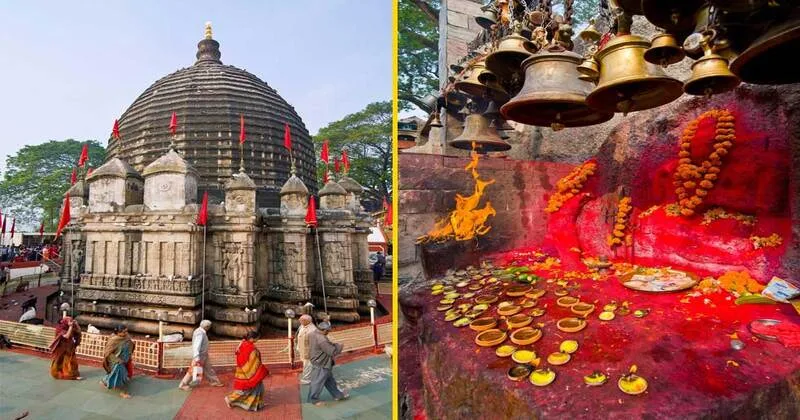
Observed annually in the month of June at the Kamakhya Mandir in Assam, Ambubachi is among the most significant religious gatherings in eastern India. Often described as the “Mahakumbh of the East,” it attracts lakhs of devotees, ascetics, and Tantric practitioners from across India and beyond.
The festival commemorates the annual menstruation of Maa Kamakhya, one of the most revered manifestations of Shakti. During the observance, the Mandir remains closed for three days, symbolising the Goddess’s menstrual period and her temporary withdrawal from public worship. Upon reopening, devotees receive blessings associated with fertility, prosperity, and spiritual power.
The symbolism of Ambubachi is profound. Menstruation is not treated as something impure or shameful. Instead, it is elevated to the level of the sacred. The Goddess bleeds because she is the source of creation itself. Her menstrual cycle becomes a cosmic event, linked with the fertility of the land and the arrival of the monsoon rains.
Raja Parba: When Mother Earth Rests
A similar philosophical idea appears in Odisha’s Raja Parba, celebrated in June during the onset of the monsoon. The festival honours Bhudevi, Mother Earth, who is believed to undergo menstruation during this period. Agricultural activities such as ploughing and digging are traditionally suspended, allowing the earth to rest and rejuvenate before receiving seeds for the next agricultural cycle.
Women and girls occupy the centre of the celebrations. New clothes, swings, songs, traditional delicacies, and community gatherings characterise the festival. The menstruation of Mother Earth becomes a symbol of fertility, abundance, and renewal.
Raja Parba reminds society that creation requires periods of rest. Just as women experience biological cycles, nature too follows rhythms of regeneration. Human beings are not separate from these rhythms but participants within them.
Tallin Pandum: The Tribal Reverence for Mother Earth
Among the Madiya community, a Particularly Vulnerable Tribal Group (PVTG) residing in the forests of Gadchiroli in Maharashtra and Bastar in Chhattisgarh, Tallin Pandum or Bija Pandum carries a similar message. The term “Tallin” refers to Mother, while “Pandum” means festival. The very name signifies the community’s reverence for Mother Earth as the source of life and sustenance. Observed in June with the arrival of the monsoon, the festival involves the blessing of seeds and ritual offerings to Mother Earth and clan deities. The community seeks divine protection and prosperity before beginning agricultural activities.
Like Ambubachi and Raja Parba, Tallin Pandum recognises that the fertility of the earth is inseparable from the continuity of life. The sowing of seeds is not viewed merely as an economic activity but as a sacred act requiring gratitude, humility, and divine blessing.
Although separated from the mainstream Hindu traditions by geography and social categorisation, the philosophical foundations of Tallin Pandum resonate strongly with those found in Ambubachi and Raja Parba.
Shared Civilisational Foundations
These three festivals, among many in different parts of the country, emerge from different social and cultural contexts. Ambubachi is associated with Shakta traditions. Raja Parba is embedded in Odia cultural life. Tallin Pandum belongs to the indigenous traditions of the Madiya people. Yet all three celebrate remarkably similar ideas.
First, they honour the feminine principle as the source of creation. Second, they recognise fertility as sacred rather than merely biological. Third, they view Mother Earth as a living being deserving of reverence and respect. Fourth, they align human activity with seasonal and ecological rhythms. Most importantly, they reveal a cultural continuum that transcends the modern distinction between “tribal” and “non-tribal.”
The categories of tribal and non-tribal often obscure deeper civilizational connections. While rituals, myths, and social structures may differ, many communities across India share common assumptions about nature, fertility, ancestry, sacred geography, and the interconnectedness of life.
Diversity and Unity in the Indian Civilisational Experience
One of the defining characteristics of Indian civilisation has been its ability to accommodate diversity without demanding uniformity. Different communities developed distinct rituals, local deities, and cultural practices while simultaneously participating in wider civilizational frameworks. Ideas travelled across regions. Communities borrowed from one another. Local traditions became regional traditions, and regional traditions contributed to broader civilizational narratives.
This process was not based on homogenization. Rather, it was based upon mutual recognition, adaptation, and coexistence. A tribal community could worship its ancestral deities while sharing broader cultural values with neighbouring Hindu communities. A regional goddess could simultaneously be a local protector and a manifestation of a wider sacred principle. Multiple paths could coexist without requiring a single authoritative doctrine.
Festivals such as Ambubachi, Raja Parba, and Tallin Pandum demonstrate that beneath the diversity of rituals lies a shared reverence for life, nature, femininity, and the sacredness of creation.
Challenges to Indigenous Cultural Pluralism
The coexistence of these traditions also highlights a fundamental feature of many indigenous Indian belief systems: they are generally non-exclusive. Historically, communities often accepted the legitimacy of multiple forms of worship and spiritual practice. Cultural exchange, adaptation, and mutual influence were common. Traditions evolved through processes of giving and receiving rather than through rigid uniformity. This pluralistic ethos has often come into tension with Semitic religious frameworks that emphasise exclusive truth claims and universal conformity. Wherever exclusivist ideologies seek to replace rather than engage with local traditions, tensions naturally emerge. The challenge, therefore, is not merely religious but civilizational. It concerns whether diverse traditions can continue to coexist and enrich one another, or whether pressures toward homogenization will weaken the cultural ecosystems that have sustained them.
The preservation of indigenous festivals such as Tallin Pandum, alongside traditions like Ambubachi and Raja Parba, is therefore important not only for cultural heritage but also for maintaining India’s pluralistic civilizational character.