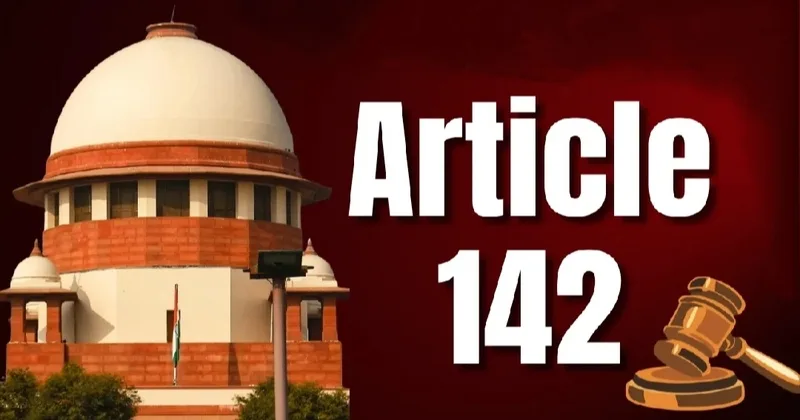
New Delhi: In a significant judicial reform measure aimed at addressing long-standing delays in the justice delivery system, the Supreme Court on May 29 invoked its extraordinary powers under Article 142 of the Constitution and issued binding directions to all High Courts across the country to ensure time-bound pronouncement and publication of judgments.
A bench led by Chief Justice of India Surya Kant passed a series of structured guidelines intended to streamline judicial timelines, particularly in cases where judgments are reserved for long periods and remain pending without pronouncement. The Court observed that such delays directly impact litigants, weaken public confidence in the justice system, and undermine the fundamental principle of timely justice.
Three-month limit for reserved judgments
One of the most important directions issued by the Court is that all High Courts must pronounce reserved judgments within a maximum period of three months. The Supreme Court noted that while reserving judgments is a normal judicial practice, indefinite delays in delivering them create uncertainty for litigants and can lead to avoidable hardship, especially in criminal and liberty-related matters.
The Court emphasised that High Courts, being principal constitutional courts at the state level, handle thousands of critical cases daily, and therefore must adhere to strict internal discipline in disposing of reserved matters.
Strict rules for bail cases
In another major direction aimed at protecting personal liberty, the Supreme Court laid down timelines for the disposal of bail matters. It is ordered that bail orders must be pronounced on the same day whenever possible. In cases where the order is reserved, it must be delivered on the next day without delay.
Further strengthening the process, the Court directed that all regular bail orders must be immediately communicated to the concerned trial courts to avoid procedural lag. It also held that undertrial prisoners who are granted bail should be released on the same day, subject to completion of necessary formalities.
The Court noted that delays in bail execution often defeat the very purpose of granting bail, resulting in unnecessary continued incarceration despite a judicial order in favour of release.
Mandatory 24-hour upload of judgments
To enhance transparency and public access, the Supreme Court directed that all High Court judgments, once pronounced, must be uploaded on official High Court websites within 24 hours. The Court observed that in the digital age, the timely availability of judgments is essential for lawyers, litigants, researchers, and the public. This direction is also expected to reduce confusion regarding case outcomes and improve accessibility to judicial records across the country.
The Supreme Court further clarified a key procedural aspect, stating that the date on which the operative portion of a judgment is pronounced will be treated as the official date of pronouncement of the judgment. This clarification aims to remove ambiguity in cases where full judgments are uploaded or signed later, but operative orders are already pronounced in court.
The judgment was delivered in a case that highlighted significant delays in pronouncement and uploading of judgments, with particular reference to concerns arising from proceedings in the Jharkhand High Court. The issue of reserved judgments remaining pending for extended periods prompted the Supreme Court to step in and lay down uniform guidelines applicable across all High Courts.
Legal experts view the ruling as a major step toward judicial reform, especially in improving efficiency and reducing pendency-related stress in the justice system. By introducing fixed timelines for judgments and bail orders, the Supreme Court has effectively set performance benchmarks for High Courts. The decision is also expected to have a broader impact on case management practices, pushing courts toward greater discipline in scheduling, pronouncement, and publication of orders. At its core, the ruling reinforces a simple but powerful principle: justice delayed, particularly in matters of liberty, can often amount to justice denied.