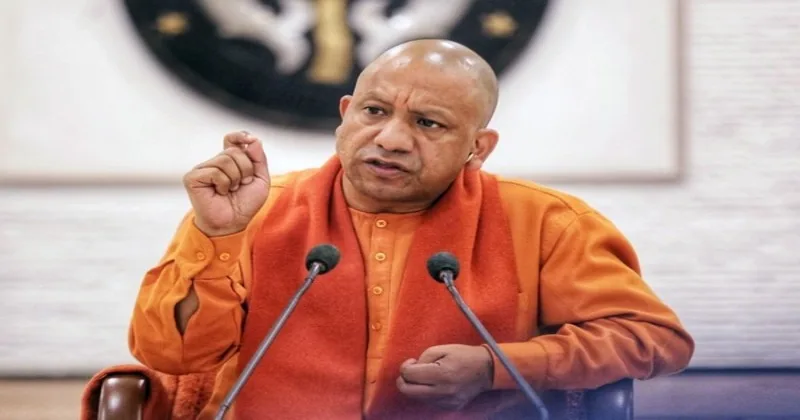
A man steps out of a Rs 2.5 crore car. He looks around. Then he picks up a Rs 45 flower pot and walks away. The CCTV does not lie. Neither does the question of what has gone wrong? When Uttar Pradesh Chief Minister Yogi Adityanath narrated this incident during a public address, he called it a ‘new model of theft.’ The phrase landed with a mirror to society. Not because the act was large. But because of what it quietly reveals about the society we are becoming.
India has long framed poverty as the mother of crime. Deprivation and desperation were the standard explanations whenever someone crossed a moral line. That logic is flawed now. This incident dismantles even that.
The man in the luxury car was not hungry. He was not desperate. Whatever moved his hand toward that flower pot, it was not in need. It was something, a belief, perhaps, that small public things belong to no one. Those rules apply to those who cannot afford to ignore them. That wealth quietly purchases exemption from ordinary civic obligations.
Walk through any Indian city today. Public benches vanish. Decorative plants disappear from road medians. Utility fixtures are stripped from the walls. None of it makes headlines because each act is too minor. Too common. Yet the cumulative damage is real. Public spaces feel increasingly disrespected, not because the state has abandoned them but because too many citizens already have.
What is troubling here is not the scale. It is the psychology. The person involved understands ownership. He drives a car that most Indians will never sit inside. Yet the mental wall between ‘mine’ and ‘ours’ appears to have collapsed entirely. This is not poverty of the wallet. It is a poverty of conscience.
Prosperity does not automatically build character. India’s economic growth has created a visible culture of display. Luxury goods as identity. Status is the only currency that matters. In such an environment, a dangerous logic quietly takes hold: if you can afford the car, you have already paid your dues. The flower pot is just a bonus.
Public spaces are not transactions. They are expressions of a shared compact, the agreement that what belongs to everyone will be treated as if it belongs to someone. When that compact erodes, it does not erode evenly. It collapses inward.
The Chief Minister’s anecdote resonated because people recognised it instantly. Not that specific man necessarily. The person who jumps a queue because waiting is for others. Who dumps waste at the park gate because cleaning is someone else’s job? Who takes the flower pot because nobody will stop him?
India’s ambition today is not only to build infrastructure. It is to build a nation where roads, parks and flower pots and the values they represent are treated as worth protecting by everyone. Not just by those who cannot afford a Rs 2.5 crore car. That is why the image of a luxury vehicle stopping for a flower pot thief feels so unsettling. It represents one moment of the tension between economic advancement and moral consciousness. The value of the stolen object may have been insignificant, but the questions raised by the CM stand tall.