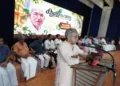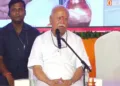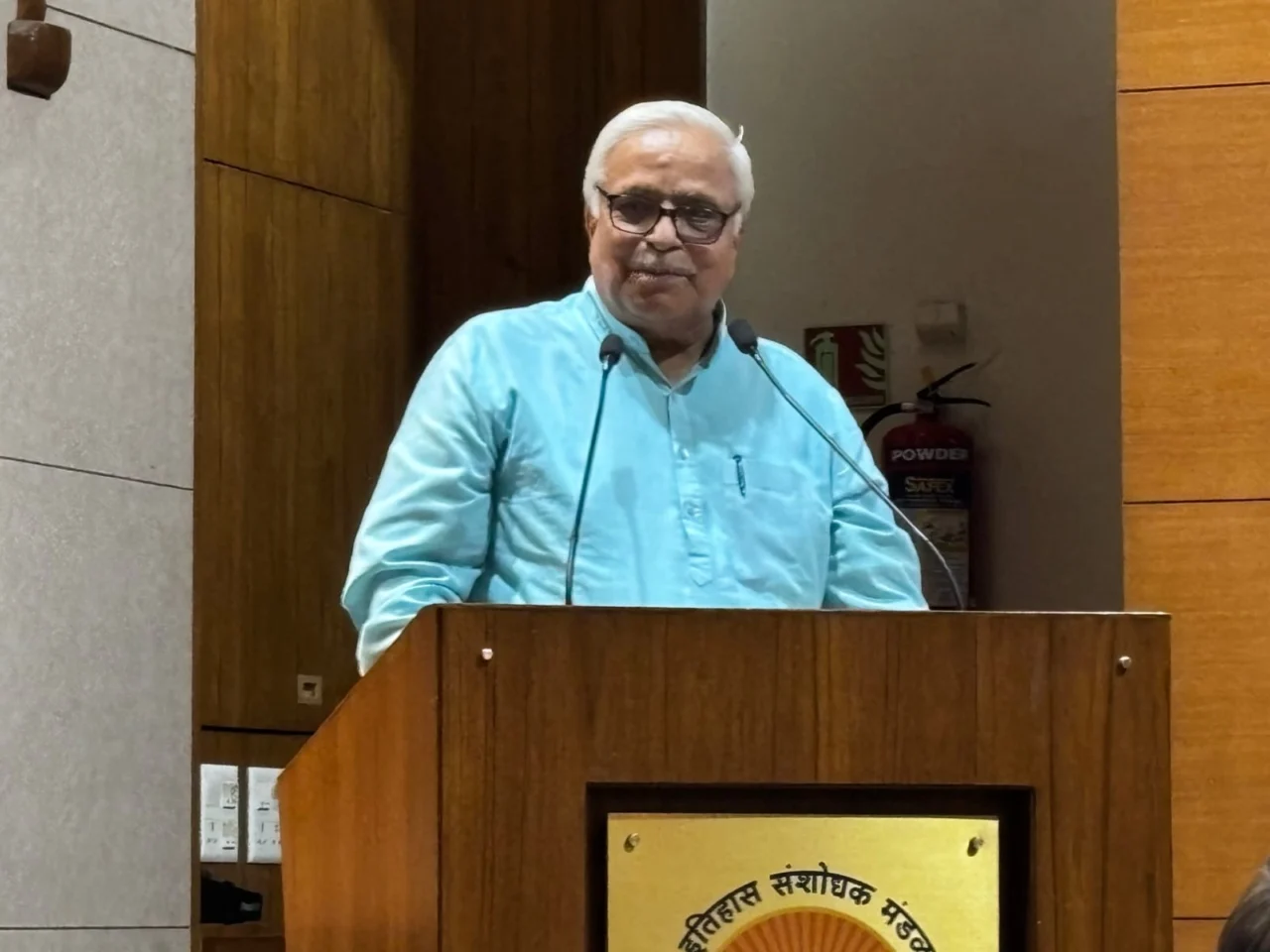
Pune: The concepts of Hindu and Hindutva are universal, timeless, and cannot be confined within the narrow boundaries of any sect or denomination, said Bhayyaji Joshi, member of the Akhil Bharatiya Karyakarini of Rashtriya Swayamsevak Sangh, at the book release ceremony of the book Samaj Sanghatanecha Varasa Ani Sangh, authored by Ramesh Patange.
He stated that once Hindus realise their true civilisational identity and collective selfhood, all social discrimination and divisions prevailing in society would naturally disappear.
He observed that foreign invasions caused society to drift away from its broad and integrated worldview, leading to social fragmentation and narrow thinking. He said the RSS is working to rebuild this forgotten foundation and strengthen social unity and national consciousness.
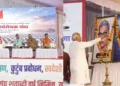
The book release function was organised on May 26, at the VK Rajwade Auditorium of Bharat Itihas Sanshodhak Mandal. The event was hosted by Bharatiya Vichar Sadhana. Among those present on the dais were Bharat Itihas Sanshodhak Mandal President Pradeep Rawat, Dada Rawat, Bharatiya Vichar Sadhana President Dr Girish Aphale, and Karyavah Kashinath Devdhar.
Praising the author’s scholarly work, Shri Joshi said that Ramesh Patange has presented a deeply researched perspective on the RSS’s establishment and ideological evolution, which will serve as an important reference for future generations.
He remarked that Hindu is not merely a sectarian identity, but a comprehensive way of life rooted in shared civilisational values extending from Kashmir to Kanyakumari. Languages, deities, pilgrimage centres, and scriptures belong to the entire society and not to any single caste or group, he said.
According to Bhayyaji Joshi, society became fragmented because of narrow caste-based thinking and social divisions. He noted that saints and reformers across different periods worked to preserve social cohesion and prevent the erosion of the larger civilisational structure. Continuing that legacy, Dr Keshav Baliram Hedgewar established the RSS to instil the spirit of “We are all one” within society.
He further said that mutual cooperation and interdependence form the foundation of Bharatiya thought, adding that the slogan “Bharat Mata Ki Jai” transcends regional and caste divisions. He asserted that the RSS is not separate from society, but an inseparable part of it.
Speaking on the occasion, author Ramesh Patange said that the book was published as a continuation of the earlier publication Amhi Sanghat Ka Aahot? released during the RSS centenary year. He said his prolonged study and engagement with the work of Samajik Samrasta Manch helped him understand the depth and ideological continuity of Sangh work.
Drawing parallels between the establishment of the RSS and the spiritual mission of Gautama Buddha, Patange said that just as Buddha initiated a transformative movement with a few committed followers, Dr Hedgewar too laid the foundation of an enduring social movement through the RSS.
He also traced a broader ideological lineage from Guru Nanak Dev, Swami Dayananda Saraswati, Veer Savarkar, and Dr BR Ambedkar to Dr Hedgewar, saying the book attempts to present this larger intellectual and civilisational tradition before society.
Dada Rawat, speaking at the event, said that the ideological foundations of present-day Sangh thought draw inspiration both from ancient Indian traditions and the reformist ideas of the enlightenment era. He added that the continuity of Hindu society and Hindutva survived through traditions such as the Warkari and Dharkari movements, which enabled society to endure centuries of struggle.