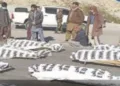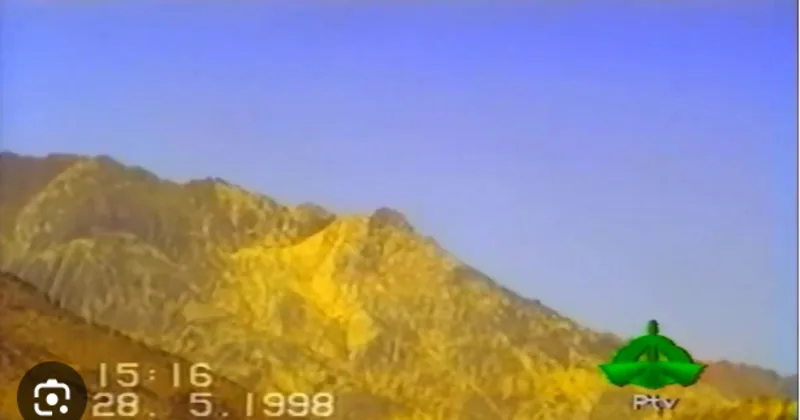
All over Pakistan, functions were organised on May 28 extolling the virtues of nuclear tests conducted on May 28, 1998. These tests were conducted in Chagai hills of Balochistan where new cancer cases among locals is an everyday affair. This has been happening ever since the conduct of five nuclear tests decades ago, as the Federal and the state government ignore the plight of the locals, refusing to own up that the nuclear radiation has caused these cancers.
It is the poor Baloch people living near Chagai hills who have borne the ill effects of the nuclear fallout. The Pakistan authorities, scientists and politicians included, made no effort to educate the locals regarding dangerous consequences of nuclear radiations. All the dramatis personnel involved in the conduct of the nuclear explosions at Chagai were travellers, Punjabis predominantly, who went to Chagai for a few days. They had their nuclear protection suits and took precautions to protect themselves but left the place soon after conducting the tests.
On Thursday, Pakistan President Asif Zardari, Prime Minister Shehbaz Sharif and Chief of Defence Forces (CDF) General Asim Munir did a lot of backslapping extolling the virtues of Pakistan being a nuclear state. Ironically, however, there was not a single report in any of the Pakistani newspapers from anywhere in Balochistan regarding the day being celebrated as Youm e Takbir. Ironical because Balochistan’s Chagai hills were the venue of these explosions and if the Baloch saw a connect with Pakistan’s so-called achievement, there could have been reports of them celebrating the day.
Nothing surprising though as ever since it was forcibly made a part of Pakistan in March 1948, Balochistan has been exploited in every manner conceivable by the Punjabi-dominated polity of the country. It is a province which occupies 45 per cent geographical spread of Pakistan but may not be getting 4.5 per cent of resources from the Federal government.
Balochistan’s own resources, its vast mineral wealth comprising copper, gold, other precious metals, besides natural gas, are used for the benefit of Pakistan. Th local Baloch have no say in the exploitation of these resources, neither getting jobs in the mines, nor transport contracts for taking out these minerals from Balochistan.
In May 1998 too, when Pakistan wanted to conduct nuclear tests in response to India’s tests of May 11 and 13 called Pokharan II, it chose Balochistan’s remote area as the venue. Not because the site was more suitable or the best suited but because Pakistan didn’t care for what happened to the locals as a fallout of nuclear radiation. It could not have conducted these tests in Punjab, stronghold of Nawaz Sharif, who was PM at that time, fearing an adverse public response.
In May 1998, Benazir Bhutto of Pakistan People’s Party (PPP) was the opposition leader, and she was a strong votary of conducting these explosions. She stated at that time that Pakistan had made rapid and consistent strides in the field of nuclear technologies during her father late Zulfikar Ali Bhutto’s stewardship. However, she too did not argue for the nuclear tests being conducted anywhere in Sindh which has vast uninhabited Thar desert.
There was thus a tacit understanding between the Pakistani Punjabis and Pakistani Sindhis to exploit Balochistan. Incidentally, this understanding continues till day and Balochistan is totally marginalised as a province in any decision-making, including regarding its own fate, on issues that concern its people. Since no safety precautions were taken to shield local populations from the nuclear fallout, Balochistan was considerable most suitable as a sacrificial animal. Not very different from the countless sacrificial goats, cows and camels butchered all over Pakistan a day ago on Eid ul Zuha.
When it came to the question of choosing a location for nuclear explosions, all top people in Pakistan readily agreed that it had to be Balochistan. Never mind the fact that no material was available anywhere in Balochistan. Also never mind the fact that no experiments or laboratories for nuclear tests were set up in Balochistan ever.
True to their character, and like an invading army, hordes of Pakistani scientists descended on Chagai hills in Balochistan in the run-up to the nuclear explosions. There was zero preparation at Chagai in May 1998, as all developments regarding nuclear devices had, till then, remained restricted to Islamabad-Rawalpindi and Lahore. In fact, according to reports in the public domain, all the materials needed for the explosions were carried from Rawalpindi to Chagai in knocked down state aboard a C-130 military aircraft with four F-16s acting as its escorts.
President Zardari, in his message to the people of Pakistan, said the nuclear tests conducted 28 years ago established Pakistan’s deterrence capability and made the country the seventh nuclear power in the world, according to a report of Tribune of Pakistan.
Paying tribute to the scientists, engineers and armed forces, he said their dedication, professionalism and patriotism enabled Pakistan to achieve a historic milestone, he also acknowledged the role of the national leadership and institutions in strengthening the country’s strategic capabilities. However, there was not a word about the local Baloch people who have been suffering from the ill effects of the nuclear radiation.