

Margo- Neem-based soap in India
September 20, 2026
  • Read Ecopy
  • Circulation
  • Advertise
  • Careers
  • About Us
  • Contact Us
Android AppiPhone AppArattai
Organiser
  • ‌
  • Bharat
    • Assam
    • Bihar
    • Chhattisgarh
    • Jharkhand
    • Maharashtra
    • View All States
  • World
    • Asia
    • Europe
    • North America
    • South America
    • Africa
    • Australia
  • Editorial
  • International
  • Opinion
  • RSS @ 100
  • More
    • World Hindu Congress 2026
    • Op Sindoor
    • Analysis
    • Sports
    • Defence
    • Politics
    • Business
    • Economy
    • Culture
    • Special Report
    • Sci & Tech
    • Entertainment
    • G20
    • Azadi Ka Amrit Mahotsav
    • Vocal4Local
    • Web Stories
    • Education
    • Employment
    • Books
    • Interviews
    • Travel
    • Law
    • Health
    • Obituary
  • Subscribe
    • Subscribe Print Edition
    • Subscribe Ecopy
    • Read Ecopy
  • ‌
  • Bharat
    • Assam
    • Bihar
    • Chhattisgarh
    • Jharkhand
    • Maharashtra
    • View All States
  • World
    • Asia
    • Europe
    • North America
    • South America
    • Africa
    • Australia
  • Editorial
  • International
  • Opinion
  • RSS @ 100
  • More
    • World Hindu Congress 2026
    • Op Sindoor
    • Analysis
    • Sports
    • Defence
    • Politics
    • Business
    • Economy
    • Culture
    • Special Report
    • Sci & Tech
    • Entertainment
    • G20
    • Azadi Ka Amrit Mahotsav
    • Vocal4Local
    • Web Stories
    • Education
    • Employment
    • Books
    • Interviews
    • Travel
    • Law
    • Health
    • Obituary
  • Subscribe
    • Subscribe Print Edition
    • Subscribe Ecopy
    • Read Ecopy
Organiser
  • Home
  • Bharat
  • World
  • Operation Sindoor
  • Editorial
  • Analysis
  • Opinion
  • Culture
  • Defence
  • International Edition
  • RSS @ 100
  • Magazine
  • Read Ecopy
Home Bharat

The Green Legacy of Margo: How Neem became India’s first mass-market herbal soap in the early 20th century

Margo Neem Soap emerged in colonial India as one of the earliest herbal personal care innovations rooted in traditional neem-based science. It symbolised the shift toward indigenous, nature-based alternatives in a market dominated by British brands

Nandini NairNandini Nair
May 9, 2026, 05:30 pm IST
inBharat, Special Report
Follow on Google News
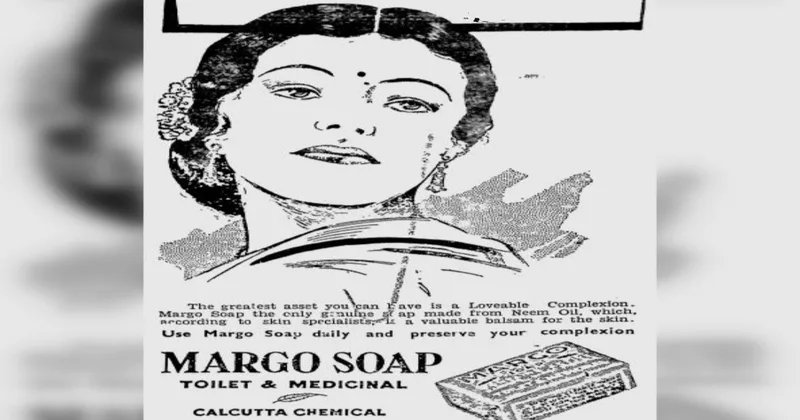
Margo neem soap emerged in colonial India as one of the earliest herbal personal care innovations rooted in traditional neem-based science

Margo neem soap emerged in colonial India as one of the earliest herbal personal care innovations rooted in traditional neem-based science

Facebook
Twitter
WhatsAppTelegramEmail

In early 20th-century colonial India, personal hygiene, industrial chemistry, and emerging nationalist sentiment intersected in fascinating ways. One of the most enduring products from this period is Margo neem soap, a brand that became synonymous with herbal cleansing and “natural protection.” Over time, however, its story has gathered layers of cultural memory, marketing narrative, and historical mythmaking that blur the line between fact and folklore.

In 1920, the British soap giants (Lever Brothers) had a problem. They could make us smell like a rose, but they could not survive the Indian skin. The heat, the rashes, & the tropical infections were the enemies of the Empire. K.C. Das (I will write about him separately) & the… pic.twitter.com/5JKlbTkmky

— Parimal (@Fintech03) May 3, 2026

The Origins of Margo and Neem-Based Soap in India

The soap widely known today as Margo traces its origins to Margo Soap, introduced in the 1920s by Calcutta Chemical Company (later associated with modern consumer goods groups, including Henkel India in later decades).

Its defining ingredient was neem, scientifically known as Azadirachta indica, a tree deeply rooted in Indian traditional medicine systems like Ayurveda. Neem oil had long been used in folk practices for its antibacterial, antifungal, and insect-repelling properties, though these effects are more accurately described today in terms of general antimicrobial activity rather than “immunity” or disease prevention. The innovation of Margo was not the discovery of neem itself, but rather its industrial adaptation into a mass-market soap bar, making a traditional botanical ingredient commercially accessible.

The Chemistry Challenge: Why Neem Was Difficult to Commercialise

Neem oil is chemically complex. Early soap manufacturers faced real difficulties in integrating it into stable, pleasant-smelling bars. It contains compounds such as azadirachtin, which contribute to its bitter taste and strong odour, and can be sensitive to heat and processing conditions.

The claim that Indian chemists “perfected a cold process that preserved active medicinal properties” reflects a popular narrative rather than a documented scientific breakthrough. In reality, soap manufacturing in the 1920s involved evolving industrial techniques, and while neem-based formulations were indeed developed successfully, the preservation of specific “active immunity-boosting compounds” is not supported by modern dermatological science.

What is historically accurate is that Indian manufacturers were experimenting with local botanical inputs to create alternatives to imported European soaps, which were often perceived as expensive and less suited to tropical climates.

Colonial Market Context and Lever Brothers Competition

During the colonial era, British firms such as Lever Brothers dominated soap markets across India. These products were typically designed for European climates and consumer preferences, lighter fragrances, different oil bases, and industrial formulations optimised for temperate conditions.

Indian-made soaps like Margo positioned themselves differently: as tropical, herbal, and locally rooted alternatives. This distinction became a powerful marketing advantage, especially as nationalist sentiment grew in the early 20th century and consumers increasingly favoured indigenous goods under the broader Swadeshi movement. However, there is no verified historical evidence that British medical authorities “adopted Margo for military use” or that European soaps caused widespread “skin rot” in colonial forces. These elements belong more to later storytelling than to the archival record.

The Role of Branding and Cultural Identity

One of Margo’s most significant achievements was not scientific, but symbolic. Its branding emphasised:
The use of neem as a distinctly Indian botanical identity

A green, herbal aesthetic associated with purity and nature

Positioning as a “natural” alternative to imported luxury soaps

This helped Margo become part of a broader cultural shift in which Indian products were no longer seen as inferior substitutes but as authentic alternatives rooted in local knowledge systems.

Also Read: Bangladeshi leader Md Nurul Huda urges Mamata Banerjee to ‘Declare War on Delhi’; “17 crore Muslims with you” in Bengal

Global Influence of Neem in Modern Skincare

Today, neem extracts are widely used in global cosmetics and personal care industries. From herbal soaps to acne treatments, neem has been incorporated into formulations by numerous international brands.
This reflects a broader trend: the globalisation of traditional botanical knowledge. While modern products are far more scientifically standardised, the cultural legacy of neem-based soap innovation in India remains significant.

The story of Margo soap sits at the intersection of innovation, colonial economics, and cultural storytelling. Historically, it represents an important milestone in India’s early consumer goods industry and the adaptation of traditional ingredients into modern manufacturing. At the same time, many of the more dramatic narratives surrounding it, such as medical immunity, imperial dependence, or covert resistance funding, belong to the realm of mythologised history rather than verified fact. What remains undisputed is this: Margo helped establish neem as a lasting symbol of Indian natural science and laid early groundwork for the country’s later herbal and Ayurvedic skincare industry—a legacy that continues to influence global markets today.


 

Topics: Margo soapAzadirachta indicaIndian heritage brandsHerbal skincareNatural antisepticColonial IndiaSwadeshi MovementNeem
Nandini Nair
Nandini Nair
Nandini Nair is a Subeditor-cum-Content Manager at Organiser Digital with more than 3.5 years of experience covering international, national, cultural and current affairs. Also tracks and develops impactful stories emerging from social media discourse, delivering engaging digital reporting [Read more]
Share
Tweet
SendShareSend
✮ Subscribe Organiser YouTube Channel. ✮
✮ Join Organiser's WhatsApp channel for Nationalist views beyond the news. ✮
Previous News

Brain Drain to Brain Gain: Sridhar Vembu’s vision of bringing global Indian talent back to build a stronger India

Next News

From Waste to Wealth: Uttar Pradesh to turn cow dung into biogas and compost under Yogi’s new plan

Related News

Vishwakarma Puja Dattopant Thengadiji Vs Commies: Communist devaluation of dignity and selfhood

Congress Parliamentary Party Chairperson Sonia Gandhi and Congress President Mallikarjun Kharge speak with a party worker during the rendition of Vande Mataram at the 80th Independence Day celebrations at Congress headquarters, in New Delhi on August 15. Lok Sabha LoP Rahul Gandhi is also present

Vande Mataram and dirty politics of Congress: Appeasement DNA of ideological unease

The Swadeshi movement turned Indian enterprise into a powerful force for economic self-reliance, national pride and the struggle for Swaraj

Building Economic Swaraj: How Indian enterprises fought foreign rule and reclaimed national pride

From Village Schools to Colonial Classrooms: The Systematic Disruption of India’s Traditional Education(AI Generated Image)

How British colonialism & Macaulay’s minute systematically dismantled Indian indigenous education system!

UP CM Yogi Adityanath honoured handloom weavers and recalled the Swadeshi Movement on National Handloom Day 2026

National Handloom Day: Yogi Adityanath salutes artisans, recalls Swadeshi Movement’s legacy

President Droupadi Murmu honoured 22 artisans with the Sant Kabir and National Handloom Awards

National Handloom Day 2026: President Murmu honours 22 master artisans with Sant Kabir and National Handloom Awards

Load More

Latest News

BMS launches National Organisation for Digital Employees (NODE) for IT workforce; aims to strengthen employee welfare

GalaxEye’s US patent for OptoSAR marks a major boost for India’s private space sector, advancing its global Earth-observation ambitions

GalaxEye secures US patent for OptoSAR technology, boosting India’s private space and deep-tech ambitions

The arrested Bangladeshi national

Keralam: Series of Bangladeshi arrests raises questions over alleged support ecosystem of fake IDs, jobs and shelter

The Indian Army has launched AASHVAST to detect hidden software and electronic vulnerabilities in military drones

Indian Army strengthens drone security with AASHVAST lab to detect software vulnerabilities & Chinese components

Nileema Mishra’s grassroots work empowered women and helped transform more than 200 villages across Maharashtra

Nileema Mishra: The woman who transformed more than 200 villages across rural Maharashtra

Shree Stambheshwar Mahadev Mandir in Gujarat

Shiva Mandir that disappears into the sea and returns with the tide: The fascinating story of Stambheshwar Mahadev

Vishwa Hindu Parishad (VHP) spokesperson Surendra Jain (file photo0

VHP condemns Hamid Ansari over remarks citing Nehru on Hindu right-wing communalism

Ganesh murti visarjan incidents raise concerns over radical Islamic intolerance and law and order in Tamil Nadu

ABVP registers 3-0 win in Delhi University Students’ Union elections; wins president, secretary, joint secretary posts

Ganapati murti visarjan procession at T. Narasipura on September 18

Karnataka: Ganapati procession follows approved mosque route in T Narasipura amid allegations of police high-handedness

Load More
  • Privacy
  • Terms
  • Cookie Policy
  • Refund and Cancellation
  • Delivery and Shipping

© Bharat Prakashan (Delhi) Limited.
Tech-enabled by Ananthapuri Technologies

  • Home
  • Search Organiser
  • Bharat
    • Assam
    • Bihar
    • Chhattisgarh
    • Jharkhand
    • Maharashtra
    • View All States
  • World
    • Asia
    • Africa
    • North America
    • South America
    • Europe
    • Australia
  • Editorial
  • Operation Sindoor
  • Opinion
  • Analysis
  • Defence
  • Culture
  • Sports
  • Business
  • RSS @ 100
  • Entertainment
  • More ..
    • Sci & Tech
    • Vocal4Local
    • Special Report
    • Education
    • Employment
    • Books
    • Interviews
    • Travel
    • Health
    • Politics
    • Law
    • Economy
    • Obituary
  • Subscribe Magazine
  • Read Ecopy
  • Advertise
  • Circulation
  • Careers
  • About Us
  • Contact Us
  • Policies & Terms
    • Privacy Policy
    • Cookie Policy
    • Refund and Cancellation
    • Terms of Use

© Bharat Prakashan (Delhi) Limited.
Tech-enabled by Ananthapuri Technologies