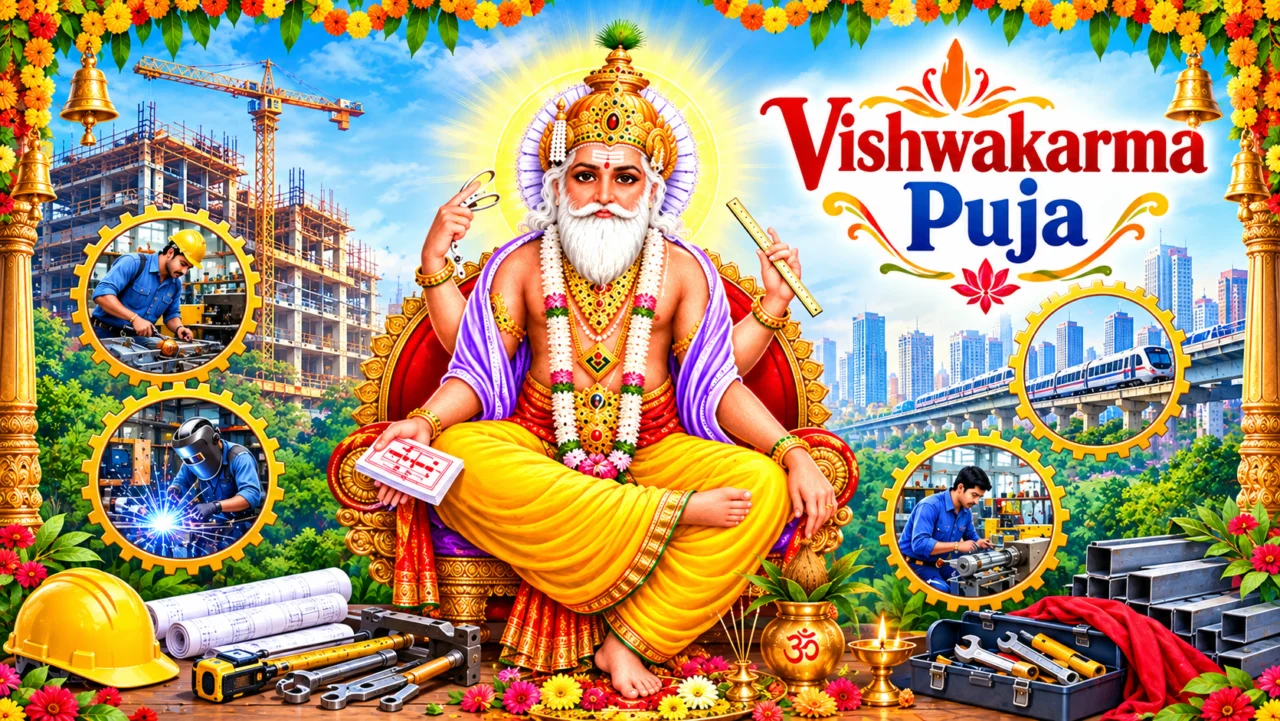
When clouds like carded cotton float in the autumn blue sky, and the breeze is filled with the sweet fragrance of Shiuli flowers, there begins the timeless tradition of worshipping Vishwakarma, the divine architect and craftsman, across every workplace of eternal India. However, this festival is not confined to the narrow boundaries of scriptural rituals or mantra chanting. During the fiery days of India’s freedom struggle under colonial rule, Vishwakarma Puja emerged as a unique symbol across this land. It was a remarkable convergence where indigenous craftsmanship, economic nationalism, and the Indian labour movement met at a single confluence. When the British colonial rulers sought to systematically destroy India’s traditional arts and handicraft-based cottage industries through deliberate de-industrialisation, the working people of colonised India found in Vishwakarma Puja an infallible weapon to reclaim their self-respect and awaken their inner strength. Yet, most unfortunately, Marxist historians and Left-wing theorists completely ignored the deep anti-British economic nationalism and working-class resistance hidden within these festivals, deliberately choosing instead to taint them with the brush of communalism.
Significance of Vishwakarma
Vishwakarma is the primordial sculptor, architect, and deity of craftsmanship in Indian culture, whose civilisational and socio-economic significance was first systematically documented in the modern era by the world-renowned art historian Ananda K. Coomaraswamy in his classic book The Indian Craftsman, published in London in 1909, and by George Birdwood in his classic work The Industrial Arts of India, published in 1880. Coomaraswamy powerfully demonstrated in his book that the worship of Vishwakarma, the veneration of tools, or Shastra Puja by Indian artisans was not mere blind superstition or idolatry, but rather a profound Vedic spiritual philosophy that transformed one’s labour into a sacred sacrifice, or yajna. In his book, Coomaraswamy beautifully articulated the majesty of Indian artisans, writing that to the Indian craftsman, his hammer, chisel, or loom is not merely a material tool for earning a livelihood; it is a physical manifestation of the Creator’s creative power. When the craftsman worships Vishwakarma, he essentially venerates the supreme divine majesty of creation.
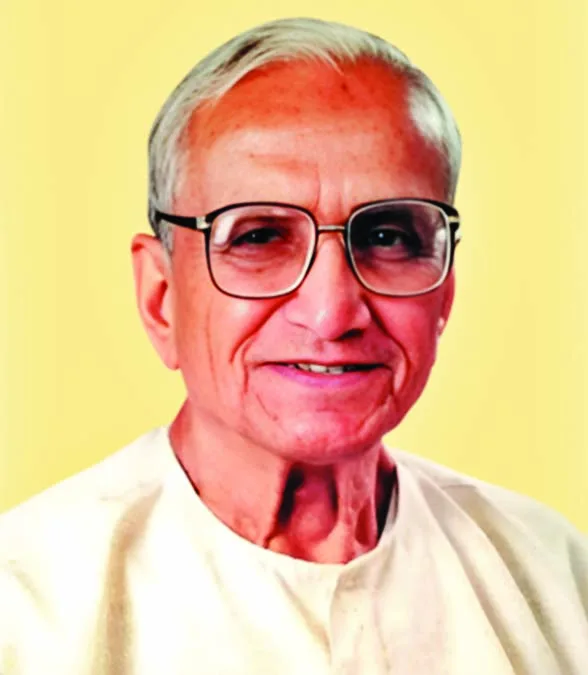
Eminent historian Sumit Sarkar, in his monumental work The Swadeshi Movement in Bengal 1903–1908, published in 1973 by the People’s Publishing House in New Delhi, documented how the anti-Partition Swadeshi movement of 1905 forged a deep synthesis between spiritual and political awakening in India. A timeless illustration was the immortal anthem “Vande Mataram,” composed by Rishi Bankim Chandra Chattopadhyay in 1876, which first appeared in his revolutionary 1882 novel Anandamath as a hymn to Goddess Durga sung by the sannyasis and later became the battle cry of national liberation.
During the Swadeshi movement of 1905, when nationalist leaders like Lala Lajpat Rai, Bal Gangadhar Tilak, and Bipin Chandra Pal—popularly known as the triumvirate “Lal-Bal-Pal”—called for the revival of indigenous cottage industries and artisanal power, traditional festivals like Vishwakarma Puja acquired a vibrant new nationalist dimension across factories, blacksmith workshops, and weaving centres. The consecration of tools and machinery became a public social pledge of self-reliance and the boycott of foreign goods.
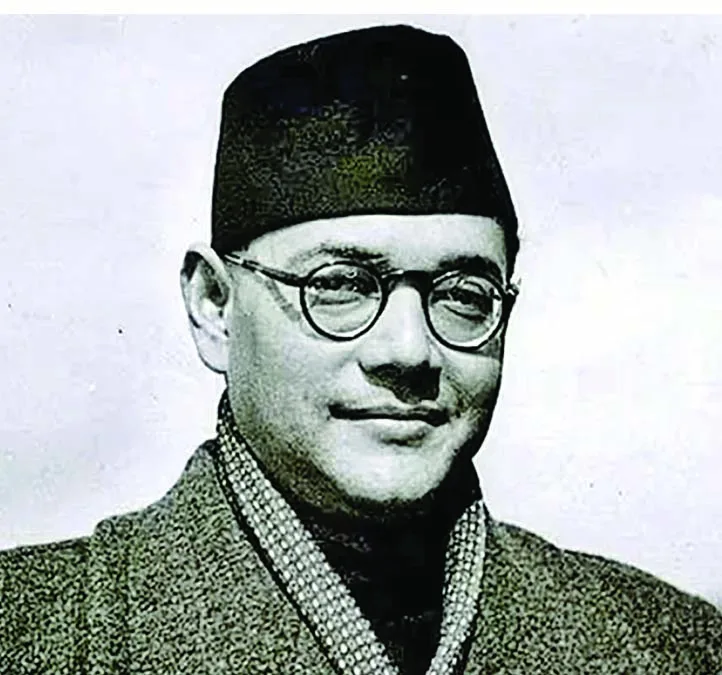
Yet, from the very beginning, the Communists of India launched a systematic conspiracy to fiercely attack, humiliate, and destroy this indigenous labour philosophy and the unique identity of the artisan community. Modern sociologist Laura Bear, in her insightful 2013 research essay titled This Body is Our Body: Viswakarma Puja, the Social Debts of Kinship, and Theologies of Materiality in a Neo-liberal Shipyard (published in the volume Vital Relations: Modernity and the Persistent Life of Kinship), clearly demonstrated that for modern Indian labourers, Vishwakarma Puja is not merely a festive ritual. It represents their own spiritual autonomy and a symbol of self-respect within the factory premises. Bear noted in her essay that, by quoting shipyard mechanics and blacksmiths, she shows that even within the harsh mechanical environment of the factory, workers organise Vishwakarma Puja to consecrate their tools, providing them psychological liberation from mechanical exploitation.
In contrast, Left-wing trade unions sought to uproot this organic and indigenous labour philosophy entirely. Consequently, in post-Independence India, a powerful nationalist alternative emerged in the philosophy of Dattopant Bapurao Thengadi and the Bharatiya Mazdoor Sangh he founded. Thengadi’s timeless doctrine of the “Industrial Family” or “Audyogik Parivar” presented a profound spiritual and practical challenge to the imported European theory of class struggle championed by the communists, charting a long and historic chapter of ideological battle in the history of India’s political and industrial culture.
Vishwakarma Puja & Swadeshi Movement: Narrative of Economic Nationalism
The connection between the main current of India’s freedom struggle and Vishwakarma Puja is deeply rooted in history. In the late nineteenth and early twentieth centuries, as British colonial economic policies pushed India’s prosperous blacksmiths, weavers, brass-smiths, and carpenters to the brink of ruin, this ancient tradition underwent a powerful revival. Eminent historian Dr. Bipan Chandra, in his seminal work Nationalism and Colonialism in Modern India, published in 1979 by Orient Longman, discussed in detail how British customs tariff and industrial policies economically crippled the indigenous cottage industries and the artisan class. Dr. Bipan Chandra wrote that the British colonial tax structure and the unrestricted influx of machine-made British goods had devastated the Indian weavers and blacksmith communities, and that the only escape from this economic devastation was the awakening of Swadeshi self-strength.
In response, just as Lokmanya Bal Gangadhar Tilak transformed the Ganesh Festival and Shivaji Jayanti into public platforms for the anti-British movement in Maharashtra, Vishwakarma Puja was similarly wielded as a political and cultural weapon in Eastern and Northern India. Energised by the sacred chant of Vande Mataram, the artisan community transformed the platforms of Vishwakarma Puja into battlegrounds for their economic independence.
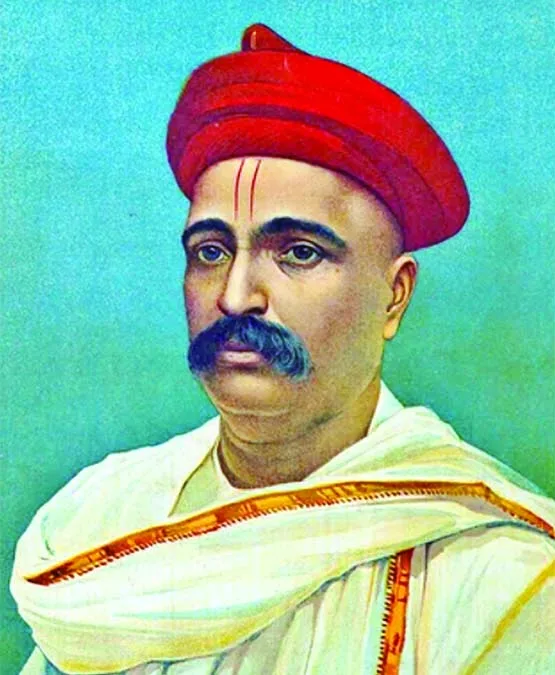
Historical records reveal that the primary driving forces behind this movement were Deshbandhu Chittaranjan Das and Netaji Subhas Chandra Bose. While serving as President of the All India Trade Union Congress, C.R. Das used the Vishwakarma Puja pavilions in the Kharagpur Railway Workshop and the jute mills of Hooghly as strategic political centres to organise workers. Where the British police imposed strict prohibitions on general political assemblies, gathering workers under the pretext of Vishwakarma Puja was an exceptionally easy and legally compliant strategy. Behind the cover of these pavilions, they distributed patriotic literature and drew blueprints for armed revolution. Realistic historical accounts of these events are documented in Sumit Sarkar’s Modern India 1885–1947, published in 1983 by Macmillan India, where he highlights the significant contribution of popular religious gatherings in mobilising the historic Kharagpur railway strikes.
Similarly, during the 1920s and 1930s, Netaji Subhas Chandra Bose, as the President of the Jamshedpur Labour Association and the Golmuri Tinplate Workers’ Union, regularly visited the worker colonies of the Jamshedpur iron and steel factories on the auspicious occasion of Vishwakarma Puja, actively supporting and validating the dignity of this festival. Netaji used these traditional Vishwakarma Puja gatherings to introduce thousands of labourers to the mantra of complete Independence. On the day of the puja, the skies of Eastern India would be adorned with vibrant, colourful kites. These kites were more than a source of recreation; freedom fighters wrote powerful slogans like “Vande Mataram” or “British Quit India” on them and flew them high into the sky, representing a silent, skybound resistance against colonial rule.
Even in the armed revolutionary movement, artisans from blacksmith communities, such as Ramdas Lohar or Nana Lohar—an associate of Chandra Shekhar Azad—used the sacred Shastra Puja of Vishwakarma as cover to secretly manufacture bombs and weapons. However, the Communists consistently viewed this patriotic and historically rooted Indian labour movement as the primary threat to the hegemony of their alien European dogmas and made relentless attempts to stifle its voice. Articulating this, Rajnarayan Chandavarkar, in his classic academic work The Origins of Industrial Capitalism in India: Business Strategies and the Working Classes in Bombay, 1900–1940, published in 1994 by Cambridge University Press, demonstrated how the social and cultural festivals of Indian workers functioned as a protective shield and a means of resistance against colonial capitalist exploitation—a historical reality that the communists have stubbornly refused to acknowledge.
‘Industrial Family’ vs. Class Struggle: A Psychological Conflict between Two Opposite Poles
On July 23, 1955, celebrating the birth anniversary of Lokmanya Bal Gangadhar Tilak, Dattopant Thengadi, with absolute humility but iron resolve, founded the Bharatiya Mazdoor Sangh in Bhopal. Thengadi was not merely a labour leader; he was a unique philosopher-craftsman who synthesised labour and industry through the lens of Indian philosophy. The foundational pillar of his vast intellectual framework was a noble, ancient Indian concept that he termed the “Industrial Family” or “Audyogik Parivar.” According to this philosophy, a factory is not an exploitative dungeon or a gladiatorial arena for conflict between owners and workers; rather, it is a joint family where owners, artisans, managers, and society interact as mutual cooperators with absolute trust, sharing the responsibility for the nation’s economic prosperity.
To comprehend the core philosophical contributions of Dattopant Thengadi and the Bharatiya Mazdoor Sangh, one must read Thengadi’s seminal book Third Way, first published in 1995 in New Delhi by Janaki Prakashan (and later reprinted with refinements by Sahitya Sindhu Prakashana in Bengaluru). In this text, Thengadi demonstrated how both capitalism and communism reduce human beings to mere cogs in a machine and material entities. Drawing upon the cooperative systems of ancient India and the economic principles detailed in Kautilya’s Arthashastra, he argued that in the Indian labor culture, work is a “yajna” and the factory is the sanctified arena of that sacrifice. In this classic text, Thengadi explicitly wrote that while Western social thought revolves around rights, the traditional Indian labor philosophy reminds us of our duties. When work is transformed into a sacred sacrifice, production is no longer just a commodity; it becomes an offering dedicated to the collective welfare of society.
In another of his celebrated theoretical works, Clash of Ideologies: Marxist and Indian, published in 1997 by Suruchi Prakashan in Delhi, Thengadi mapped the deep social scars inflicted by dialectical class struggle. In his view, Western social structures evolved through the conflict of the “master-slave” relationship, which manifested as the “class enemy” in communist theory. Conversely, the foundational basis of traditional Indian social relationships is mutual interdependence and responsible partnership. Dattopant Thengadi, in his renowned address Integral Humanism: A Study, explained the philosophy of the “Industrial Family” in the light of Pandit Deendayal Upadhyaya’s philosophy of Integral Humanism, where every industrial enterprise is conceptualized as a self-sustaining societal family.
The communists made a calculated attempt to malign Thengadi’s “Industrial Family” concept as “yellow unionism”. Turning the yellowed pages of the communist organ People’s Democracy and the Communist Party of India’s theoretical journal New Age, one finds constant propaganda claiming that the “Industrial Family” was a dangerous conspiracy hatched by owners to pacify workers’ revolutionary consciousness forever. Yet, history stands witness that the Bharatiya Mazdoor Sangh was never a passive or owner-compliant organisation. In his collection of classic lectures compiled in the book Audyogik Mahasangh (published in Nagpur in 1986), Thengadi proudly raised the revolutionary threefold slogan: “Nationalisation of the workers, laborisation of the industry, and industrialisation of the nation.” This three-pronged program was truly revolutionary. It did not limit workers to battles over wages; it advocated making them active partners and key decision-makers in industrial enterprises. Because of their narrow European dogmatic lenses, the communists could never comprehend this indigenous revolutionary concept and consequently resorted to blind aggression as their primary weapon.
Left-Wing Dogmatism: A War Against the Worker’s Self-Identity and Beliefs
Behind the communist opposition to Vishwakarma Puja and nationalist tool worship lay Karl Marx’s dogmatic ideological orthodoxy. In 1844, in his work A Contribution to the Critique of Hegel’s Philosophy of Right, Karl Marx famously labeled religion as the “opium of the people.” Armed with this mechanical, European materialist worldview, the Communist Party of India and later the CPI(M) entered the factory floors of India. Rajani Palme Dutt, in his famous book India Today, published in 1940 by Victor Gollancz, asserted that to revolutionize the national awakening and the labor movement in India, all religious and traditional sentiments must be discarded. Rajani Palme Dutt explicitly wrote in his book that unless Indian workers were liberated from medieval religious bigotry and superstition, the creation of a revolutionary class consciousness would remain impossible. In their view, the workers’ tool worship or Vishwakarma devotion inside the factory was a form of “false consciousness,” a conspiracy manufactured by the bourgeoisie and capitalists to pacify class consciousness. The Left believed that a worker who worships his tools and machinery and looks upon the factory as his family would never participate in an armed class struggle against the capitalist.
This narrow Marxist framework was first intellectually shattered in academic scholarship by the eminent historian Dipesh Chakrabarty. In his pathbreaking book Rethinking Working-Class History: Bengal 1890–1940, published in 1989 by Princeton University Press, Chakrabarty demonstrated that the class consciousness of Bengali jute mill workers was not cast in any universal European mold. The mental horizon of Indian workers was shaped within a pre-capitalist religious and social culture, where religious festivals—especially Vishwakarma Puja—far from weakening class solidarity, actually helped workers build a collective social identity and mutual belonging within the factory. In the fifth chapter of his book, Dipesh Chakrabarty detailed how workers forged social solidarity through these collective festivals even within a hostile working environment, which provided them with a form of psychological defense against capital exploitation.
Similarly, the renowned sociologist Leela Fernandes, in her book Producing Workers: The Politics of Gender, Class, and Culture in the Calcutta Jute Mills, published in 1997 by the University of Pennsylvania Press, provided detailed ethnographic research proving that the construction of Vishwakarma Puja pavilions and the celebration of the festival inside the jute mills was a sphere of the workers’ own cultural autonomy. It was a cultural resistance by Indian workers against the ruthless, disciplinary exploitation of white British managers. Yet, the communist trade unions chose to deny this reality, attempting instead to impose a mechanical atheism upon the workers. They claimed that celebrating Vishwakarma Puja inside the factory was the greatest obstacle to initiating the workers into scientific socialism.
The historian Chitra Joshi, in her scholarly work Lost Worlds: Indian Labour and its Forgotten Histories, published in 2003 by Anthem Press, analyzed the life and labor of textile mill workers in Kanpur, demonstrating how workers utilized their traditional cultural values to construct resistance against capitalist discipline. In Kanpur as well, festivals like Vishwakarma Puja and tool worship were symbols of the workers’ own power and agency, which the communists, with their rigid, mechanical philosophy, failed to comprehend. In her book, Chitra Joshi paints a vivid and realistic picture of the workers’ profound emotions and festive enthusiasm during Vishwakarma Puja in the Kanpur mills.
The Fake Internationalism of May Day vs. Indian Labor Philosophy
Analytically, there exists a deep psychological chasm between May Day and Vishwakarma Puja in the minds of Indian workers and artisans. The history of May Day traces back to the Haymarket labor riots in Chicago on May 1, 1886. Later, in 1889, the Second Communist International in Paris declared May 1 as International Workers’ Day. However, the roots of this movement lay in the dialectical materialist framework of European owner-worker conflict, which conceptualized the worker and the employer as eternal, irreconcilable enemies. Furthermore, in the late 1930s, when the Soviet dictator Joseph Stalin signed the notorious non-aggression pact with Adolf Hitler, the communists overnight suspended their anti-fascist May Day celebrations, issuing orders to observe it strictly as a labor day.
In sharp contrast to this ideological betrayal and fake internationalism, in 1955, Dattopant Thengadi and the Bharatiya Mazdoor Sangh rejected the Leftist slogan of “Workers of the world, unite!” and raised the indigenous call: “Mazdooron, duniya ko ek karo!”—Workers, unite the world! Thengadi, in his address on Integral Humanism: A Study, showed that tools and machines are not symbols of capitalist oppression, but manifestations of divine creative majesty. Thengadi and the BMS declared September 17, the day of Vishwakarma Jayanti, as India’s true National Labor Day.
However, the rise of this indigenous culture posed an existential threat to the monopoly of the Indian communists. They viewed it as a devastating blow to their Leftist hegemony and launched a fierce campaign of slander and misinformation against Vishwakarma Puja. They sought to forcibly impose the reactionary theories of May Day on the workers while marginalizing traditional Indian festivals. This psychological conflict is analyzed in detail by sociologist Kiran Saxena in her rich research article, “The Hindu Trade Union Movement in India: The Bharatiya Mazdoor Sangh,” published in the July 1993 issue of the journal Asian Survey, where she demonstrated how the BMS, through Vishwakarma Puja, secured the triumph of a nationalist labor philosophy over imported Leftist dogmas.
Communist Slander, Humiliation, and Red Terror on the Factory Floors
The Communist Party of India and their labor fronts, the All India Trade Union Congress and the Center of Indian Trade Unions, resorted to multiple strategies over the decades to vilify Vishwakarma Puja and the Bharatiya Mazdoor Sangh. Their primary and most powerful weapon was branding Vishwakarma Puja as a “communal” or “fascist conspiracy.” Left-wing intellectuals and sections of the media constantly propagated that by organizing Vishwakarma Puja, the RSS and the BMS were attempting to divide workers on religious lines and disrupt working-class unity.
Workers who organised Vishwakarma Puja or wished to apply a tilak to their foreheads and worship their machinery on the shop floor were subjected to brutal mockery and humiliation. CITU cadres told ordinary workers that such worship was “backwardness and superstition” and equivalent to licking the boots of the capitalists. C.K. Saji Narayanan, in his book Bhishmacharya of Labour Movement, and the internal archives of the BMS record how communist leaders mocked Thengadi’s concept of tool worship as medieval barbarism.
Beyond intellectual mockery, the communists unleashed raw physical violence and economic terror. Particularly in the jute mill belts of West Bengal and Kerala, as well as the mining regions, CITU cadres launched physical assaults on BMS workers. The districts of Kannur, Thiruvananthapuram, and Kozhikode in Kerala were drenched in the blood of BMS and RSS workers. The Kerala Unit of the BMS documented these atrocities in a sensitive white paper titled We Accuse: An Anatomy of the CPI(M) CITU Murder Politics in Kerala (preserved in the archives of the V.V. Giri National Labour Institute in Noida). During the Left Democratic Front government led by E.K. Nayanar from 1978 to 1981, at least twenty BMS workers were brutally murdered, and hundreds were permanently disabled in Kerala.
The most chilling historical illustration of this Left-wing violence and human rights violation was the brutal murder of the veteran BMS leader Manoj C.T. in the Kozhikode district on February 12, 2012. The charge sheet submitted by the Central Bureau of Investigation in this murder case documented a deep-seated conspiracy involving top cadres of the CPI(M). The accounts of this red terror are vividly portrayed by the prominent journalist N.P. Ullekh in his brilliant book Kannur: Inside India’s Bloodiest Revenge Politics, published in 2018 by Penguin Random House India. Ullekh wrote that the soil of Kannur and Kozhikode had become a ruthless valley of political murders in the name of red ideology, where CITU systematically plotted to eliminate any alternative saffron-flag-bearing workers to maintain their monopolistic trade union hegemony.
Similarly, in West Bengal, during the thirty-four-year reign of the Left Front government, the hegemony of CITU was maintained in the Durgapur-Asansol industrial belt and the Hooghly-Howrah jute mill areas by suppressing any attempts by the BMS to establish unions. The primary condition for securing employment in the factories was possessing a CITU red card. Those who spoke of patriotism or wished to carry the saffron flag of the BMS were brutally beaten, driven out of the factories, and systematically deprived of their livelihoods.
Left-Wing Betrayal
The Communist hostility toward this nationalist labour philosophy was not isolated; it was part of a deeper, anti-national conspiracy of collaboration. In August 1942, when the Quit India Movement was launched under the leadership of Mahatma Gandhi and the Indian National Congress, the working class of India spontaneously participated in strikes, paralysing the British administration. At that critical juncture, the Communist Party of India, acting on the directives of Moscow and the Communist Party of Great Britain, openly opposed the Quit India Movement. When the Soviet Union joined the Allied forces in World War II, the freedom struggle of India became irrelevant to the Indian communists, and they adopted the “People’s War” line to support the British war effort.
Overnight, the ban on the Communist Party was lifted, and the British colonial Government released Communist leaders from prisons. To ensure British weaponry production faced no disruptions on the shop floor, the communists directed workers not to strike, labelling this submission “Industrial Peace.” In September 1942, during Vishwakarma Puja, when ordinary workers could have mobilised patriotic protests, Communist union leaders maintained strict surveillance inside the factories, forcing workers to report to duty. This historic betrayal of the Indian freedom struggle is meticulously documented in D.N. Gupta’s Communism and Nationalism in Colonial India, 1939–45, published in 2008 by Sage Publications. In the fourth chapter of his book, Gupta wrote that the Communist Party maintained close contact with British colonial intelligence agencies and the police department to suppress any strikes or movements by Indian workers during the war, branding patriotic sentiments as communal provocations.
An even greater betrayal was the infamous Adhikari Thesis presented on September 19, 1942, by Communist theorist Dr. Gangadhar Adhikari, compiled in the pamphlet Pakistan and Indian National Unity. In this thesis, the Communists argued that India was not a single nation or state, but an artificial conglomeration of eighteen sovereign nationalities. Through this thesis, they provided the theoretical justification for Jinnah and the Muslim League’s demand for Pakistan, actively supporting the Balkanisation of India. This partition thesis did not merely target India’s geographical boundaries; it also sought to deny the organic unity of a pan-Indian artisan culture represented by Vishwakarma Puja, which bound artisans from Kashmir to Kanyakumari in a single civilisational thread.
Subsequently, in 1962, when the Chinese Red Army invaded Indian borders, a dominant faction of the Communist Party of India and the AITUC indirectly supported the Chinese aggression, launching a treasonous conspiracy to halt production in Indian defence factories. They absurdly claimed that the socialist Chinese Red Army was invading to “liberate” the Indian working class! In this hour of grave national crisis, the nationalist workers of the BMS guarded the defence factories with their lives, keeping the wheels of defence production turning. Under the guidance of Dattopant Thengadi, the workers raised the thunderous slogan: “Lal gulami chhodkar, bolo Vande Mataram!” This single slogan completely unmasked the pro-Chinese communist leaders on the shop floors.
Similarly, during the dark days of the Emergency (1975–1977), when the Indira Gandhi Government suspended all democratic and trade union rights, Communist-controlled AITUC chose a path of servile sycophancy and maintained a “conspiracy of silence” to flatter the regime. In sharp contrast, the Bharatiya Mazdoor Sangh stood at the forefront of the nationwide resistance called by Loknayak Jayaprakash Narayan. Dattopant Thengadi went underground, serving as the National General Secretary of the Lok Sangharsh Samiti to coordinate the anti-authoritarian movement. Over five thousand dedicated BMS workers were imprisoned, and 111 suffered brutal torture under the notorious Maintenance of Internal Security Act (MISA). This heroic struggle is documented with extensive historical evidence in Walter K. Andersen and Shridhar D. Damle’s classic sociological work, The Brotherhood in Saffron: The Rashtriya Swayamsevak Sangh and Hindu Revivalism, published in 1987 by Westview Press.
Two-Way Destruction vs. National Alternative: Industrial Collapse in West Bengal, Globalisation, and the PM Vishwakarma Yojana
The ultimate tragedy of this psychological and cultural opposition was the catastrophic industrial collapse and devastation that descended upon West Bengal’s jute mill belt and the Durgapur industrial region during the thirty-four years of Left Front rule. The militant trade unionism, continuous strikes, and lockouts championed by CITU forced the closure of one jute mill, textile mill, and engineering factory after another. The industrial heartlands of Hooghly and Durgapur, which used to be illuminated with festive lights and filled with music on Vishwakarma Puja, were transformed overnight into desolate industrial graveyards.
The traditional artisans whom Vishwakarma Puja represented—the blacksmiths, weavers, and carpenters—lost their livelihoods and fell into extreme poverty. The Dutch sociologist Jan Brouwer, in his celebrated work The Makers of the World: Caste, Craft and Mind of South Indian Artisans, published in 1995 by Oxford University Press, demonstrated how the Vishwakarma artisans of South India struggled to preserve their social traditions and the sanctity of their labor. Brouwer wrote that the traditional identity of the Vishwakarma artisans is deeply spiritual and philosophical; they do not view their tools merely as a means of production, but as a part of the divine creative majesty of God. This philosophical strength preserves their social uniqueness and moral self-reliance.
However, the Left Front government of West Bengal systematically annihilated this spiritual and socio-economic identity of cottage and small-scale artisans. Historical research by Vijaya Ramaswamy in her books Textiles and Weavers in Medieval South India and Vishwakarma Craftsmen in Early Medieval Peninsular India reveals that since ancient and medieval times, the artisan class maintained their social identity and business autonomy through the worship of Vishwakarma.
Similarly, in 1991, when the Indian Government opened the doors to economic globalisation by signing the unilateral WTO agreements, the visionary Dattopant Thengadi formulated a sharp, nationalist resistance against this new economic policy, calling it “India’s Second Battle f or Economic Independence.” This movement led to the founding of the Swadeshi Jagran Manch in 1991.
In his celebrated lecture series and book Global Economic System: A Hindu View, published in 2004, Thengadi clearly showed how the World Trade Organisation (WTO), the International Monetary Fund (IMF), and the World Bank seek to erode the sovereignty of developing nations. His thunderous slogan against the WTO was: “Modo, Todo ya Chhodo!”
While the communists theoretically opposed globalisation, their resistance was purely opportunistic and performative. Whenever West Bengal’s Left Front Government bureaucrats sought foreign capital from Singapore or America, causing the destruction of traditional domestic cottage industries, AITUC and CITU chose absolute silence. Sociologist Saarang Narayan documents this resistance in his research paper, “Swadeshi Globalisation: Dattopant Thengadi’s Hindu Nationalist Path for Globalisation in Late Twentieth-Century India,” published in the 2026 issue of the prestigious journal Globalisations (Volume 23, Number 3). Saarang Narayan showed how Thengadi rejected the Western model of globalisation and offered an organic, indigenous alternative.
In 2023, the launch of the “PM Vishwakarma Yojana” under Prime Minister Narendra Modi provided economic self-reliance and social dignity to millions of marginalised artisans and cottage workers across India, delivering a devastating blow to the communist theory of “class annihilation.” Characteristically, Left-wing intellectuals did not hesitate to slander this historic scheme, labelling it an attempt to reinforce the caste system—a direct insult to the aspirations for moral and economic self-reliance of the artisan community, as discussed by sociologist Sowparnika Balasubramanian in her 2018 research dissertation, Casting Selves: Tradition, Practice, and Ethics in an Artisan Community in India.
Conspiracy on International Platforms
The Communist conspiracy’s primary battleground was the academic world and international labour forums. The Marxist historians, who held a monopolistic hegemony over the writing of India’s freedom struggle and labour history, systematically erased the contributions of Vishwakarma Puja and the BMS. Historians like Sumit Sarkar, while discussing working-class mobilisation during the Swadeshi movement of 1905, completely omitted the role of religious festivals and the artisan community’s self-identity.
Similarly, the highly celebrated volume India’s Struggle for Independence 1857–1947, authored by Bipan Chandra, Mridula Mukherjee, and K.N. Panikkar, contains absolutely no mention of how workers used Vishwakarma Puja to assemble secretly or how they used kites as silent, skybound messengers of anti-British slogans. Rajnarayan Chandavarkar, in his books The Origins of Industrial Capitalism in India: Business Strategies and the Working Classes in Bombay, 1900–1940 and History, Culture and the Indian City, recorded the daily lives of Bombay textile workers but ignored the deep spiritual and political significance of their tool worship.
Examining the P.C. Joshi Archives at Jawaharlal Nehru University in Delhi and the old issues of Economic and Political Weekly published from Mumbai, it becomes clear how Left-wing historians maintained an academic monopoly to expunge the names of BMS and Dattopant Thengadi from university curricula. In the books of Partha Chatterjee, such as Nationalist Thought and the Colonial World and The Nation and Its Fragments, the faith and labour culture of marginal artisans are represented in a fragmented, colonial-modern framework. Sociologist Sangit Kumar Ragi discusses this institutional conspiracy at length in his theoretical essay “Bharatiya Mazdoor Sangh: An Introductory Study,” published in 2015 in the Indian Journal of Public Administration.
Across international platforms like the International Labour Organisation (ILO) and the World Federation of Trade Unions (WFTU), Communist union representatives consistently slandered the BMS, labelling it a fascist and communal entity. Even in 2022, when the BMS applied for membership in the International Trade Union Confederation (ITUC), socialist and communist-supported unions unitedly opposed its entry. They alleged that because the saffron-flag-bearing BMS spoke of traditional Indian civilisational values, it was unfit for international labour forums. Yet, truth prevailed. Today, the BMS is recognised and respected as the sole authentic representative of Indian labour in the ILO and other global conferences.
In a strange twist of historical irony, the communists who once banned religious celebrations and puja ceremonies inside factory gates now desperately set up book stalls in Durga Puja pavilions and send their top leaders to inaugurate Durga Pujas to maintain political survival. In 2016, the West Bengal State Committee of the CPI(M) was finally forced to admit that Durga Puja and other festivals are no longer forbidden, and comrades are permitted to join puja committees. This belated realisation is a clear admission of their historical and cultural defeat.
Starting on an auspicious day in 1955 with zero funds, no office space, and a handful of dedicated RSS pracharaks, the Bharatiya Mazdoor Sangh has evolved into one of the world’s largest independent trade unions by verified membership. During the official membership verification conducted by the Ministry of Labour, Government of India, in 1984, 1996, and 2002, the BMS emerged as the undisputed top labour organisation in the country with millions of verified members, shattering the hegemony of the communist CITU. The statistics and analysis of this unprecedented triumph are detailed by the prominent researcher Pong-Sul Ahn in his research report The Growth and Decline of Political Unionism in India, published in 2009 by the International Labour Organization, which shows the steady decline of AITUC and CITU alongside the rapid ascent and consolidation of the BMS.
Vishwakarma Puja and Dattopant Thengadi’s “Industrial Family” theory were never political conspiracies; they represented the organic awakening of Indian civilisation’s self-strength. On the historic occasion of the sesquicentennial of Rishi Bankim Chandra Chattopadhyay’s “Vande Mataram,” we must proudly acknowledge that the communist conspiracy to imprison the Indian worker’s mind within an artificial, alien dogma has failed completely. Vishwakarma is still worshipped with hammers and axes across India’s blacksmith shops and factories, representing not just a faith, but an immortal anthem of Indian craftsmanship, economic nationalism, the timeless synthesis of the “Industrial Family,” and the self-respect of labour.