The 2026 Assembly election result in West Bengal is not just a political defeat. It is a collapse that unfolded across every level of governance. What makes this verdict extraordinary is not only that the All India Trinamool Congress lost power, but that its entire administrative structure appeared to crumble under the weight of voter anger.
Out of 35 ministers who contested, 22 were defeated. This translates to 63 per cent of the cabinet losing their seats. In electoral analysis, even a 40 per cent loss among ministers is considered severe. Crossing the 60 per cent mark points to something deeper. It shows not just dissatisfaction with individual leaders, but a rejection of the system they represented.
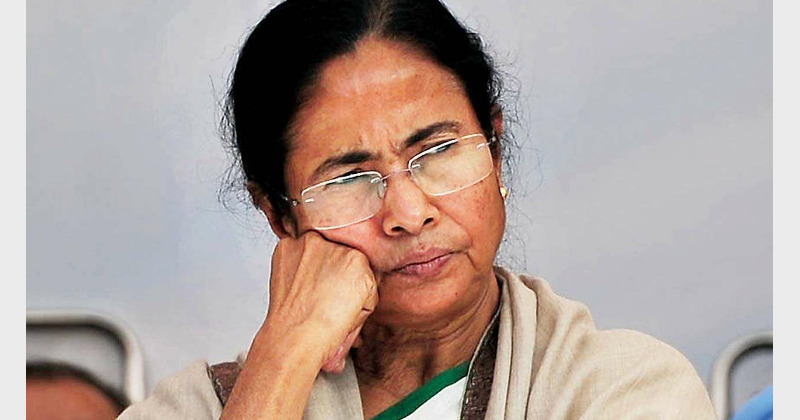
At the centre of this collapse stands Mamata Banerjee herself, who lost from Bhabanipur.
This was not a routine anti-incumbency wave where a few ministers lose while the leadership survives. The defeats cut across every layer of power. Cabinet ministers, ministers of state, and key decision makers across departments all faced rejection.
Finance, education, industry, labour, rural development, minority affairs, infrastructure, transport, irrigation, and science and technology. Almost every major arm of governance saw its political head voted out.
This kind of outcome rarely happens without a widespread perception that governance itself has failed to meet expectations.
A senior voter in Kolkata summed it up quietly while standing outside a counting centre to media. “This was not about one leader. This was about how we have been living.”
When numbers begin to tell a human story
Behind every statistic is a story of expectation and disappointment.
Take the case of a young graduate from Durgapur. He had spent years preparing for government exams. Recruitment controversies and delays left him disillusioned. When he voted this time, he said his decision was simple. “If the system does not give us jobs, why should we give them power?”
In a village near Purbasthali, a farmer spoke about rising costs and limited returns. He had seen schemes announced, but little change in his income. “We kept hearing promises. But our lives did not change,” he told media.
In North Bengal, a small trader described how business had become unpredictable. “There is always pressure from local networks. You cannot work freely,” he was quoted saying, referring to what many describe as an entrenched local control system.
These voices, scattered across regions, came together in the final verdict.
Key faces, key defeats
The scale of the collapse becomes clearer when one looks at who lost.
Among the most significant defeats was that of Mamata Banerjee herself in Bhabanipur. Alongside her, several senior ministers handling critical portfolios were voted out.
1. Aroop Biswas, associated with housing and power, lost from Tollygunge.
2. Bratya Basu, who handled higher education and school education, lost from Dum Dum.
3. Chandrima Bhattacharya, linked to finance and environment, was defeated in Dum Dum Uttar.
4. Shashi Panja, a prominent face in industry and women and child development, lost from Shyampukur.
5. Sujit Bose, Indranil Sen, and Becharam Manna were also among those defeated.
The list extends across sectors and regions, covering ministers responsible for agriculture, labour, tribal development, rural governance, and infrastructure.
For many voters, this was not about removing individuals. It was about dismantling a structure they believed was no longer working for them.
Margins that reflect clear shifts
The margins of defeat in several constituencies underline how decisive the voter mood was.
1. Nirmal Majhi lost by more than 49,000 votes in Goghat.
2. Pradip Mazumdar faced a margin of over 30,000 votes in Durgapur Purba.
3. Chandrima Bhattacharya lost by more than 26,000 votes.
4. Udayan Guha, Siddiqullah Choudhury, and Shashi Panja also faced significant margins.
These are not narrow losses caused by fragmented voting. These are clear swings where voters chose one side decisively.
An election analyst in Kolkata told media,. “When margins cross twenty or thirty thousand consistently, it means voters are not confused. They are certain.”
One of the most striking features of this verdict is its geographical spread.
1. In urban centres like Tollygunge, Dum Dum, and Bidhannagar, ministers lost.
2. In industrial belts such as Asansol and Durgapur, the story was similar.
3. In agrarian regions like Singur and Purbasthali, voters turned away from the ruling party.
4. In North Bengal, including Dinhata and Mal, the trend continued.
This widespread pattern rules out the possibility of a localised issue. Instead, it points to a state wide shift in voter sentiment.
A school teacher from North Bengal described the mood. “People were quiet. But they were watching everything. This result shows they had made up their minds long ago.”
The emotional undercurrent of the verdict
Elections are often discussed in numbers, but this one carried a strong emotional undercurrent.
For many, this vote was about dignity. About feeling heard. About accountability.
A woman in Kolkata who had benefited from welfare schemes said she still chose change. “Help is important. But safety and respect are more important,” she said.
A retired government employee spoke about corruption allegations that had dominated headlines. “We felt the system was slipping. It was not the Bengal we knew,” he said.
These sentiments reflect a deeper churn. Voters were not just reacting to policies. They were responding to lived experiences.
The defeat of Mamata Banerjee transformed the election into a direct referendum on leadership.
For over a decade, she had been the central figure in Bengal politics. Decisions, campaigns, governance narratives all revolved around her.
When she lost, it sent a powerful signal. The dissatisfaction was not limited to local representatives. It had reached the very top.
What the collapse really means
When 63 per cent of a cabinet loses, it is not just a bad election. It is a breakdown of political credibility.
It suggests that voters no longer trust the system to deliver on its promises. It indicates that governance gaps have accumulated over time. It reflects frustration that has moved beyond anger into action.
For the All India Trinamool Congress, this is more than a loss of power. It is a moment of reckoning.
The 2026 verdict marks the end of a 15 year chapter in Bengal’s political history.
For Mamata Banerjee, the verdict raises difficult questions about leadership, governance, and legacy.
And for the people of Bengal, this election will be remembered not just for who won or lost, but for the clarity with which they delivered their message.
They did not whisper. They spoke through numbers, through margins, and through the dismantling of an entire ruling structure.