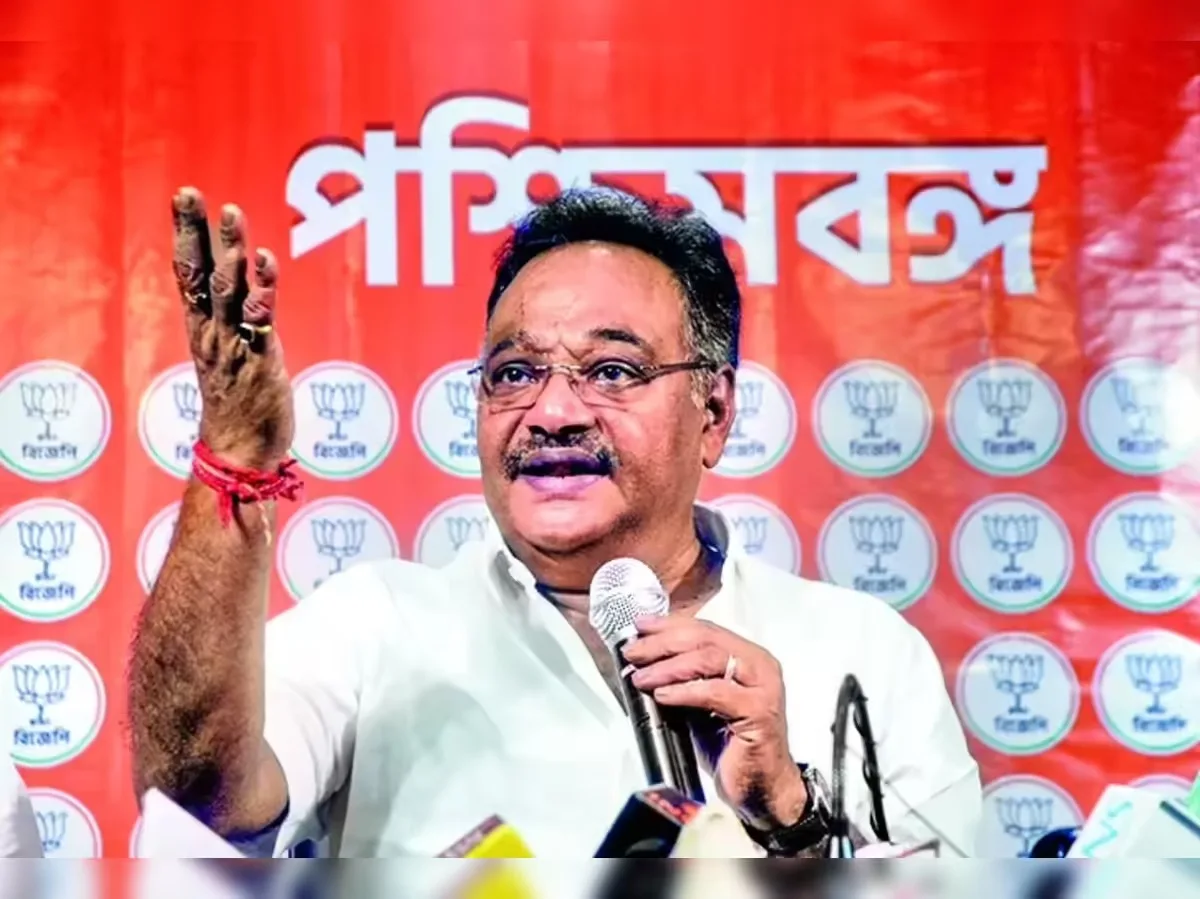
Ahead of the counting of votes in the high-stakes West Bengal Assembly elections, Samik Bhattacharya asserted that the electorate has voted decisively against what he described as the “maha jungle raj” of the All India Trinamool Congress.
Addressing a press conference, the BJP state president and Rajya Sabha MP claimed that people across Bengal are seeking “freedom” from years of alleged political intimidation, corruption, and administrative breakdown under Chief Minister Mamata Banerjee.
Bhattacharya urged citizens to maintain peace on counting day while expressing confidence that the electoral process would remain secure and transparent.
Highlighting concerns from previous elections, Bhattacharya assured that extensive security arrangements have been put in place to ensure smooth counting.
“Tomorrow’s vote counting will take place without any hindrance. Forces will be deployed everywhere, our counting agents will stay throughout. There will be no repeat of 2021. The votes that people have cast will not be looted,” he stated.
Taking a veiled dig at the ruling party, he also referred to legal battles fought over electoral processes, adding that those who approached the courts have already received a response from the judiciary, including observations from the Supreme Court of India.
The BJP has repeatedly alleged that earlier elections in the state were marred by violence, booth capturing, and voter suppression, claims that the TMC has consistently denied.
In a strong political assertion, Bhattacharya claimed that a significant section of voters who were previously unable to exercise their franchise due to fear have come forward this time.
“The TMC government is gone. Many people in West Bengal have never voted. They were not allowed to vote. In such an atmosphere, now that people have become fearless, they have voted,” he said in an interaction with media.
The BJP leader framed the 2026 election as a turning point where suppressed voices have translated into a decisive electoral pushback against the incumbent government.
Sharpening his attack, Bhattacharya accused the TMC government of large-scale financial mismanagement and announced that, if voted to power, the BJP would bring out a detailed “white paper” within six months.
“The people have rejected and rooted out the TMC government. Within six months, we will publish a white paper on the amount of money the TMC spent on expensive lawyers from the High Court to the Supreme Court,” he said.
The remarks come amid ongoing political debates around alleged recruitment scams, financial irregularities, and governance issues that have dominated the election discourse.
Opposition leaders have consistently accused the ruling dispensation of fostering a system of patronage and shielding corruption, allegations that have been a central plank of BJP’s campaign.
In further remarks, Bhattacharya described the election as an “election of rejection,” suggesting that multiple factors have contributed to what he believes is a declining support base for the TMC.
“From teacher recruitment scams to unemployment, all factors are contributing to the TMC’s decline,” he said, pointing to issues that have triggered public anger in recent years.
The BJP has consistently highlighted alleged irregularities in recruitment processes and lack of employment opportunities as key governance failures of the state government.
Beyond criticism, the BJP also attempted to frame a forward-looking narrative centred on regional pride and economic revival.
Bhattacharya invoked a “Bengalis first” sentiment, suggesting that voters are now prioritising development, investment, and opportunities over identity-based politics.
“Our main aim is to stop the exodus of labour, students, capital and investors,” he said, adding that the BJP aims to transform West Bengal into a major investment destination if it forms the government.
The issue of migration of skilled labour and capital flight has been a recurring theme in the BJP’s campaign, which has positioned itself as a party focused on industrial growth and economic stability.
Counting of votes will take place across 293 constituencies on May 4, with one seat going for repoll later. The election has been widely viewed as a direct contest between the ruling TMC and a resurgent BJP.
Exit polls have offered mixed projections. While some indicate an edge for the BJP, others suggest a strong performance by the TMC, making the final outcome highly uncertain.
A victory for Mamata Banerjee would allow her to retain power for a fourth consecutive term, while a loss could significantly alter the political landscape of the state and raise serious questions about her leadership going forward.
As West Bengal awaits the results, the statements by BJP leadership underscore the intensity of the political battle and the high stakes involved.
Called by the BJP as a referendum on governance, corruption, and political freedom, the election outcome is expected to have far-reaching consequences not just for the state but also for national politics.
Whether the electorate has indeed voted for change, as claimed by the BJP, or chosen continuity under the TMC will become clear as counting progresses.