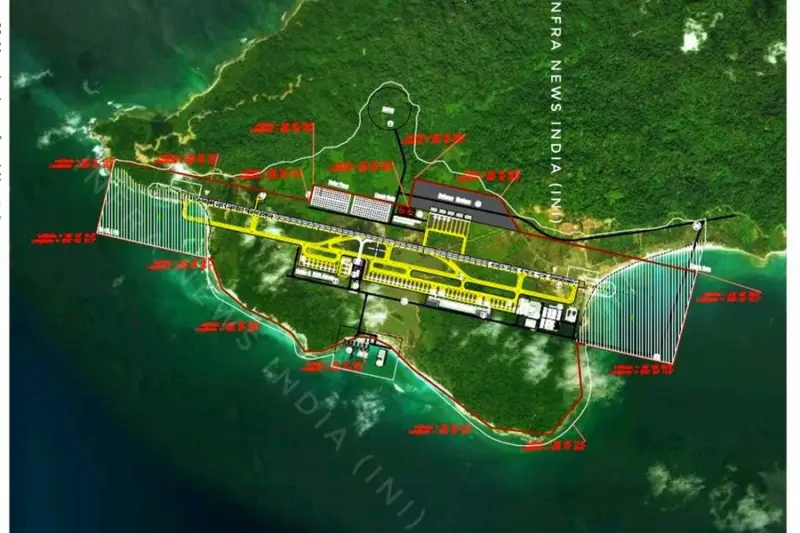
At the far edge of India, where dense tropical rainforests meet the vast expanse of the Indian Ocean, Great Nicobar Island is undergoing a transformation that could redefine its role in the country’s future. Long considered geographically significant but economically underdeveloped, the island is now the focus of an ambitious development plan aimed at turning it into a global hub for trade, connectivity, and strategic presence.
Central to this vision is its proximity to the Strait of Malacca, one of the world’s busiest maritime routes. This location gives India a unique opportunity to position itself at a key junction of global commerce, an advantage that remained largely untapped for decades.
What is the Great Nicobar project?
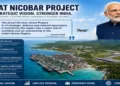
The Great Nicobar Project is a multi-component infrastructure initiative conceptualised by NITI Aayog and being implemented by the Andaman and Nicobar Islands Integrated Development Corporation Limited. With an estimated cost ranging between Rs 80,000 crore and Rs 1 lakh crore, it represents one of the largest development efforts in India’s island territories.
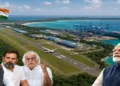
The project is built around four major pillars: an international container transhipment terminal at Galathea Bay, a greenfield airport designed for both civilian and defence use, an integrated township to support population and economic activity, and a power generation facility with an increasing focus on renewable energy.
Spread across approximately 166 square kilometres, the project involves the diversion of nearly 130 square kilometres of forest land, including the felling of around one million trees—making environmental considerations a central aspect of its planning and execution.
Environmental clearance and judicial scrutiny
The project received environmental clearance in 2022 under the Environmental Impact Assessment framework after extensive studies covering biodiversity, coastal systems, and ecological impact. However, the scale of the project led to legal challenges and closer scrutiny.
In February 2026, the National Green Tribunal upheld the clearance after examining findings from a High-Powered Committee constituted to reassess ecological and regulatory concerns.
The tribunal concluded that due procedure had been followed and that there were no valid grounds to overturn the approval.
This decision marked a turning point, allowing the project to move forward with greater certainty while reinforcing the legitimacy of its regulatory process.
Coastal regulation and scientific reassessment
One of the most debated aspects of the project was its compliance with Coastal Regulation Zone norms. Concerns had been raised that parts of the proposed development fell within CRZ 1A, a category reserved for ecologically sensitive areas where development is heavily restricted.
Subsequent ground-truthing studies conducted by the National Centre for Sustainable Coastal Management provided a revised classification. These studies found that certain areas fall under CRZ 1B, which includes intertidal zones where regulated development, including ports, is permitted.
This scientific reassessment played a key role in addressing regulatory concerns and enabling the project to proceed within the framework of environmental law.
Forests, biodiversity, and mitigation measures
The forests of Great Nicobar are part of a rich tropical ecosystem that supports a wide range of flora and fauna, including several endemic species. The diversion of forest land has therefore been one of the most sensitive aspects of the project.
To mitigate ecological impact, a comprehensive Environmental Management Plan has been incorporated. This includes the creation of wildlife corridors to ensure safe movement of animals, measures to minimise habitat fragmentation, and continuous ecological monitoring throughout different phases of construction.
Special focus has been placed on protecting key species such as the leatherback sea turtle, the Nicobar megapode, and the saltwater crocodile. Their nesting sites and habitats have been mapped and integrated into the project’s design to minimise disturbance.
Marine ecosystem protection around Galathea Bay
The marine environment surrounding Great Nicobar, particularly near Galathea Bay, has also been carefully studied. According to findings by the Zoological Survey of India, the core construction area does not contain dense coral reef systems.
However, scattered coral colonies in nearby areas have been identified and are proposed to be relocated through scientific methods. This involves detailed mapping, transplantation, and long-term monitoring to ensure survival and regeneration.
Additionally, shoreline protection measures have been integrated into the project to prevent coastal erosion and protect beaches that serve as nesting grounds for marine species.
The project incorporates several measures aimed at reducing long-term environmental impact. Renewable energy components, including solar power, form a part of the overall energy strategy. Land use within the proposed township is being regulated to prevent unplanned expansion and ecological stress.
Infrastructure planning has also taken into account climate resilience, ensuring that development does not compromise the island’s ecological balance over time.
Tribal communities at the centre of policy
Great Nicobar is home to Particularly Vulnerable Tribal Groups such as the Shompen and the Nicobarese. Their presence has been a critical factor in shaping the project’s approach.
These communities are protected under specific legal frameworks, and consultations have been conducted with the Ministry of Tribal Affairs. Oversight is provided by institutions like the Andaman Adim Janjati Vikas Samiti, ensuring that policies related to tribal welfare are implemented effectively.
The project adheres to established policies such as the Shompen Policy of 2015 and the Jarawa Policy of 2004. Planning documents clearly state that no development activity will take place within designated tribal reserve areas, ensuring that traditional habitats and ways of life remain undisturbed.
The National Commission for Scheduled Tribes has also been involved in reviewing aspects related to tribal rights, adding another layer of institutional oversight.
Building infrastructure, creating opportunities
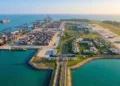
Beyond its strategic and environmental dimensions, the Great Nicobar Project is designed to create a comprehensive economic ecosystem. The transhipment terminal at Galathea Bay, with its natural depth of 18 to 20 metres, will be capable of handling some of the largest cargo vessels in the world.
This is expected to reduce India’s dependence on foreign ports for transhipment, lowering costs and improving efficiency in maritime trade. The Greenfield Airport will significantly enhance connectivity, making the island accessible for both civilian and defence purposes.
The integrated township is planned to support economic activity by providing housing, healthcare, education, and essential civic infrastructure. Together, these developments aim to transform the island into a self-sustaining hub.
The project is expected to generate employment across multiple sectors, including construction, logistics, tourism, and services. Improved connectivity will strengthen local markets and support economic activity across the Andaman and Nicobar Islands.
For local communities, including indigenous groups, the project offers opportunities for improved access to healthcare, education, and livelihoods. Skill development initiatives and community-based employment models are expected to play a key role in ensuring inclusive growth.
Tourism is also likely to benefit. With better infrastructure and connectivity, Great Nicobar has the potential to emerge as a destination for eco-tourism, attracting visitors while maintaining ecological balance. This could create additional employment in hospitality, transport, and related services.