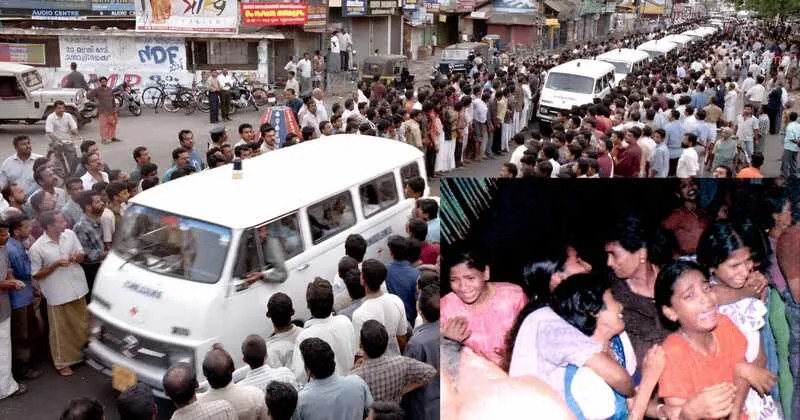
Kozhikode: The sea breeze in the coastal village of Marad in Kozhikode district still seems to carry the memory of bloodshed. Today marks 23 years since the massacre that left an indelible scar on the region. Eight Hindu fishermen were brutally killed by a group of Muslim terrorists on Marad beach on the evening of May 2, 2003. The attack, investigators later found, was not spontaneous but part of a carefully orchestrated plan aimed at eliminating members of the traditional fishing community of Marad. The assailants executed the killings with precision and retreated after claiming eight lives.
The subsequent investigation revealed the involvement of Islamist terror organisations, including the National Development Front (NDF), which later rebranded itself as the Popular Front of India (PFI). The first court verdict in connection with the Marad massacre was delivered in 2008, when 63 accused were found guilty. The Keralam High Court later upheld the trial court’s verdict and sentenced 22 additional accused to life imprisonment, making it one of the most contentious and closely watched legal battles in the state’s history. In a significant development, the Marad Special Court sentenced two absconding accused to double life imprisonment, marking a crucial turning point in the case.
Despite allegations that both the Congress-led United Democratic Front (UDF) and the CPI(M)-led Left Democratic Front (LDF) governments adopted a stance that shielded the accused, the victims’ families continued their legal struggle. This battle was sustained over the years with the strong backing of various Hindu organisations, which remained steadfast in their demand for justice.
Judicial findings and demand for CBI probe
The Judicial Commission headed by Justice Thomas P. Joseph, constituted in the aftermath of the massacre, uncovered evidence of a deep-rooted conspiracy and financial transactions linked to the incident. The commission strongly recommended a probe by the Central Bureau of Investigation (CBI). However, this recommendation was not implemented, with allegations that successive state governments avoided a CBI inquiry as part of a calculated political decision.
A prolonged legal struggle followed in the Keralam High Court. Eventually, in 2016, the High Court ordered that the case be handed over to the CBI. Acting on this directive, the CBI registered an FIR on January 19, 2017, at the Ernakulam Judicial Magistrate Court, naming several leaders of the Muslim League as accused. It was also alleged that the state government failed to extend adequate cooperation, including withholding essential documents required for the CBI investigation.
Memory, politics, and continuing contestation
The history of the Marad massacre continues to evoke strong political and social responses in Keralam. For many, it reflects deeper concerns about the growth of Islamic religious extremism in the state, with claims that even places of worship were misused as weapons depots and centres of mobilisation. At the same time, it is also seen as a narrative of resistance, highlighting the determination of the Hindu community to pursue justice through constitutional means and faith in the legal system.
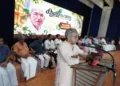
As Keralam marks another anniversary of the tragedy, the Marad massacre remains both a reminder and a tribute to the eight fishermen who lost their lives. The memory of the incident continues to resonate, underscoring unresolved debates around justice, governance, and communal harmony in the state. A memorial service will be held at Marad beach tomorrow at 7:30 am to honour the victims. Later in the day, at 5 pm, an Anti-terror Day programme will be organised at Alakapuri Auditorium. Speakers at the event will include Hindu Aikyavedi leader KP Sasikala Teacher, along with A. P. Ahmed, Arif Hussain, and Sashi Kammateri.