
ABU DHABI: It wasn’t an HR meeting. It wasn’t a standard redundancy. For 15 Pakistani employees of Etihad Airways—including veterans with nearly two decades of service—the end came at an immigration office. The order was brutal and final: You have 48 hours to leave the country.
This isn’t just workforce management; it is a geopolitical execution. When a state-linked carrier like Etihad bypasses institutional protocols to deport staff with two days’ notice, it isn’t cutting costs—it’s sending a message to a capital city.
Crucially, this shift unfolds against the backdrop of the 2025 Strategic Mutual Defence Agreement, a landmark pact that has fundamentally bound Islamabad’s military assets to Riyadh’s security.
Additionally, the deployment of Israel’s Iron Dome to the United Arab Emirates signals a tectonic shift in West Asian geopolitics. This move reflects more than just the immediate pressures of the ongoing war with Iran; it highlights a profound and permanent strategic realignment across the Gulf.
UAE’s Etihad fired 15 Pakistani employees Abruptly
The sudden termination and 48-hour deportation of 15 Pakistani employees by Etihad Airways has sent shockwaves through the expatriate community. It signalled a cold departure from standard corporate professionalism. Bypassing traditional HR channels, the airline reportedly routed these dismissals through immigration offices, giving staff—including a 20-year veteran—virtually no time to settle personal affairs or relocate families.
This unconventional and abrupt enforcement has fueled widespread speculation that the move is less about workforce restructuring and more about a calculated, state-level message being sent to Islamabad.
The lack of transparency from Etihad, combined with the involvement of UAE immigration authorities, has amplified anxieties regarding the job security of the 1.6 million Pakistanis living in the Emirates.
As Pakistan grapples with economic fragility, this incident highlights a growing vulnerability. For many, these “pink slips” represent more than just lost livelihoods; they mark a visible decline in Pakistan’s standing within its most critical economic corridor.
Abu Dhabi – Pakistan: The $3.5 Billion Divorce!
The roots of this “Pink Slip Diplomacy” lie in a crumbling financial pact. On April 23, 2026, Abu Dhabi did the unthinkable: it forced Pakistan into an early repayment of $3.45 billion in debt. By demanding $1 billion for the Abu Dhabi Fund for Development immediately, the UAE signaled that it no longer views Pakistan as a partner to be sustained, but as a liability to be settled.
The financial squeeze has now cascaded into the labor domain, hitting the very people who keep Pakistan’s economy afloat via remittances.
The Iran-UAE escalation has shattered long-standing political taboos, transforming the Abraham Accords from a diplomatic framework into a wartime military alliance. The once-unthinkable presence of Israeli IDF troops and Iron Dome batteries on Emirati soil has been normalised under the urgent logic of collective security.
Following a barrage of over 2,700 Iranian missiles and drones, Abu Dhabi has prioritized survival over legacy sensitivities, with officials openly declaring that any partner contributing to the nation’s defense is now welcomed as a “true friend.”
This shift signals a permanent strategic realignment, as the UAE pivots toward a high-tech security architecture anchored by Israel to counter a perceived long-term threat from Tehran.
Caught in the Riyadh-Abu Dhabi Crossfire
Why the sudden hostility? Look to the Saudi-Pakistan axis. As Islamabad doubles down on its defense alignment with Riyadh—offering troops and strategic backing—it has inadvertently placed itself on the “wrong side” of an emerging intra-Gulf rift. Abu Dhabi, now anchored in a new security architecture alongside Israel and India, increasingly views Pakistan’s tilt toward Saudi Arabia as a strategic irritant.
UAE’s Strategic Repositioning
The UAE is actively constructing a new security architecture anchored around Israel and India, while shedding older dependencies. Labour policy in Gulf states has historically been an instrument of foreign policy.
Economic, intelligence, and defense partnerships have accelerated at a breakneck pace, fueled largely by the Abraham Accords and the normalization of UAE–Israel ties. This strategic pivot is further bolstered by India’s expanding footprint in the Emirates, where its influence over trade, infrastructure, and the diaspora has become a cornerstone of the new regional order.
Simultaneously, Israel’s cutting-edge defense tech and intelligence networks have transformed it into a vital shield against Iranian aggression. UAE presidential advisor Anwar Gargash recently admitted that Tehran’s hostility is only serving to cement Israel’s regional importance. With Gargash warning that restoring trust with Iran will take “ages and ages,” the current rupture appears not just deep, but permanent.
OPEC Exit: UAE-Saudi split is complete
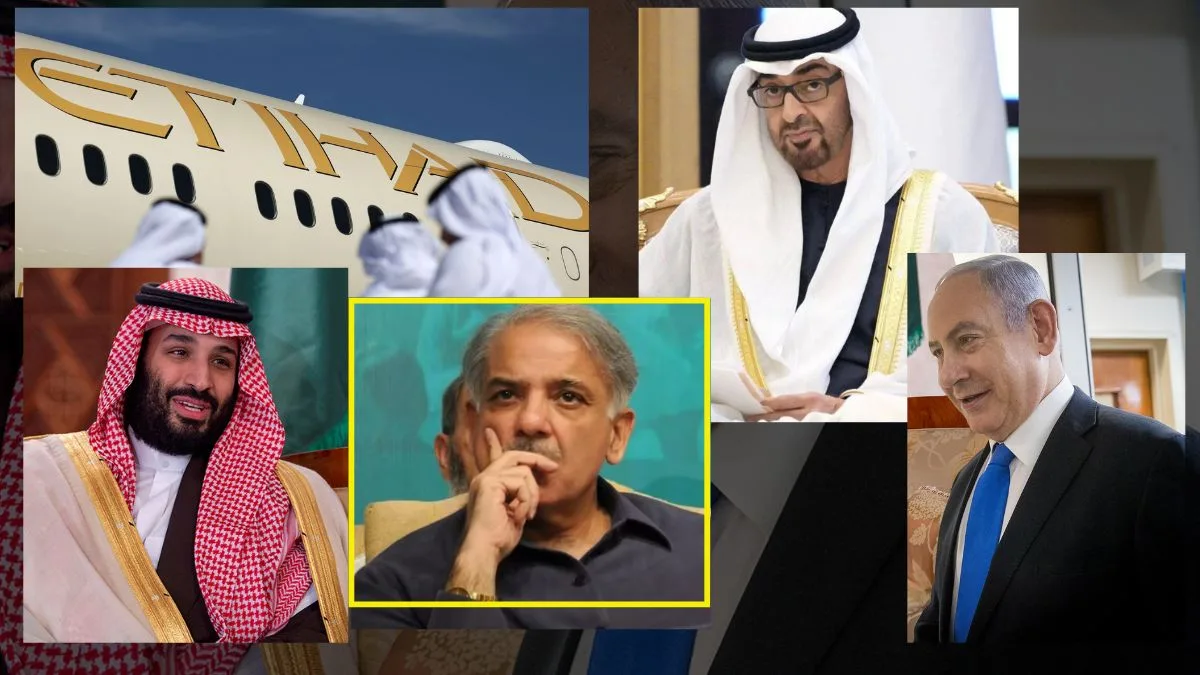
The UAE’s formal exit from OPEC marks the final rupture in its relationship with Saudi Arabia, signaling a shift that goes far beyond oil production quotas. Once close allies during the Arab Spring, the partnership between UAE President Mohamed bin Zayed (MBZ) and Saudi Crown Prince Mohammed bin Salman (MBS) has collapsed into a rivalry defined by incompatible visions for the Middle East.
In 2019, Mohamed bin Zayed Al Nahyan (MBZ), widely known as the UAE’s President, pulled Emirati forces out of Yemen and backed groups opposing the Saudi-supported government. In the years that followed, the UAE and Saudi Arabia also found themselves on opposite sides in conflicts across Sudan, Libya, and Somalia.
The rift between the UAE and Saudi Arabia was inevitable, given their fundamentally different approaches. The idea that oil-rich Muslim-majority nations in West Asia move in lockstep is misleading. Anlaysts suggest that each country operates within its own distinct social, economic, and political realities.
The UAE developed into a more open, business-driven society with a global outlook, while Saudi Arabia remained largely conservative and heavily reliant on oil.
Moreover, the UAE is no longer willing to play “junior partner” to Saudi Arabia. By leaving OPEC, Abu Dhabi has prioritized its own identity as a diversified global player over a fraying regional alliance that has reached its breaking point.