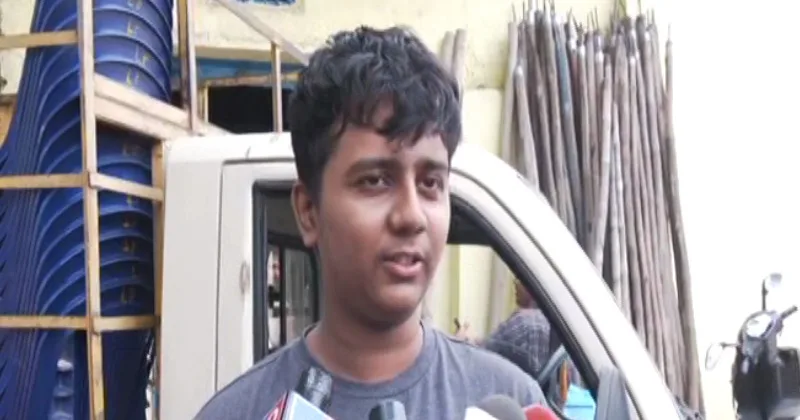
Bengaluru: The controversy surrounding the compulsion to remove janivara(sacred thread) has resurfaced in Karnataka, triggering fresh outrage during the ongoing Common Entrance Test(CET). Allegations that multiple students were asked to remove their sacred thread at an examination centre have once again brought the spotlight on the delicate balance between institutional dress codes and religious freedoms.
The latest incident was reported from an examination centre at Krupanidhi College in Madivala on April 23 , where a student identified as Anand Sudheer Rao, along with more than five others, was allegedly instructed by invigilators to remove his janivara before being allowed into the examination hall. The sacred thread, worn primarily by members of the Brahmin community and other Hindu groups after the upanayana ritual, is considered as an essential marker of religious identity and spiritual discipline.
According to the sources, the situation escalated when the student initially refused to comply, citing religious beliefs. He was reportedly told that failure to follow the dress code would result in denial of entry, effectively forcing him to choose between his faith and his academic future. Under pressure and fearing the loss of a crucial examination opportunity, the student’s parents eventually persuaded him to remove the sacred thread, a decision they later described as deeply distressing.
The issue quickly snowballed into a controversy after other parents and students raised objections. Many questioned why a traditional religious symbol was treated on par with prohibited items, arguing that such actions reflect insensitivity and lack of clarity in implementing guidelines. For affected families, the incident was not just about an exam rule but about the emotional strain of being compelled to compromise on long-held beliefs.Stude
Following the uproar, local authorities including the tahsildar, education department officials, and police personnel visited the examination centre to assess the situation. However, allegations have also surfaced that parents were asked to provide written statements downplaying the incident, raising concerns about whether there was an attempt to contain the fallout rather than address the root issue transparently.
In what appeared to be a damage-control measure, the college management later apologised to the affected families and allowed students to attend subsequent exams while wearing the janivara. While this step brought temporary relief, it did little to quell the broader concerns that have now resurfaced across the state.
Karnataka Higher Education Minister M. C. Sudhakar visited the centre and termed the episode a “minor incident,” stating that dress code guidelines had already been communicated through official channels. He assured that if any staff had acted beyond prescribed norms, action would be taken after reviewing the report. At the same time, he hinted that some elements might be attempting to create unnecessary controversy.
The minister’s remarks, however, have drawn mixed reactions. Critics argue that describing the issue as minor undermines the seriousness of the concerns raised by students and families, particularly those who view the sacred thread as integral to their religious identity. Several community representatives have called for greater sensitivity and clearer instructions to ensure that such incidents are not repeated.
This is not the first time the janivara issue has surfaced during CET examinations. A similar controversy in Bidar district last year saw a student reportedly denied entry into a mathematics exam hall for wearing the sacred thread. At that time, authorities had assured that corrective measures would be implemented. The recurrence of such incidents has led many to question whether those assurances translated into effective ground-level action.
Experts point out that while dress codes are often enforced to prevent malpractice and maintain uniformity, they must be implemented with nuance. Religious symbols that do not pose any security risk, they argue, should be treated differently from items that could potentially be misused.