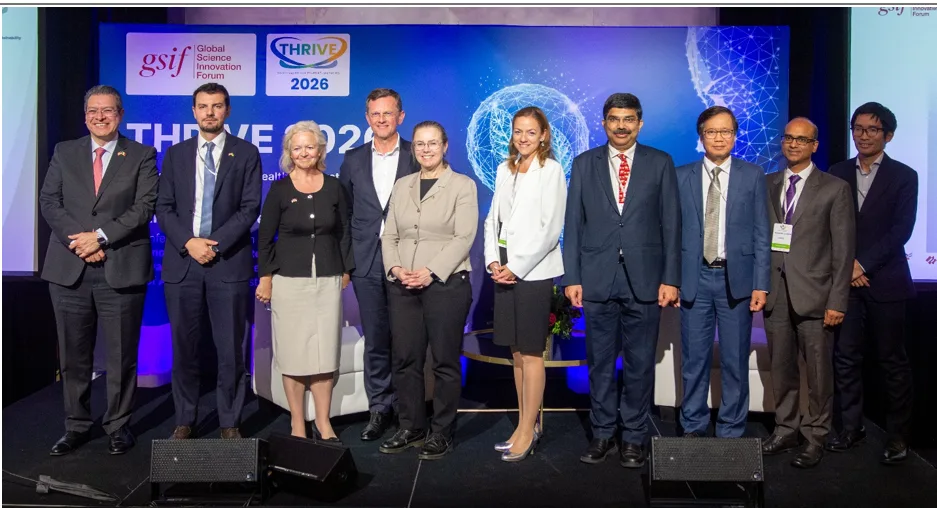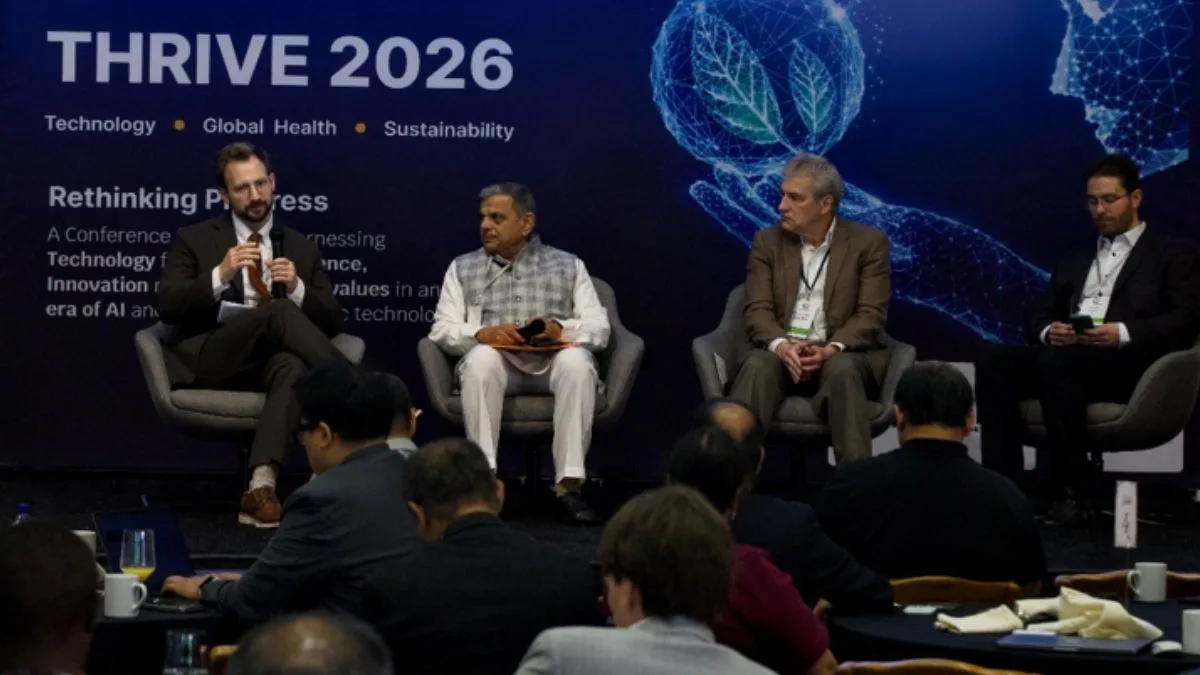
Stanford Faculty Club, California: In a landmark gathering that bridged ancient civilisational wisdom with cutting-edge frontier technology, the Global Science Innovation Forum (GSIF) successfully concluded its inaugural flagship summit, THRIVE-2026. The conference at Stanford University’s Faculty Club was preceded by an opening dinner reception at the Computer History Museum, which convened Nobel laureates, global policymakers, visionary technologists, and ethicists to advance dialogue at the intersection of cutting-edge science and technology.
The summit focused on a singular, urgent mission: ensuring that the rapid evolution of Artificial Intelligence, Health, and Sustainability serves the broader interests of humanity rather than just economic bottom lines.
Ethics Over Economy: The Call for ‘Soulful’ Technology
The highlight of the summit was the panel on “Science, Knowledge Systems and Civilizational Leadership,” where Dattatreya Hosabale, Sarkaryavah (General Secretary) of the Rashtriya Swayamsevak Sangh (RSS), delivered a powerful critique of modern scientific detachment. He stated:
“Scientific advancement must be evaluated not just through economic outcomes but through a broader lens of economy, ecology and ethics… If traditional knowledge is not properly understood, all those scientific inquiries of the past will be concluded as only superstitions.”
He cautioned against the dismissive attitude toward traditional wisdom, warning that “If traditional knowledge is not properly understood, all those scientific inquiries of the past will be concluded as only superstitions.”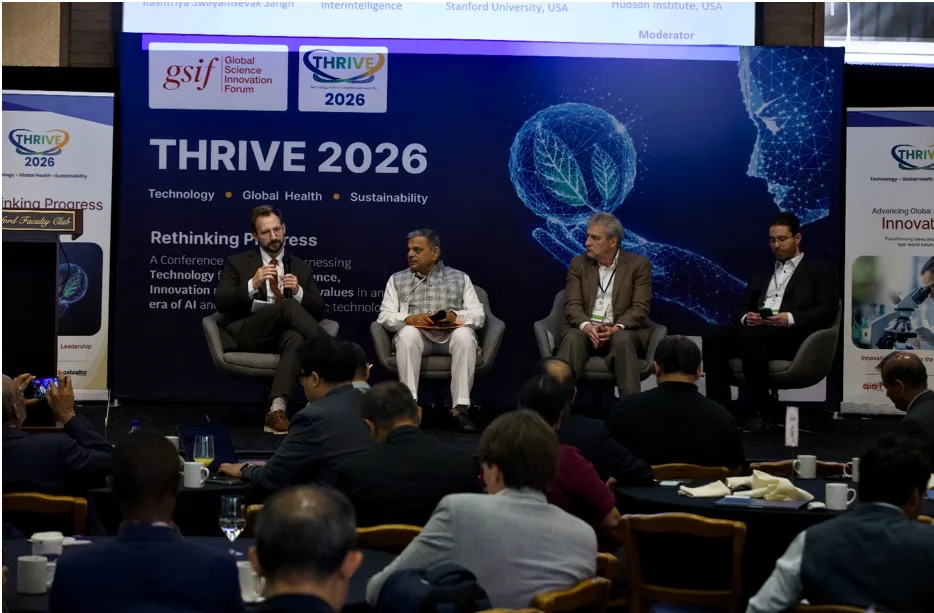
The conference focused on three core pillars:
- Artificial Intelligence
- Sustainability
- Health
Silicon Valley Giants on the Future of AI
The proceedings opened at the Computer History Museum with a high-stakes fireside chat between Google founding board member Ram Shriram and pioneering investor Vinod Khosla.
Ram Shriram predicted a revolution in education, noting that AI would make knowledge “free and democratized” through adaptive learning customized to every individual.
“Knowledge is going to be free and democratized and widely available, some of it happened with internet but with AI now it will happen at a greater pace and it’s adaptive learning customized to each user.” Ram Shriram said.
Vinod Khosla emphasized the necessity of making the “cheapest technology also the most sustainable,” asserting that environmental goals are achievable through focused innovation. “My general view is we should strive for the cheapest technology to also be the most sustainable and that’s achievable if we put our mind to it,” he said.
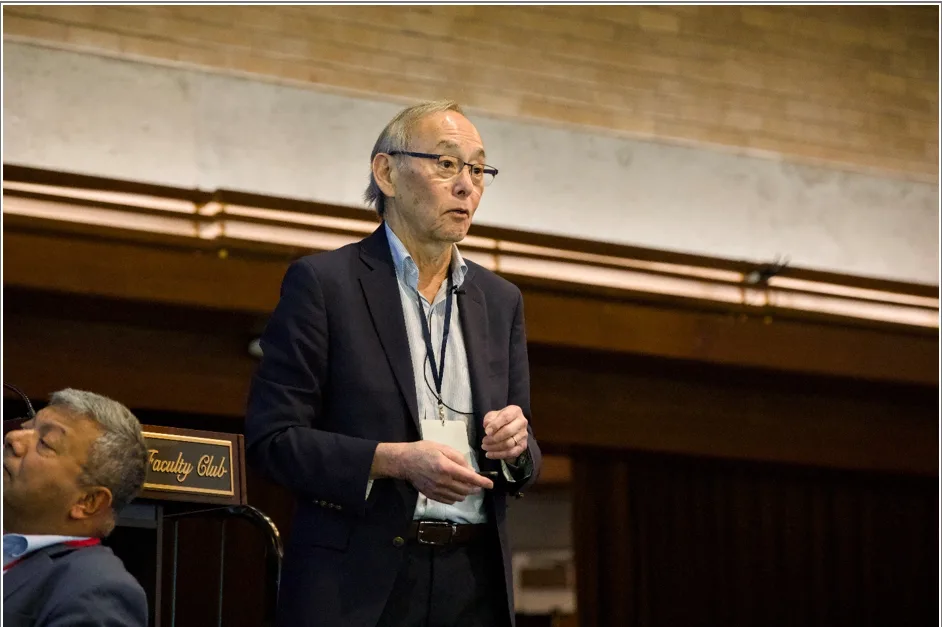
Prof. Steven Chu, Nobel Laureate and former U.S. Secretary of Energy, addressed the looming labor crisis, questioning how society will marry the “technology revolution” of AI replacing jobs with a declining global population. “Technology revolution: AI is going to replace many, many jobs; how do you marry replacing jobs with a declining population? This transition is a huge challenge.”
Concrete Deliverables: Beyond Dialogue
- Trustworthy AI Audit Model: A blueprint for ethical transparency.
- Edge AI Deployment Framework: Guidelines for localized, secure AI processing.
- Policy Blueprints: Strategic maps for ethical governance and civilisational flourishing
Global Collaboration and Civilisational Context
Conference Chair Prof. Anurag Mairal emphasized that GSIF’s mission is to anchor global solutions in the cultural and civilisational contexts of local communities. This sentiment was echoed by Dr. Yashodhan Agalgaonkar, Co-chair, who noted the overwhelming international response, including engagement with Consuls General from over 20 countries.
“THRIVE 2026 was conceived as a global convening of scientists, technologists, and policymakers to advance international cooperation in technology and promote the harmonization of policy frameworks. The 20+ white papers coming out of the conference are evidence of that cooperation,” Dr. Yashodhan Agalgaonkar stated
The summit received significant support from the Global Indian Scientists and Technocrats Forum (GIST Forum USA) and industry leaders like Palo Alto Networks. Dr. Yelloji Rao Mirajkar of GIST USA described the event as a “remarkable synthesis of ancient wisdom and modern science.”
“The Global Science Innovation Forum – THRIVE 2026 brought together global leaders in technology and policy to address critical governance challenges across AI, health, and sustainability. As a sponsor, Palo Alto Networks is proud to contribute to advancing important conversations on the societal values shaping technology policy.” said Kelly Waldher, Chief Marketing Officer of Palo Alto Networks,
“We are proud to be a sponsor of the conference. It was truly remarkable and brought together a synthesis of ancient wisdom and modern science to address emerging challenges for humanity,” said Dr. Yelloji Rao Mirajkar, International Coordinator, GIST USA said.
Thrive 2026: Looking Ahead
As the summit concludes, GSIF has already initiated follow-on working groups to implement the roundtable outputs. With its flagship initiative, THRIVE-2026 has officially positioned itself as the premier global platform for “Science with a Conscience,” challenging the world’s brightest minds to ensure that the next century of innovation is as ethical as it is advanced.
About the Global Science Innovation Forum (GSIF)
The Global Science Innovation Forum (GSIF) is an independent, globally networked collaborative platform of scientists and professors dedicated to advancing ethical, public-policy-oriented scientific progress and responsible innovation. All collaborators contribute on a pro bono basis. GSIF brings together world-class thinkers to address humanity’s greatest challenges at the intersection of science, technology, ethics, and leadership. THRIVE-2026 marks its flagship initiative for 2026.
Participants and Speakers List
● Prof. Steven Chu, Nobel Laureate in Physics and former U.S. Secretary of Energy
● H.R. McMaster, former U.S. National Security Advisor
● Ram Shriram, American Businessman, Founding Board Member Google, USA
● Dattatreya Hosabale, Sarkaryavah (General Secretary) of the Rashtriya Swayamsevak Sangh (RSS), India
● Prof. Dame Juliet Gerrard, Former Chief Scientific Advisor to PM of New Zealand
● Vinod Khosla, founder of Khosla Ventures and pioneering technology investor