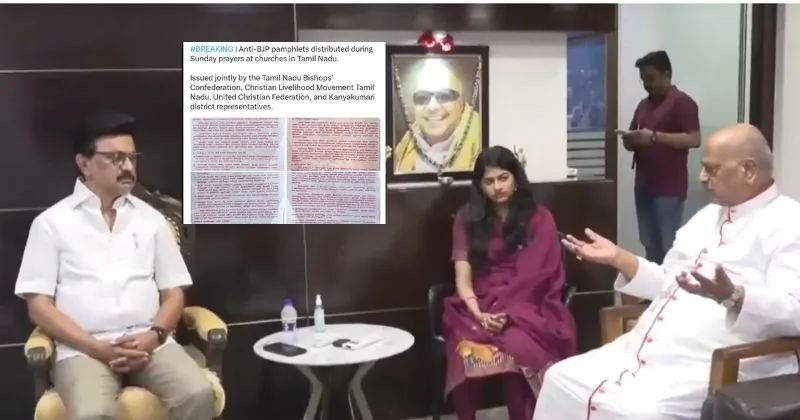
CHENNAI: The high-stakes electoral battle in Tamil Nadu has taken a legal turn after the Legal Rights Observatory (LRO) filed a formal complaint with the Income Tax Department, alleging large-scale financial irregularities involving the Dravida Munnetra Kazhagam (DMK) and the Tamil Nadu Catholic Bishops’ Conference.
In its submission, the LRO has called for a detailed probe into what it described as “suspicious transactions” amounting to hundreds of crores. The complaint alleges that funds were routed from the DMK to church-linked institutions to secure public backing for Chief Minister M. K. Stalin in the ongoing election campaign.
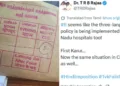
Lodged complaint at @IncomeTaxIndia seeking investigation of suspicious transaction of 100s of Cr Rs from @arivalayam to TN Catholic Bishop Conf to extract open support for @mkstalin in TN elections! Bishops must contest polls rather than indulging in f***h trade @zeneraalstuff pic.twitter.com/JSUFQlkwlN
— Legal Rights Observatory- LRO (@LegalLro) April 20, 2026
The allegations surfaced shortly after a publication linked to the Rashtriya Swayamsevak Sangh (RSS) claimed that sections of the Church were working in tandem with the DMK to counter the electoral prospects of the Bharatiya Janata Party (BJP). This has further intensified the political confrontation between the DMK-led alliance and the BJP-led camp in the state.
The controversy gained momentum on April 19 when a delegation of Christian bishops met Chief Minister Stalin and expressed support for the ruling alliance. While opposition voices have cited the meeting as evidence of organised institutional backing, DMK leaders have dismissed the claims, asserting that engagement with various communities is a routine aspect of democratic politics.
Adding to the row, reports have emerged from multiple districts about pamphlets critical of the BJP being distributed during Sunday prayers in churches. These pamphlets were reportedly issued by a coalition of Christian organisations, including the Tamil Nadu Bishops’ Conference and affiliated groups. Critics argue that such coordinated messaging points to political mobilisation through religious platforms, while supporters contend that community groups have the right to express their political views.
Tamil Nadu’s demographic composition adds further significance to the issue, with Christians and Muslims together accounting for nearly 15 percent of the electorate. Political analysts note that even marginal shifts in community voting patterns could influence outcomes in closely contested constituencies.
As of now, there has been no official response from the Income Tax Department regarding the complaint. The DMK has not issued a detailed statement addressing the specific financial allegations but has reiterated its commitment to secular governance and inclusive outreach.
Legal Complaint Seeks Action Over Church-Linked Pamphlets Targeting BJP in Tamil Nadu
A formal representation has been submitted to the Election Commission of India and the Chief Electoral Officer of Tamil Nadu, urging immediate intervention into the alleged circulation of politically sensitive pamphlets during church gatherings on April 19.
The complaint, which has also been marked to the Ministry of Home Affairs, calls for urgent scrutiny of what it describes as “serious violations” of electoral law and constitutional norms.
Allegations of Religious Appeals in Elections
At the centre of the controversy are pamphlets reportedly distributed in churches across multiple districts of Tamil Nadu during Sunday prayers. The material allegedly contains political messaging framed along religious lines, including criticism of the Bharatiya Janata Party (BJP) and favourable references to rival political formations, including the Dravida Munnetra Kazhagam (DMK)-led alliance.
According to the complaint, the content appears to appeal directly to members of the Christian community, urging “collective and conscious voting decisions” and framing the election as a contest between “communal” and “secular” forces.
Such messaging, the complainant argues, may violate provisions of the Representation of the People Act, 1951—particularly Sections 123(3) and 123(3A), which prohibit appeals to voters based on religion and the promotion of enmity between communities in the context of elections.
Named Organisations Under Scanner
The pamphlets reportedly bear the names of several Christian organisations, including the Tamil Nadu Bishops’ Council, Tamil Nadu Christian Rights Movement, and Tamil Nadu Christian Unity Council (Kanyakumari District).
While the authenticity and official endorsement of these materials remain unverified, the complaint stresses that any involvement of such bodies in electoral messaging would warrant strict legal scrutiny.
Foreign Funding Angle Raises FCRA Concerns
A significant aspect of the complaint pertains to the alleged involvement of entities registered under the Foreign Contribution Regulation Act (FCRA).
The Tamil Nadu Bishops’ Council is stated to be an FCRA-registered organisation that receives foreign contributions. The complaint argues that if such funds are found to have been used—directly or indirectly—for political messaging, it could constitute a violation of FCRA provisions, which prohibit the use of foreign funds for political purposes.
Call for Immediate Action
The complainant has urged the Election Commission to initiate a time-bound inquiry into the origin, funding, and distribution of the pamphlets. It has also sought preventive measures, including seizure of materials and directions to halt further circulation.
Additionally, the matter has been recommended for examination by the Ministry of Home Affairs to determine any breach of foreign funding regulations.