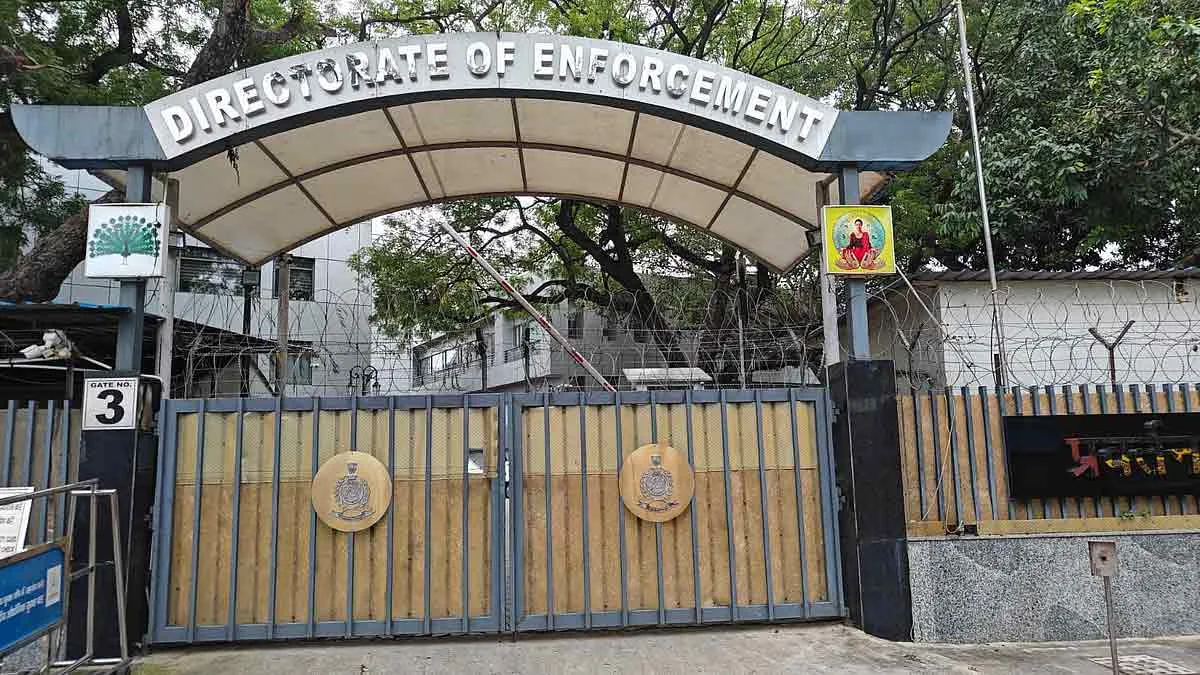
The Enforcement Directorate (ED) has claimed to have uncovered a large-scale financial network used to support the illegal infiltration and settlement of Rohingya and Bangladeshi nationals in India through the misuse of foreign contributions received by certain FCRA-registered organisations.
The findings emerged during searches conducted at 13 locations across Uttar Pradesh, West Bengal, Haryana and Delhi as part of a money laundering investigation linked to an alleged infiltration racket.
According to the agency, digital devices, financial records and other incriminating documents seized during the searches point to a structured network that allegedly channelled foreign funds from United Kingdom-based entities to charitable trusts and subsequently to suspected illegal immigrants.
Funds Routed Through Charitable Trusts
The investigation is based on a case originally registered by the Uttar Pradesh Anti-Terrorism Squad (ATS), which alleged the existence of an organised syndicate facilitating the illegal entry and settlement of Rohingya and Bangladeshi nationals in India.
According to ED officials, the probe revealed that certain public charitable trusts registered under the Foreign Contribution Regulation Act (FCRA) received funds from overseas entities and allegedly diverted portions of these funds to individuals suspected of being illegal immigrants.
Officials said money was reportedly transferred in small tranches ranging from Rs 6,000 to Rs 10,000 through multiple bank accounts and layered transactions.
“It was revealed that a syndicate operates through public charitable trusts registered under FCRA. These trusts received funds from UK-based entities, after which amounts were transferred in small tranches to suspected individuals to help them settle in India,” an ED official said.
The agency alleged that the funds were ultimately used for the economic rehabilitation of illegal immigrants and to help them establish a long-term presence in the country.
Employment, Cash Support And Livelihood Assistance
Investigators claimed that the network extended beyond facilitating entry into India and allegedly provided support mechanisms to help beneficiaries become financially self-sufficient.
According to the ED, some trusts allegedly arranged employment opportunities, distributed cash assistance and, in certain cases, provided e-rickshaws and other means of livelihood.
Officials alleged that such support was intended to generate a permanent source of income for the beneficiaries and aid their settlement in different parts of the country.
Multiple NGOs Under Investigation
Among the organisations currently under scrutiny are:
Harora Al-Jamiatul Islamia Darul Uloom, Kalilkapur, West Bengal
Mohalla Mahal near Madini Masjid, Deoband, Saharanpur, Uttar Pradesh
Tahiria Welfare Trust, North 24 Parganas, West Bengal
The searches were carried out at locations in Kolkata, North 24 Parganas, South 24 Parganas and Murshidabad in West Bengal; Ballabhgarh in Haryana’s Faridabad district; Deoband in Uttar Pradesh’s Saharanpur district; Delhi; and other locations.
The action was conducted under provisions of the Prevention of Money Laundering Act (PMLA), 2002.
Alleged Multi-Layered Infiltration Network
According to the ED, the investigation has revealed a highly organised structure involving multiple groups performing different roles within the network.
One group allegedly coordinated the receipt and distribution of foreign funds, while another was responsible for facilitating illegal cross-border movement through districts located along the India-Bangladesh border.
The agency further alleged that separate groups specialised in preparing forged identity documents, including Aadhaar cards, PAN cards, passports and other documents, enabling infiltrators to assume new identities.
“It was revealed that one group was helping illegal Rohingya and Bangladeshi nationals enter India through border districts in West Bengal, while another group prepared documents for them before they were sent to different parts of the country,” the ED said.
Money Laundering Angle Under Investigation
The ED stated that the predicate investigation indicated the existence of a complex financial network involving charitable trusts, multiple bank accounts, mule accounts and layered transactions.
Investigators are examining whether foreign contributions were diverted in violation of FCRA provisions and whether the funds were subsequently laundered to facilitate activities linked to illegal immigration.
The agency also noted that cash withdrawals and small-value transfers were frequently used, which investigators believe may have been intended to avoid detection.
Investigation Continues
The ED said the seized electronic devices, financial records and documents are currently being examined to establish the full extent of the alleged network and identify all individuals and entities involved.
The agency is continuing its probe into the suspected misuse of foreign funds, alleged document forgery operations and the broader financial ecosystem that may have supported the infiltration and rehabilitation of illegal immigrants across multiple states.