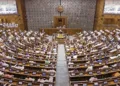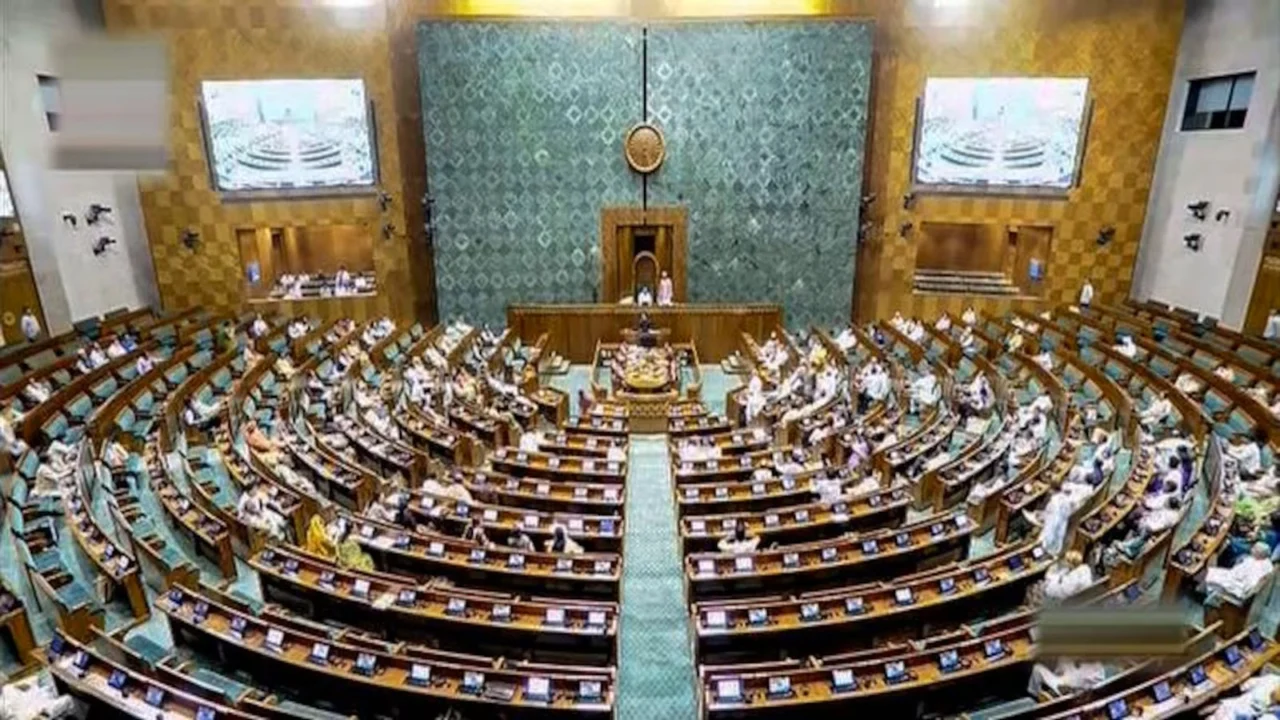
During India’s parliamentary proceedings, the Constitution (131st Amendment) Bill, 2026, did not receive the constitutionally mandated majority in the Lok Sabha on April 17, bringing renewed focus on the future timeline of women’s reservation and electoral reforms.
The bill secured 278 votes in favour and 211 against, with 489 members present and voting. However, under the provisions of Article 368 of the Constitution, a constitutional amendment requires the support of at least two-thirds of the members present and voting, a benchmark the bill could not meet.
The development has triggered a sharp political debate, particularly because of the bill’s direct link to the implementation of the 33 percent women’s reservation in Parliament and state assemblies.
What was the 131st Constitution Amendment Bill?
The Constitution (131st Amendment) Bill, 2026, was a wide-ranging proposal aimed at restructuring India’s electoral framework. One of its most prominent provisions was to increase the strength of the Lok Sabha from 550 to 850 seats, with 815 seats allocated to states and 35 to Union Territories.
The rationale behind this proposal lies in addressing the imbalance in representation that has persisted since the freeze on delimitation based on the 1971 Census. Over time, population changes have resulted in disparities, where constituencies in some states represent significantly larger populations than others.
The bill sought to enable a fresh delimitation exercise, ensuring that representation in Parliament reflects current demographic realities and that each vote carries relatively equal weight.
Why was it important for Women’s Reservation?
A key feature of the bill was its connection to the implementation of the women’s reservation law under the Nari Shakti Vandan Adhiniyam.
The 2023 law guarantees 33 percent reservation for women in the Lok Sabha and state assemblies, including provisions for Scheduled Castes and Scheduled Tribes. However, it includes a clause stating that the reservation will only come into effect after a fresh census and delimitation exercise.
With the next census expected around 2026-27, the implementation timeline for women’s reservation is currently aligned with the post-delimitation phase, likely beyond the next general elections.
The 131st Amendment Bill was designed to accelerate this timeline by removing the dependency on the “first census after 2023” clause and enabling earlier implementation through an immediate delimitation process.
This is why the bill was seen by the government as a crucial step in operationalising women’s reservation in the near term.
Delimitation and its role
Closely linked to the amendment was the proposed Delimitation Bill, 2026. Delimitation refers to the redrawing of constituency boundaries to reflect population changes.
The process is essential for implementing women’s reservation, as it determines which constituencies would be reserved. Without delimitation, the reservation framework cannot be operationalised.
The bill proposed the creation of a Delimitation Commission, likely led by a former Supreme Court judge, to carry out this exercise using available data.
Following the Lok Sabha voting outcome, Union Minister Kiren Rijiju moved to withdraw the Delimitation Bill and related legislative proposals, as they were contingent on the constitutional amendment.
What were the concerns?
Opposition parties opposed the bill on several grounds. One of the primary concerns was the proposal to use the 2011 Census data for delimitation, which they argued could disadvantage southern and north-eastern states that have effectively controlled population growth.
Leaders from the opposition also questioned the broader implications of increasing Lok Sabha seats and altering constituency boundaries, raising concerns about the federal balance of representation.
Rahul Gandhi described the bill as an “unconstitutional trick,” suggesting that it could disproportionately benefit certain regions.
Similarly, Akhilesh Yadav raised demands for additional provisions, including religion-based quotas within the reservation framework, which were not part of the bill.
While opposition parties maintained that they support women’s reservation in principle, their stance on the 131st Amendment has led to questions about the pathway and timeline for its implementation.
Government’s response and reactions
The ruling National Democratic Alliance (NDA) strongly criticised the opposition’s position, framing the issue as one directly impacting women’s political representation.
Prime Minister Narendra Modi, in a cabinet meeting following the development, reportedly stated that the opposition would have to answer for its stand, emphasising that the bill was intended to ensure timely implementation of women’s reservation.
Union Home Minister Amit Shah also questioned the opposition’s approach, asking how leaders could celebrate a development that has implications for expanding women’s participation in legislatures.
Kiren Rijiju described the opposition’s position as contradictory, arguing that while they publicly support women’s reservation, their stance on the amendment raises questions about their commitment to its early rollout.
Debate over Women’s representation
The developments have intensified the national conversation around women’s representation in politics. While there is broad consensus across parties on the principle of reservation, differences have emerged over the method and timing of implementation.
Supporters of the amendment argue that without such enabling provisions, the implementation of the 2023 law remains dependent on procedural timelines like the census and delimitation, which could push it further into the future.
On the other hand, critics argue that structural changes to representation must be approached cautiously, considering their long-term impact on federal balance and regional equity.
With the current legislative position, the implementation of women’s reservation remains linked to the completion of the next census and the subsequent delimitation process.
This means that the timeline for operationalising the 33% quota will depend on when these processes are completed and how quickly legislative consensus can be built around enabling provisions.
The broader agenda of electoral reforms, including the expansion of Lok Sabha seats, also remains subject to further political discussions and consensus-building.
The debate surrounding the Constitution (131st Amendment) Bill, 2026 highlights the complexities of balancing electoral reform, federal considerations, and gender representation.
While the government has positioned the amendment as a pathway to accelerate women’s reservation, the opposition’s stance reflects concerns over structural and regional implications.
As discussions continue, the key question remains: how and when will India translate its commitment to women’s political representation into reality?